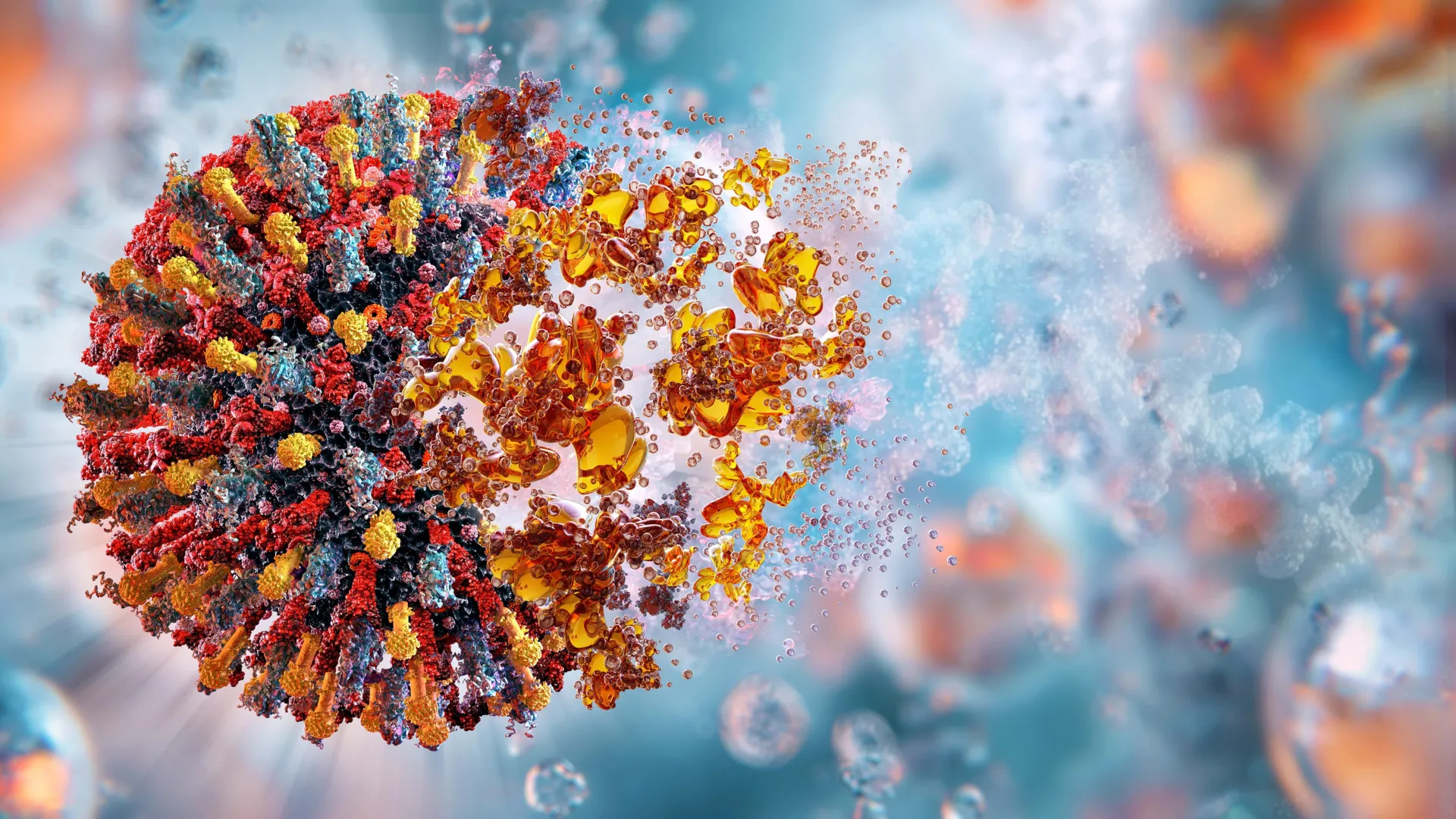
In the ongoing biological arms race between human health and pathogenic invaders, enteroviruses have long held a tactical advantage. Responsible for a spectrum of debilitating conditions—ranging from the common cold and hand, foot, and mouth disease to severe, life-altering illnesses like polio, myocarditis, and encephalitis—these viruses are masters of cellular hijacking. For decades, the precise mechanical "switch" they use to commandeer human cells remained an elusive mystery.
Now, a breakthrough study led by researchers at the University of Maryland, Baltimore County (UMBC) has illuminated this critical mechanism. Published in the journal Nature Communications, the research team has mapped the exact molecular interactions that allow enteroviruses to turn a host cell into a virus-manufacturing factory. This discovery not only resolves a longstanding debate in virology but also opens the door to a new generation of "broad-spectrum" antiviral therapies that could neutralize an entire family of pathogens with a single strike.
The Viral Engine: How Enteroviruses Hijack Cellular Machinery
To understand the magnitude of this discovery, one must first appreciate the efficiency of the enterovirus. These pathogens carry an incredibly compact RNA genome, yet they possess a level of biological sophistication that defies their diminutive size.
According to Deepak Koirala, associate professor of chemistry and biochemistry at UMBC and the lead investigator of the study, the viral genome is a master of multitasking. "Viruses are so, so clever," Koirala explains. "Their entire genome is equivalent to about one mRNA sequence in humans, yet they are so effective at hijacking cellular machinery."
Within the host cell, the viral RNA faces a logistical paradox: it must simultaneously serve as a blueprint for the production of viral proteins while also acting as a template for the replication of its own genome. To manage this dual role, the virus employs a specialized fusion protein known as 3CD. This protein is composed of two functional domains: 3C, which acts as a protease to cleave long amino acid chains into functional viral components, and 3D, which functions as an RNA polymerase—an enzyme that builds new copies of the viral genome. Because human cells do not naturally contain the machinery to replicate viral RNA, the enterovirus must bring its own tools to the job.
Unraveling the Mystery: A Chronology of Discovery
The path to this discovery was paved by years of incremental scientific progress. The UMBC team, including lead researcher Koirala and recent Ph.D. graduate Naba Krishna Das, began by focusing on the unique architecture of the viral genome. Earlier work from the Koirala lab successfully identified a distinct "cloverleaf" shaped structure within the viral RNA. This structure, they hypothesized, was the "docking station" where the replication process began.
While other research groups had previously mapped the structures of the 3C and 3D proteins in isolation, the interaction between these proteins and the RNA remained theoretical. The UMBC team’s breakthrough was capturing the "snapshot" of the RNA and the protein complex working in tandem.
"We previously determined the structure of the RNA alone, and other groups determined the structure of 3C and 3D," Koirala notes. "But now we’ve captured the structure of the RNA and proteins together, so we know how they are interacting."
The study utilized a sophisticated array of biophysical techniques to visualize these interactions. Through X-ray crystallography, the researchers were able to create high-resolution images of the cloverleaf RNA bound to the 3CD protein. To further validate their findings, they employed:
- Isothermal Titration Calorimetry (ITC): A method used to measure the heat released or absorbed during binding, confirming the thermodynamic stability of the complex.
- Biolayer Interferometry (BLI): A technique that tracks light interference to determine the duration and strength of molecular attachments.
These methods allowed the team to settle a prominent debate in the field: the arrangement of the 3CD proteins on the RNA strand. While some earlier models proposed that the proteins formed a single, fused pair, the UMBC team proved that two distinct 3CD molecules, each carrying its own 3D polymerase, bind side-by-side on the cloverleaf structure. While the exact reason why the virus requires two copies remains under investigation, the spatial configuration has now been definitively mapped.
The Molecular Switch: A New Target for Medicine
Perhaps the most significant finding in the study is the discovery of the "switch" mechanism that dictates the virus’s behavior. The researchers observed that when the 3CD complex is attached to the RNA cloverleaf, the virus is locked into a replication mode, churning out copies of its genome. When the complex detaches, the RNA becomes available for the production of structural viral proteins.
This discovery changes the landscape of antiviral research. Historically, drug development has focused on inhibiting the 3C or 3D proteins individually. However, the UMBC study suggests a more elegant approach: targeting the interaction interface itself. By designing small molecules that prevent the 3CD complex from binding to the RNA cloverleaf, scientists could theoretically shut down the replication process before it ever begins.
"Now we have another layer to test," says Koirala. "What if we target the RNA, or the RNA-protein interface, so that we break the interaction? That is another opportunity. Now that we have high-resolution structures, you can precisely design drug molecules to target them."
Implications: The Quest for Broad-Spectrum Antivirals
The most compelling aspect of this research lies in its potential for universality. When the team examined seven different types of enteroviruses, they found that the RNA cloverleaf structure and the 3CD binding behavior were nearly identical across all of them.
This high degree of conservation suggests that the cloverleaf structure is a vital, evolutionary "non-negotiable" for the virus. If the virus were to mutate this structure significantly to evade a drug, it would likely lose its ability to replicate entirely. This inherent stability makes it an ideal target for broad-spectrum antiviral drugs—medications that could treat not just one specific pathogen, but an entire family of related viruses.
Current medical responses to enteroviral infections are largely supportive, focusing on managing symptoms rather than stopping the viral life cycle. The development of a broad-spectrum antiviral could shift this paradigm, providing clinicians with a powerful tool to treat outbreaks of polio, encephalitis, or emerging enteroviral strains before they cause significant morbidity.
Conclusion: Translating Basic Science into Global Health
The work conducted at UMBC serves as a testament to the importance of foundational, curiosity-driven science. By peering into the minute, cloverleaf-shaped architecture of an RNA strand, Koirala and his team have provided the pharmaceutical industry with a new roadmap for drug design.
"His latest work demonstrates why we need to investigate this basic science—so that it can be translated into developing drugs targeting pathogens that cause so many harmful diseases," the researchers emphasize.
As the team moves forward, the focus will shift from mapping the structure to designing and testing small molecules capable of acting as "molecular wedges," preventing the 3CD complex from engaging with the viral genome. While the path from the laboratory bench to the pharmacy shelf is long and arduous, the UMBC study has cleared one of the most significant hurdles in modern virology. By understanding how the virus masters its own internal machinery, humanity is now one step closer to mastering the virus.
This study not only demystifies the complex dance of viral replication but also offers a glimmer of hope for a future where enteroviruses are no longer the unpredictable, unstoppable threats they have been for generations. The "cloverleaf" may be small, but its role in the survival of these viruses is immense—and thanks to this new research, it may soon become their greatest vulnerability.