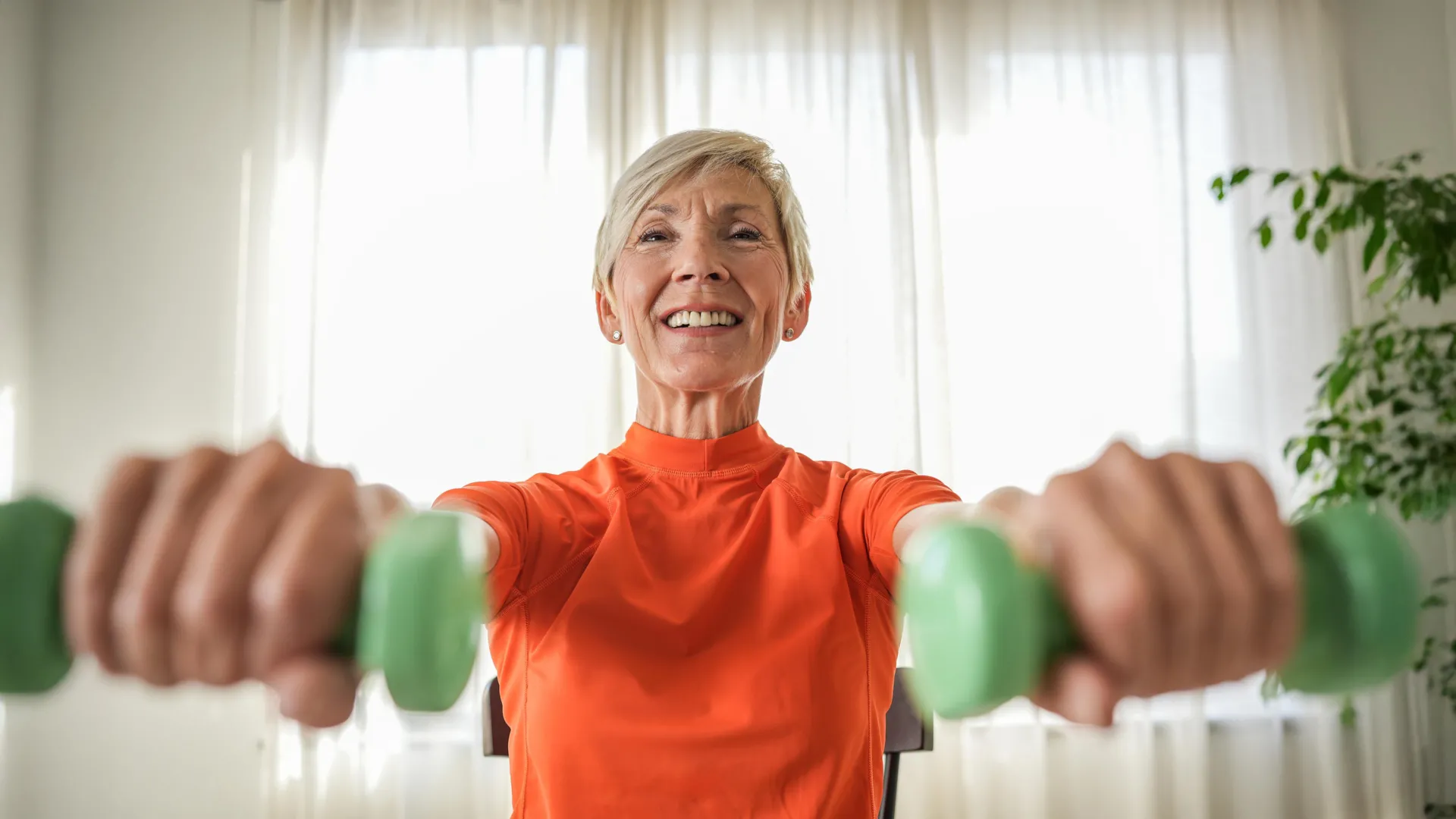
For decades, the public health mantra for aging gracefully has centered on aerobic conditioning. From brisk walking to cycling and swimming, the focus has consistently been on cardiovascular health—keeping the heart pumping and the lungs efficient. However, a landmark study published in JAMA Network Open has shifted the paradigm, suggesting that for older women, the key to longevity may lie as much in their muscles as in their heart rate.
Led by researchers at the University at Buffalo (UB), this extensive study involving over 5,000 women underscores a critical reality: muscle strength is not merely an aesthetic or athletic pursuit; it is a fundamental biological necessity for survival, particularly as we age.
Main Facts: The Strength-Longevity Connection
The research, which tracked 5,000 women between the ages of 63 and 99 over an eight-year period, provides some of the most robust evidence to date that physical power—specifically grip strength and lower-body functionality—is a primary predictor of mortality risk.
The study utilized two standardized, non-invasive clinical measures to assess strength:
- Grip Strength: A proxy for overall upper-body and systemic muscular integrity.
- The Chair Stand Test: A functional test requiring participants to stand up from a seated position five times as rapidly as possible without the use of their hands.
The results were striking. Even after accounting for variables that typically confound such studies—including sedentary behavior, aerobic activity levels, cardiovascular fitness (measured via gait speed), and markers of inflammation (C-reactive protein)—the correlation remained clear: women who exhibited greater muscular strength lived longer.
Chronology of the Investigation
The journey to these findings began with a recognition of a gap in existing geriatric literature. While previous studies had established links between frailty and mortality, they often failed to isolate "muscular strength" from "physical activity." It was difficult for scientists to determine if a woman was healthy because she moved more, or if she moved more because she was stronger.
The Research Timeline
- The Enrollment Phase: Over 5,000 women aged 63 to 99 were recruited for the study, creating a diverse cohort that represents the fastest-growing demographic in the United States.
- The Baseline Assessment: Researchers established baseline levels of grip strength and chair-stand capability. Unlike previous studies, they also integrated accelerometer data to track daily movement and blood tests to monitor systemic inflammation.
- The Eight-Year Follow-Up: Over nearly a decade, the team monitored mortality rates, adjusting for a wide array of health markers.
- The Synthesis: By isolating muscle strength from cardiovascular fitness and body size, the researchers were able to prove that strength provides a unique, independent survival advantage.
The study’s design was meticulous in addressing the "body size" argument. Critics have long suggested that larger individuals might naturally be stronger due to carrying more mass. However, the UB researchers scaled strength to both total body weight and lean body mass, and the result remained the same: strength itself—the ability of the muscles to generate force—was the protective factor against early mortality.
Supporting Data: The Quantifiable Benefits of Power
The numbers derived from the study offer a compelling argument for prioritizing strength training in clinical settings.
Key Statistical Findings:
- The 7-Kilogram Rule: Every 7-kilogram (approximately 15.4 pounds) increase in grip strength was associated with a 12% reduction in the risk of all-cause mortality.
- The Chair Stand Efficiency: Performance in the chair-stand test proved equally vital. For every 6-second improvement in the time taken to complete five sit-to-stand repetitions, participants saw a 4% lower mortality rate.
- The "Inactive" Paradox: Perhaps the most significant finding was that women who failed to meet the standard government guidelines for 150 minutes of aerobic activity per week still experienced lower mortality rates if they possessed high levels of muscle strength.
This finding disrupts the current health narrative. It suggests that if an older woman is unable to meet the high cardiovascular demands of a rigorous aerobic program, strength training offers a viable, perhaps even superior, alternative path to reducing health risks.
Official Responses and Expert Insight
Dr. Michael LaMonte, a research professor of epidemiology and environmental health in UB’s School of Public Health and Health Professions and the study’s lead author, believes these findings necessitate a change in how we advise the aging population.
"If you don’t have enough muscle strength to get up, it is going to be hard to do aerobic activities, such as walking, which is the most commonly reported recreational activity in U.S. adults ages 65 and older," Dr. LaMonte stated.
He emphasizes that the decline in muscle strength is a "mechanical" barrier to health. When a person lacks the force to move their body against gravity, their world shrinks. They become less mobile, less active, and consequently, more prone to the systemic illnesses associated with sedentary living.
"Muscular strength, in many ways, enables one to move their body from one point to another," LaMonte added. "When we no longer can get out of the chair and move around, we are in trouble. Healthy aging is best pursued through adequate amounts of both aerobic and muscle-strengthening physical activities."
The collaborative nature of the study—involving experts from the National Cancer Institute, Stanford, and the Fred Hutch Cancer Center—lends significant weight to these assertions, suggesting that the medical community is moving toward a consensus that resistance training is a "medicine" that has been under-prescribed.
Implications for Public Health and Daily Life
The implications of this study for the aging American population are profound. With the segment of the population aged 80 and older growing faster than any other, the public health burden of frailty is immense.
Redefining Exercise Guidelines
Current public health guidelines heavily favor aerobic exercise. While these are beneficial, the JAMA Network Open study provides a clear mandate to emphasize strength training. For clinicians, this means that "strength" should be a vital sign, just as important as blood pressure or heart rate.
Accessible Strength Training
One of the most encouraging aspects of the study is the accessibility of the intervention. The researchers emphasize that one does not need a sophisticated gym membership to reap these benefits.
Practical applications for older adults include:
- Bodyweight Movements: Modified push-ups, wall presses, and simple squats (or knee bends) are highly effective.
- Household Resistance: Dr. LaMonte suggests that everyday items—soup cans or heavy books—can serve as functional resistance tools for those who find traditional weights intimidating.
- Professional Guidance: While simple movements are effective, the researchers urge older adults to consult with a primary care physician or a physical therapist before starting a new regimen. A professional can ensure that exercises are performed with proper form, minimizing the risk of injury and ensuring that the intensity is appropriate for the individual’s current fitness level.
A New Philosophy on Aging
Ultimately, the study shifts the focus from "exercise as a chore" to "strength as a survival mechanism." It frames aging not as an inevitable decline into fragility, but as a period where the maintenance of power is possible and highly rewarding. By treating muscle strength as a critical component of longevity, we empower older adults to retain their independence, improve their daily quality of life, and significantly extend their years in good health.
As Dr. LaMonte concluded, the goal is not just to add years to life, but to add life to years. Through the simple, consistent act of building strength, that goal becomes significantly more attainable for millions of women across the country.