BUNIA, Democratic Republic of Congo — In a quiet, cordoned-off corner of Bunia, the weight of a global health emergency was reduced to the size of a small, wooden coffin. On Friday, June 19, 2026, mourners stood at a somber distance, watching as masked and gloved healthcare workers lowered the body of a six-month-old infant into the earth. She was the third child from a local orphanage to succumb to the Ebola virus this week, a tragic testament to an outbreak that has pushed the medical infrastructure of eastern Congo to the brink of collapse.
As a Catholic priest, Father Innocent Ndogo, offered prayers for the departed, the scene served as a grim reminder of the impersonal, sterile nature of "safe burials"—a necessity in the fight against a pathogen that remains infectious even after death. "It’s a feeling of profound sadness because we have lost one of our own, a daughter of the church," Father Ndogo said, his voice straining against the silence. "As we have always said, the Lord gives, and the Lord takes away."
The Anatomy of an Outbreak: Main Facts
The current crisis in the Democratic Republic of Congo (DRC) is centered in the Ituri province, a region already volatile due to regional instability and limited access to basic services. Unlike the more common Zaire strain of the Ebola virus, which has been the focus of international vaccine development and pharmaceutical research, this outbreak is driven by the Bundibugyo strain.
To date, the health ministry and international observers have confirmed 894 cases, with the death toll surpassing 200. Alarmingly, the Africa Centres for Disease Control and Prevention (Africa CDC) estimates that there are approximately 35,000 "suspected potential contacts"—individuals who may have been exposed to the virus and are now subject to surveillance.
The situation is exacerbated by the lack of medical countermeasures. There are no approved vaccines or specific clinical treatments for the Bundibugyo strain. Furthermore, the early diagnostic protocols failed to account for this particular variant, leading to a critical window of missed opportunities where the virus spread undetected.
A Chronology of Escalation
The progression of this outbreak has been rapid and unforgiving. While sporadic cases have appeared in the past, the current wave gained significant momentum throughout the spring of 2026.
- Early Spring 2026: The first clusters were identified in remote parts of Ituri. Initial efforts were hampered by a lack of diagnostic focus on the Bundibugyo strain, as health systems were tuned to identify the more prevalent Zaire virus.
- Late May 2026: The virus began to demonstrate sustained human-to-human transmission in urban hubs like Bunia. Reports of institutional spread, particularly within orphanages and care centers, began to surface.
- Early June 2026: The response was further complicated by civil unrest. Residents, frustrated by the strict, militarized nature of the health response and the disruption of traditional, culturally significant burial rites, clashed with medical professionals.
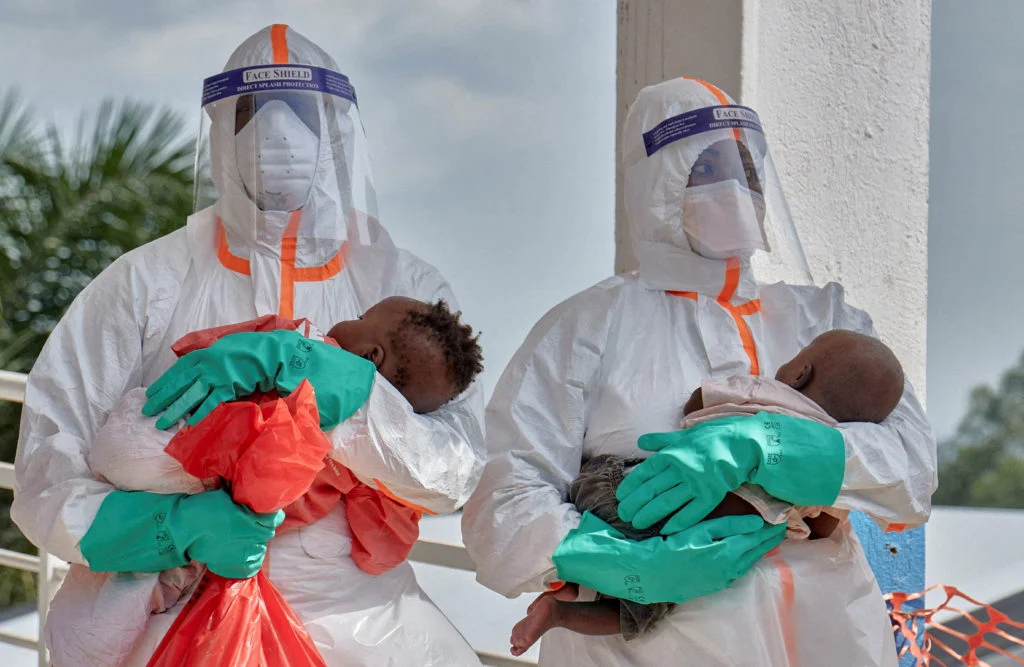
- June 9, 2026: Photographic evidence emerged of medical workers in full personal protective equipment (PPE) evacuating children from the Saint Nicholas orphanage in Bunia, highlighting the intense pressure on humanitarian agencies.
- June 19, 2026: The burial of the six-month-old infant marked a grim milestone, highlighting the tragic intersection of community vulnerability and the clinical necessity of strict infection control.
Supporting Data and Regional Scope
The scale of the current outbreak is significant. While it has not yet reached the catastrophic mortality levels of the 2014 West African epidemic—which claimed over 11,000 lives—it is currently three times more lethal than the 2000 Uganda outbreak.
The geographic footprint is expanding. While Ituri remains the epicenter, accounting for over 90% of confirmed cases, the virus has successfully traversed provincial and national borders. Cases have been documented in both North and South Kivu, and the disease has crossed into Uganda, where 19 confirmed cases and two deaths have been reported. This cross-border movement poses a severe challenge to regional stability and health security, requiring a coordinated response that currently seems to be lagging behind the virus’s spread.
Official Responses and Challenges
The response to the outbreak has been characterized by deep friction between international health agencies and the local population. In many instances, the containment effort has been heavily militarized, leading to distrust. When families are forbidden from touching their deceased loved ones, and when health workers arrive in terrifying, full-body protective suits, the result is often fear and avoidance rather than cooperation.
Alex Lock, a Communications Officer at the International Federation of Red Cross and Red Crescent Societies (IFRC), has called for a shift in public perception. "She was a baby. She had her whole life ahead of her," Lock said, referring to the infant buried on Friday. "Unfortunately, she was taken by the disease, a disease that, as you know, is transmitted from one person to another. We must not allow ourselves to become indifferent to these losses."
However, the plea for cooperation is hindered by the lack of material resources. Even the front-line health workers admit they are working with insufficient supplies. A recurring theme in reports from the field is the acute shortage of basic PPE, including gloves, masks, and protective gowns. Without the ability to protect themselves, the very individuals tasked with containing the outbreak are at high risk of becoming patients, further depleting the already strained medical workforce.
Implications for Global Health
The implications of the 2026 Bundibugyo outbreak are far-reaching.
1. The Vulnerability of Neglected Strains
The medical community has focused heavily on the Zaire strain, which has historically caused the most devastating outbreaks. The Bundibugyo strain has often been treated as a secondary concern, leaving it without the specialized vaccine portfolios that have become standard in the fight against Ebola. This outbreak underscores the danger of "medical prioritization bias," where investment in one disease variant leaves populations vulnerable to others.
2. The Erosion of Community Trust
The reliance on militarized response teams has alienated the very communities that need to report symptoms and follow quarantine guidelines. Without a "social vaccine"—trust built through community engagement and cultural sensitivity—technical interventions are destined to fail.
3. A Fragile Regional Infrastructure
The outbreak in eastern Congo and Uganda illustrates the interconnectedness of modern East Africa. A health crisis in one province quickly becomes a regional security issue. The lack of robust cross-border surveillance and synchronized response protocols continues to allow the virus to exploit gaps in regional coordination.
4. The Economic and Humanitarian Toll
Beyond the tragic loss of life, the economic consequences for the people of Ituri are devastating. Markets are shuttered, children are removed from schools, and agricultural cycles are interrupted. The fear of infection is driving migration, which, ironically, only serves to facilitate the movement of the virus into new, unsuspecting areas.
As the international community watches, the situation in Bunia remains critical. Without a massive infusion of resources—specifically protective gear, logistical support for community engagement, and a renewed focus on research for the Bundibugyo strain—the death toll is expected to climb.
"The tragedy is not just the disease," noted one anonymous aid worker, "it is the feeling that we are repeating the same mistakes of the past, simply with a different strain of the same enemy." For the grieving families in Bunia, the technical debates about strains and surveillance metrics are secondary to the simple, crushing reality of a future that will never be lived. The world’s ability to pivot from a militarized response to a humanitarian and community-centered one may well determine the final cost of this outbreak.