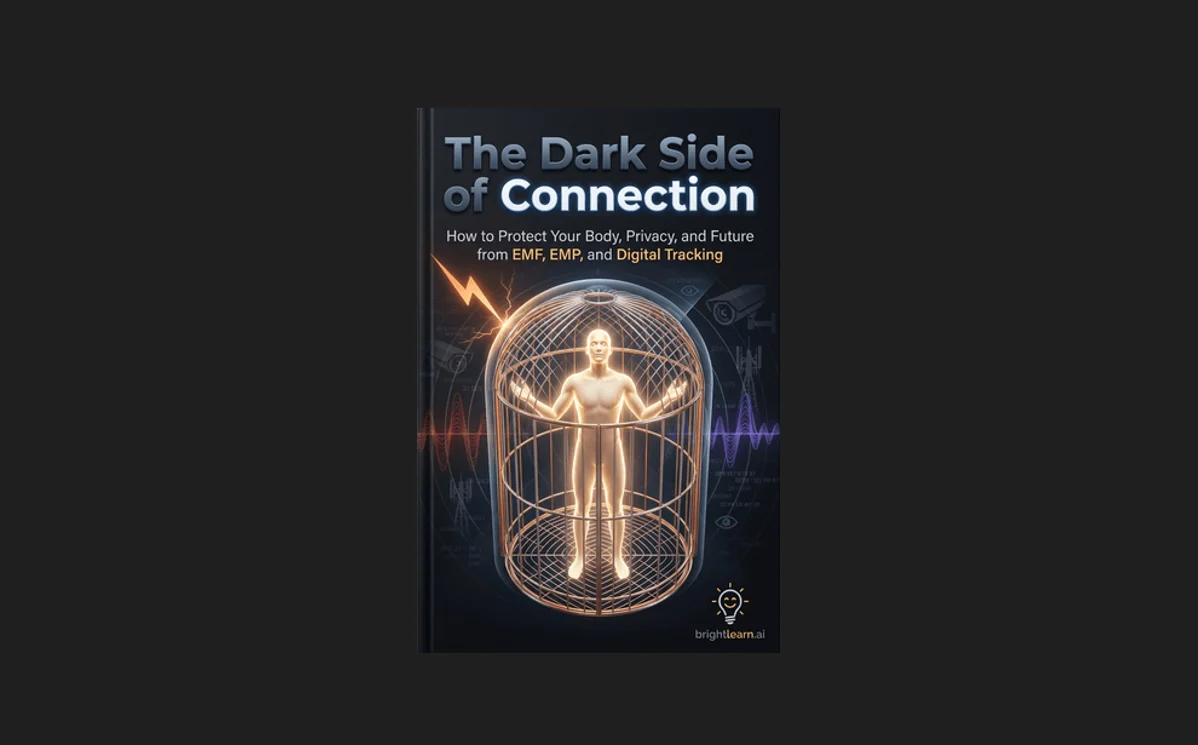
In the digital age, we have traded the sanctity of our physical autonomy and personal privacy for the convenience of instant connectivity. Yet, a growing body of research and critical analysis suggests that this trade-off may be costing us far more than we realize. The provocative new book, “The Dark Side of Connection: How to Protect Your Body, Privacy, and Future from EMF, EMP, and Digital Tracking,” serves as a sobering wake-up call, arguing that humanity is currently embroiled in an invisible, multi-front war—one that targets our biological health, our fundamental privacy, and the very infrastructure upon which modern society rests.
The Triad of Modern Vulnerability: An Overview
The premise of the book is straightforward yet chilling: the modern environment is saturated with hazards that remain largely invisible to the average citizen. The authors identify three primary pillars of this threat:
- Electromagnetic Field (EMF) Radiation: An omnipresent "soup" of frequencies emitted by smartphones, Wi-Fi routers, 5G infrastructure, and smart meters.
- Electromagnetic Pulse (EMP) Susceptibility: The precarious nature of a modern power grid that remains dangerously vulnerable to a single, high-altitude burst capable of collapsing the technological foundation of civilization.
- The Digital Surveillance State: A pervasive network of data collection that tracks individual movements, purchasing habits, and even biological vitals, transforming citizens into data points for corporate and state exploitation.
Unlike traditional fear-based literature, The Dark Side of Connection positions itself as an operational manual, providing readers with the strategic tools necessary to mitigate these risks.
Chronology of a Regulatory Failure
To understand how we reached this point, one must look at the timeline of regulatory oversight and the slow erosion of safety standards.
- 1996: The Federal Communications Commission (FCC) established the safety guidelines for radiofrequency (RF) radiation that remain in effect today. These standards were predicated on thermal effects—the idea that if a device does not heat human tissue, it is safe. Critics, including the authors of the book, argue that this approach ignores the non-thermal biological impacts that have since been documented.
- 2008: The Congressional EMP Commission issued a landmark report warning that a coordinated EMP attack could result in the death of up to 90% of the U.S. population due to the cascading failure of the electrical grid and subsequent loss of essential services. Despite these findings, major infrastructure hardening efforts have largely stalled.
- 2010s–Present: The proliferation of 5G, the Internet of Things (IoT), and the rise of advanced data brokerage have accelerated the surveillance state. Simultaneously, public health data has begun to show disturbing trends, including declines in fertility and increases in chronic health conditions that correlate with the rapid expansion of wireless technology.
The Biological Toll: Science Behind the Alarm
One of the most compelling arguments in the text concerns the physiological mechanism through which EMFs impact human health. The authors highlight the role of voltage-gated calcium channels (VGCCs) in cell membranes.
According to the research cited, EMF exposure forces these channels to open, leading to an intracellular calcium overload. This triggers a biological cascade characterized by oxidative stress, the production of free radicals, and potential DNA damage. The book bolsters this claim by referencing the National Toxicology Program’s multi-million dollar study, which found “clear evidence” of cancer in rats exposed to long-term cell phone radiation. Furthermore, the text points to the Hardell group and Interphone studies as evidence of increased glioma risks among heavy mobile device users.
The core question posed by the authors is: Why does this evidence fail to shift public policy? The book suggests a model of "regulatory capture," where international bodies like the ICNIRP (International Commission on Non-Ionizing Radiation Protection) and domestic regulators maintain close financial and professional ties with the telecom industry, effectively utilizing a "tobacco industry playbook" to downplay potential risks.
The Grid and the Void: The EMP Threat
Perhaps the most harrowing section of the book details the fragility of the power grid. An EMP, whether caused by a solar storm or a tactical strike, would bypass the modern "smart" world. The text outlines the immediate aftermath: the collapse of communications, the loss of the banking system, the cessation of water treatment, and the failure of logistics.
Without a robust, hardened grid, the modern urban environment becomes a trap. The authors argue that because the government has failed to treat this as a national security emergency, the responsibility for survival has effectively been shifted to the individual. The book encourages readers to view EMP preparedness not as a fringe activity, but as a prudent form of "civilizational insurance."
Digital Surveillance: The End of Anonymity
The book meticulously documents how devices—from smart TVs to wearables—act as involuntary informants. It details the mechanics of geo-fencing warrants, where law enforcement can request location data for every device present in a specific location during a specific window of time, effectively turning the populace into a network of tracked entities.
Even when devices are "powered off," the book warns that baseband processors can continue to facilitate tracking. This "digital footprint" is not just for targeted advertising; it is a permanent ledger that can be weaponized. The authors provide a roadmap for "disturbing" this footprint, including the adoption of privacy-focused search engines like DuckDuckGo, the use of encrypted communication tools like Signal, and the physical shielding of electronics via Faraday cages.
Practical Mitigation: A Layered Defense
The true value of The Dark Side of Connection lies in its actionable advice. The authors advocate for "defense in depth," a military-inspired strategy that relies on multiple, overlapping layers of protection:
- Physical Shielding: The book provides instructions on constructing Faraday cages to isolate critical electronics and using EMF-blocking fabrics in clothing and living spaces to reduce chronic exposure.
- The "Eight-Hour Rule": A structured approach to creating a "clean" sleeping environment, free from Wi-Fi and mobile device emissions, allowing the body to recover from daily radiation exposure.
- Biological Resilience: The authors emphasize that protection is not just about blocking incoming threats but strengthening the internal terrain. This includes the use of antioxidants (Vitamins C and E, glutathione, melatonin), magnesium, and adaptogenic herbs to combat oxidative stress.
- Earthing/Grounding: The text highlights the efficacy of grounding—direct skin contact with the earth—as a simple, cost-free method to neutralize the electrical charge accumulated from environmental EMF exposure.
Official Responses and the Scientific Consensus
It is important to note that the mainstream scientific and regulatory consensus—represented by the FCC, the WHO, and the CDC—generally maintains that current EMF levels are safe, provided they adhere to existing standards. These organizations argue that the non-thermal effects cited by the authors are not yet supported by a sufficient body of replicated, large-scale human clinical trials.
However, the authors of The Dark Side of Connection argue that the current "consensus" is a byproduct of institutional inertia and industry influence. They point to the fact that independent, peer-reviewed studies are frequently marginalized by large-scale industry-funded research. This creates a dichotomy in the public discourse: one side views the technology as safe until proven otherwise by a massive regulatory consensus, while the other views the technology as an active, unacknowledged health experiment on the human population.
Implications for the Future
The implications of the arguments presented in this book are vast. If the authors are correct, society is facing a slow-motion public health crisis that is currently being masked by the very entities tasked with our protection. The transition to an increasingly "connected" world may be creating a state of perpetual biological, digital, and structural vulnerability.
The book serves as a manifesto for personal sovereignty. By providing the tools to measure, block, and mitigate these risks, it shifts the power dynamic from the institutional level back to the individual. Whether one agrees entirely with the authors’ conclusions or views them as a necessary counter-narrative, the questions raised regarding the intersection of technology, health, and privacy are unavoidable.
In a world where connection is often synonymous with surveillance and radiation, The Dark Side of Connection encourages a radical rethink of our relationship with the devices in our pockets and the infrastructure above our heads. It is a call to take the wheel of one’s own health and digital life, ensuring that in the pursuit of a modern lifestyle, we do not lose the very freedoms and health that make life worth living.
For those seeking to further explore these topics, the authors recommend engaging with resources like the Health Ranger Report and utilizing independent platforms that offer unfiltered perspectives on these critical, often-overlooked, societal threats.
To learn more about shielding your home, securing your digital privacy, and building internal resilience, you can access “The Dark Side of Connection: How to Protect Your Body, Privacy, and Future from EMF, EMP, and Digital Tracking” via Books.BrightLearn.ai.