By Jackie Keating, LCSW
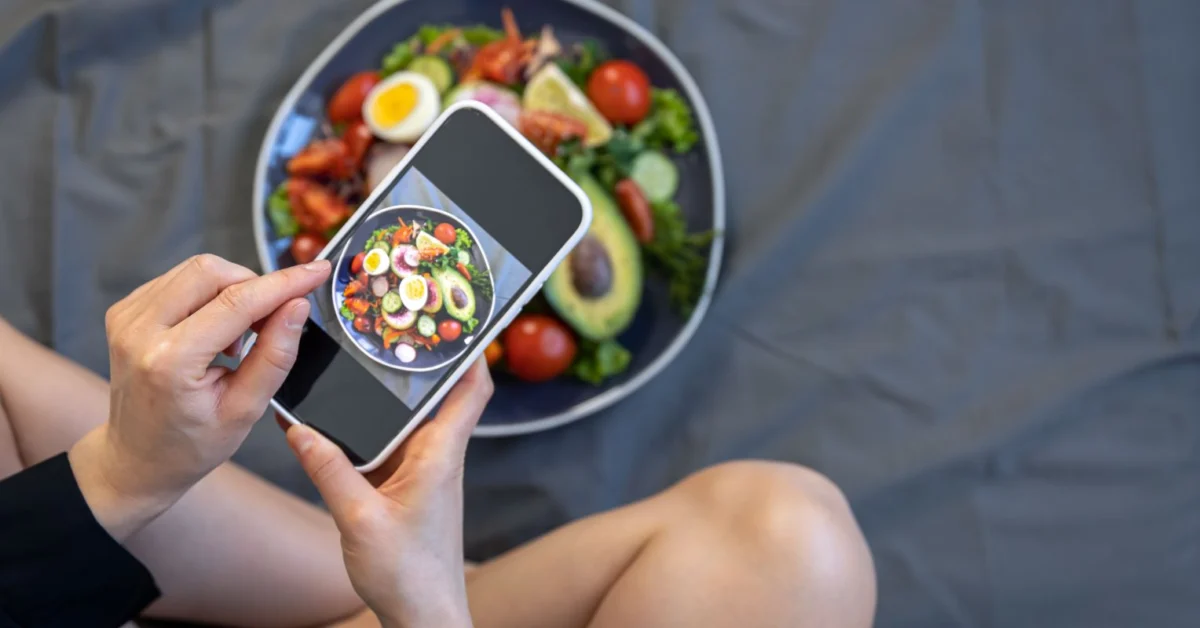
It is a familiar Sunday night ritual: you are lying in bed, the glow of your smartphone illuminating your face as you scroll through social media in search of a quiet distraction. Almost immediately, your feed is hijacked. An influencer appears, detailing their “what I eat in a day”—a display of meticulously curated meals devoid of carbohydrates and stripped of calories.
Moments later, the tone shifts. A creator shares a “relatable” post about the necessity of wine to survive a parenting shift, while another mocks their own “messy” night out. Interspersed between these glimpses into personal lives are aggressive advertisements for fitness programs, each promising a life-altering transformation in just “three simple steps.”
By Monday morning, this digital pressure permeates the real world. A coworker discusses a new restrictive diet they are beginning; a friend texts about the urgent need to “get ready for summer” by shedding weight; a celebrity promotes the latest plant-based regime. The messages are relentless, pervasive, and increasingly dangerous.
The Architecture of Diet Culture in the Digital Age
Social media was designed to foster connection, yet it has evolved into a primary delivery system for diet culture—a societal ideology that equates thinness and specific dietary habits with moral virtue, health, and happiness. While marketed under the guise of “wellness,” this culture often delivers a toxic byproduct: shame, guilt, and debilitating anxiety regarding food, body image, and self-worth.
The wellness industry has evolved into a massive, profit-driven machine. In 2024, the market was valued at over $160 billion, with projections suggesting it will balloon to $360 billion by 2034 (Finklea, 2025). Digital creators, often lacking formal nutritional or psychological training, monetize this insecurity by promoting restrictive diets, demonizing specific food groups, and engaging in fat-shaming. The subtext is constant: if you adopt their habits and purchase their products, you will attain their aesthetic—and by extension, their perceived happiness.
The Psychological Toll
Beneath the glossy, filtered images of “healthy” lifestyles often lie realities of extreme restriction, binge-purge cycles, and profound psychological distress. The data is alarming: 46% of teens aged 13–17 report that social media consumption negatively impacts their body image. Furthermore, the REACH Institute (2025) notes that individuals spending more than three hours a day on social media platforms are twice as likely to develop eating disorders compared to those with lower screen time.
The Intersection: Eating Disorders and Substance Use
Perhaps the most overlooked consequence of this digital environment is the blurring lines between disordered eating and substance misuse. While they may present differently, eating disorders (EDs) and substance use disorders (SUDs) are often cut from the same cloth: they function as maladaptive coping mechanisms for managing stress, emotional volatility, and deep-seated trauma.
The National Eating Disorders Association (NEDA, 2023) reports that 50% of individuals diagnosed with an eating disorder also struggle with the misuse of alcohol or drugs. Recent research highlights an interdependent relationship between these conditions; the presence of one significantly elevates the risk of developing the other (Xi & Galaj, 2025).
Normalizing the Unhealthy
Social media platforms like TikTok and Instagram frequently exacerbate this overlap by glamorizing both sides of the coin. Extreme dieting is presented as “discipline,” while alcohol consumption is often framed as a “reward” or a necessary tool for relaxation. By normalizing both restrictive behaviors and substance misuse, these platforms create an environment where individuals can easily slide into dual disorders without recognizing the severity of their situation until it is life-threatening.
The Fatal Consequences of Co-Occurring Disorders
The medical community views the combination of eating disorders and substance use as a critical emergency. Anorexia nervosa already holds the highest mortality rate of any mental illness. When this is compounded by substance misuse, the physical and psychological toll is catastrophic.
According to a study by Mellentin et al. (2022), the co-occurrence of alcohol or illicit drug use nearly quadruples the mortality risk compared to an eating disorder alone. The combination of systemic malnutrition, electrolyte imbalances, and the neurochemical impact of substances creates a perfect storm for organ failure and psychiatric collapse. Furthermore, individuals with these comorbidities face significantly higher rates of suicidal ideation and attempts (SAMHSA, 2025).
A Chronology of Influence: From Magazines to Algorithms
The evolution of body standards has shifted from the slow, static pace of print media to the instantaneous, algorithmic speed of social media.
- Pre-2010s: The “pro-ana” movement existed in the dark corners of early internet forums, but the primary drivers of diet culture remained traditional magazines and television, which allowed for a degree of separation between the consumer and the ideal.
- 2010–2018: The rise of Instagram ushered in the “fitspo” era. The focus shifted from pure thinness to “toned” bodies, further commodifying fitness plans and protein supplements.
- 2019–Present: The algorithm-driven short-form video era (TikTok/Reels) accelerated the cycle. Creators can now reach millions in hours, often using “relatability” as a Trojan horse to introduce harmful misinformation, extreme fasting, and “cleansing” trends.
Implications for Clinical Care and Policy
The current landscape demands an urgent shift in how we approach mental health treatment. Despite the overwhelming biological and behavioral evidence that EDs and SUDs are often intertwined, modern healthcare systems remain stubbornly siloed.
The Problem of Fragmented Care
For patients, this fragmentation is often described as a game of “whack-a-mole.” A patient may enter a facility for alcohol detoxification, only to have their restrictive eating habits ignored or exacerbated by the facility’s meal plan. Conversely, an ED treatment center may not have the resources or expertise to address an underlying substance dependency. This disjointed approach frequently leads to higher rates of relapse and prevents patients from achieving sustained recovery (Pierce, Joy, & David, 2025).
The Need for Integrative Treatment
Effective care requires an integrative, multidisciplinary model. Treatment must move beyond symptom management to address the cultural and systemic forces that drive these disorders. This includes:
- Combined Clinical Programs: Facilities must be equipped to handle the metabolic and psychological complexities of co-occurring disorders simultaneously.
- Digital Literacy Training: Mental health providers should integrate social media literacy into therapy, helping patients identify and mute harmful influences.
- Policy Reform: There is a growing call for greater accountability for social media platforms regarding the promotion of content that encourages eating disorders and substance misuse.
Reclaiming Health in a Profiteering Culture
The path to recovery is not found in the next “3-step program” or the latest viral wellness trend. It is found in the radical act of reclaiming one’s own health from a culture that profits from self-loathing.
As we look toward the future, the integration of psychiatric care is paramount. We must demand a healthcare system that recognizes the complexity of the human experience rather than reducing it to a set of statistics or a target weight. By fostering awareness of the links between digital consumption, restrictive eating, and substance misuse, we can begin to dismantle the systems that capitalize on our insecurities.
The goal is to move from a state of “wellness” as defined by an algorithm to a state of health defined by the individual’s own capacity for connection, joy, and physical stability.
References
- Dane, A., & Bhatia, K. (2023). The social media diet: A scoping review to investigate the association between social media, body image and eating disorders amongst young people. PLOS Global Public Health, 3(3), e0001091.
- Finklea, K. (2025). The wrong influence: The link between diet culture and eating disorder. HopeHealth.
- Gordon, K. H., et al. (2023). Co-occurring substance use and eating disorders. Psychiatric Times.
- Hambleton, A., et al. (2022). Psychiatric and medical comorbidities of eating disorders. Journal of Eating Disorders, 10(1), 132.
- Holland, G., & Tiggemann, M. (2023). Social media and body image: A systematic review. PLOS Global Public Health, 3(3).
- Mellentin, A. I., et al. (2022). The impact of alcohol and other substance use disorders on mortality in patients with eating disorders. The American Journal of Psychiatry, 179(1), 46–57.
- National Eating Disorders Association (2023). Statistics & research on eating disorders.
- Pierce, S., Joy, J. M., & David, A. (2025). Abstinence-based treatment of comorbid eating disorders and ultra-processed food addiction. Frontiers in Psychiatry, 16.
- Substance Abuse and Mental Health Services Administration (2025). Breaking the silence: What everyone should know about eating disorders.
- The REACH Institute (2025). Mind over minutes: How youth screen habits are impacting their mental health.
- Xi, Z.-X., & Galaj, E. (2025). Novel potential pharmacological approaches in treating eating disorders comorbid with substance use disorders. Biomedicine & Pharmacotherapy, 189.