20 May, 2026
The European Respiratory Society (ERS) has officially unveiled Guidelines in Practice, an innovative podcast series designed to bridge the often-daunting gap between clinical research and real-world patient care. By moving beyond the static pages of medical journals and into the nuanced, fast-paced world of clinical application, the ERS aims to foster a more dynamic dialogue among respiratory professionals globally.
This initiative represents a strategic shift in how medical societies disseminate knowledge, focusing not merely on the creation of guidelines, but on their long-term efficacy, the barriers to their adoption, and the tangible impact they have on patient outcomes.
Main Facts: The Evolution of Clinical Education
For decades, the standard for disseminating medical evidence has been the formal publication of guidelines—comprehensive, dense documents that serve as the "gold standard" for diagnosis and treatment. However, the ERS has identified a critical bottleneck: the "translation gap." While research is published, the day-to-day realities of clinical settings—resource constraints, evolving patient demographics, and regional policy variations—often complicate the application of these documents.
Guidelines in Practice seeks to resolve this by focusing on the "post-publication lifecycle." Each episode features a structured conversation between a member of the original guideline task force and an external expert. This format ensures that the discussion is rooted in the rigorous evidence base that birthed the guideline, while remaining open to the critical feedback of practitioners who have spent months or years testing these recommendations in real-world environments.
Key pillars of the series include:
- Contextual Application: Focusing on the "how" rather than the "what" of clinical protocols.
- Evidence-Based Storytelling: Utilizing clinical cases and patient narratives to illustrate the human impact of adherence to guidelines.
- The Feedback Loop: Identifying persistent clinical challenges that remain even after a guideline is fully implemented, thereby informing future research priorities.
Chronology: From Concept to Global Launch
The journey to the launch of Guidelines in Practice has been a multi-year project reflecting the ERS’s commitment to digital transformation in medical education.
- Q1 2025: The ERS Guidelines Committee begins internal reviews on the effectiveness of traditional dissemination models. Surveys of respiratory professionals indicate a desire for more "digestible, practical, and conversational" formats for clinical guidance.
- Q3 2025: Production begins on the pilot series. The ERS selects the "Symptom Management for Adults with Serious Respiratory Illness" guideline as the inaugural subject, given its cross-disciplinary importance and the complexity of its implementation.
- Q1 2026: Final recording sessions are completed, involving global experts from Australia, the UK, and across Europe to ensure a diverse perspective on clinical practice.
- 20 May, 2026: The official public launch of the series on the ERS Respiratory Channel, marking a new chapter in the Society’s digital engagement strategy.
Supporting Data: Why Practice-Based Learning Matters
The urgency for this series is supported by growing data regarding the lag between medical discovery and clinical practice. Research consistently shows that it can take an average of 17 years for clinical research to be fully integrated into standard medical practice. By providing a platform for practitioners to discuss the specific hurdles they face, the ERS hopes to shorten this timeframe.
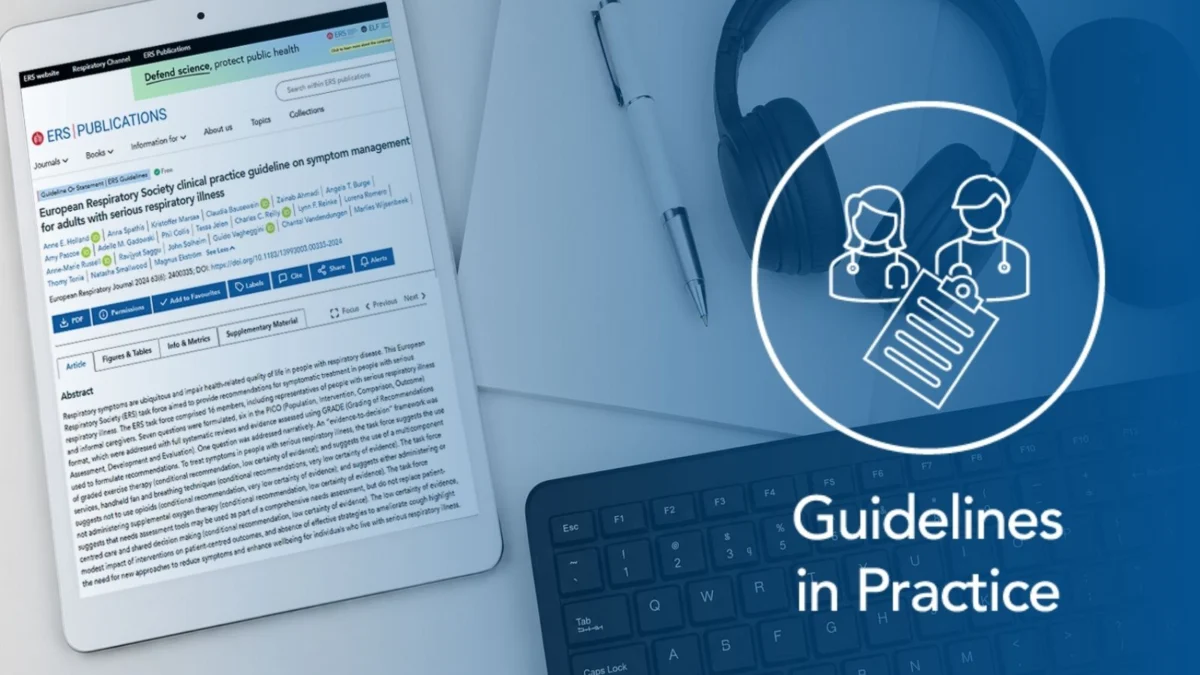
Furthermore, the shift toward "symptom-focused" care—the topic of the first episode—aligns with broader trends in healthcare, where quality of life is increasingly prioritized alongside survival rates. The ERS clinical practice guideline on symptom management for adults with serious respiratory illness, published in the European Respiratory Journal (2024), remains one of the most cited documents in recent years. By choosing this as the flagship episode, the ERS acknowledges that managing chronic breathlessness and anxiety in patients with respiratory failure requires not just a medication list, but a systemic approach to multidisciplinary palliative care.
Official Responses: Insights from the Experts
The launch of the podcast has been met with enthusiasm from within the ERS leadership and the wider medical community.
Prof. Winfried Randerath, ERS Guidelines Director, emphasized the necessity of this initiative during the launch event. "ERS guidelines are produced by task forces on specific topics in respiratory medicine in order to guide respiratory professionals in their clinical practice," Randerath noted. "However, the document itself is only the beginning. ERS guidelines have a significant impact on clinical practice, and it will be fascinating to hear first-hand about this impact from the professionals who are implementing the guidance they provide. I look forward to listening to, and taking part in, engaging discussions as part of this new series."
In the first episode, the conversation between Prof. Natasha Smallwood (Director of Respiratory Medicine, The Alfred Hospital, Melbourne) and Prof. Irene Higginson (Professor of Palliative Care and Policy, London) provides a masterclass in this approach. Their discussion moves past the technical jargon of the guideline to address the emotional and logistical realities of treating patients at the end of life.
Prof. Smallwood, who chaired the guideline development, brings a clinical perspective from the front lines of an Australian public hospital, while Prof. Higginson provides the broader policy and academic context. Their dialogue highlights that while guidelines provide the "what," the "how" depends on the strength of communication between specialties—a nuance that is rarely captured in a standard PDF publication.
Implications: The Future of Respiratory Medicine
The introduction of Guidelines in Practice carries significant implications for the future of respiratory medicine and medical education.
1. The Humanization of Data
By prioritizing storytelling and case studies, the ERS is recognizing that clinicians are more likely to retain and apply information when it is linked to real-world patient scenarios. This "narrative medicine" approach is expected to improve the actual uptake of guidelines by making the abstract concrete.
2. Global Standardization vs. Local Flexibility
One of the most valuable aspects of the series is the focus on how guidelines are adapted to different healthcare systems. By bringing in international experts, the podcast allows listeners to understand how a recommendation made in a European context might be adjusted for a clinical setting in Australia, North America, or Asia. This fosters a more flexible, adaptive approach to international medicine.
3. A Template for Other Societies
The ERS is effectively setting a new benchmark for professional societies worldwide. As the digital landscape continues to evolve, the reliance on traditional journals for professional development is waning. The success of this podcast series will likely serve as a blueprint for other medical specialties—such as oncology, cardiology, and infectious disease—to adopt similar, listener-centric educational formats.
4. Improving Patient Outcomes
Ultimately, the goal of the ERS is to improve the quality of care for patients with respiratory disease. By creating a culture where clinicians feel comfortable discussing the "gaps" in current guidelines, the society is creating a more honest and iterative approach to healthcare. When doctors feel empowered to share the challenges they face in applying new research, the entire profession learns more quickly, and the patient—the individual suffering from breathlessness or chronic respiratory failure—is the ultimate beneficiary.
Conclusion: Accessing the Future of Clinical Guidance
As of 20 May, 2026, the first episode of Guidelines in Practice is available for streaming on the ERS Respiratory Channel. The episode offers a deep dive into the practical management of symptoms in patients with serious respiratory illness, providing actionable insights that are immediately relevant to physicians, nurses, and allied health professionals.
Looking forward, the ERS plans to release subsequent episodes throughout the remainder of 2026, covering topics ranging from novel pharmacotherapy for asthma to advancements in pulmonary rehabilitation. These episodes will continue to challenge the status quo, ensuring that clinical guidelines are not just archived documents, but living, breathing tools that adapt to the ever-changing landscape of modern medicine.
For those interested in staying at the forefront of respiratory care, the ERS Respiratory Channel serves as the primary hub for this new series, alongside a vast library of on-demand content and live webinars. By embracing this digital-first approach, the ERS is not just reporting on the future of respiratory medicine—they are actively building it.
To explore the full catalog of resources, visit the ERS Respiratory Channel official website.