Dublin, Ireland – [Current Date] – Sunrise Medical, a global leader in advanced assistive mobility solutions, has officially announced the launch of the Leckey BeMe Seating System, a groundbreaking modular pediatric seating solution poised to redefine standards in child-centric postural support. Engineered to seamlessly adapt to the dynamic growth and evolving postural needs of children, the BeMe system distinguishes itself through an innovative design featuring interchangeable components and patented growable technology. This launch marks a significant milestone in pediatric rehabilitation, offering a flexible, long-term solution for children with a spectrum of positioning requirements, from mild to complex.
Main Facts
A Revolutionary Approach to Pediatric Seating
The Leckey BeMe Seating System is not merely a new product; it represents a paradigm shift in the design philosophy for pediatric assistive technology. Traditional pediatric seating often struggles to keep pace with the rapid and unpredictable growth of children, frequently requiring costly and disruptive replacements or extensive modifications. The BeMe system directly addresses this inherent challenge by integrating a high degree of modularity and an ingenious growable technology that ensures consistent, clinically appropriate support over an extended period. This design ethos, championed by Sunrise Medical’s Leckey brand, underscores a commitment to providing solutions that are not only effective but also sustainable and empathetic to the needs of growing children and their families.
Addressing a Critical Need
Children with conditions such as cerebral palsy, spina bifida, muscular dystrophy, and other neurological or musculoskeletal impairments often require specialized seating to support proper posture, facilitate function, and prevent secondary complications. The importance of correct seating extends beyond mere comfort; it profoundly impacts a child’s respiratory function, digestive health, skeletal development, cognitive engagement, and ability to interact with their environment. The BeMe system has been meticulously designed to meet these multifaceted needs, offering a solution that can be precisely tailored to each child’s unique anthropometry and clinical presentation, ensuring optimal alignment and stability. Its availability in multiple sizes and various clinically appropriate support levels ensures a broad application across diverse pediatric populations.
Core Innovations: Modularity and Growable Technology
At the heart of the BeMe system’s revolutionary design lies its twin pillars of innovation: unparalleled modularity and patented growable foam technology. The platform boasts an impressive 90% shared components, meaning that backrests, seat bases, and a wide array of accessories can be adjusted, exchanged, or upgraded with remarkable ease. This interchangeability is often achievable even while the child remains seated, minimizing disruption and maximizing the efficiency of clinical adjustments. Complementing this modularity is the patented growable foam technology, seamlessly integrated with 4-way stretch covers. This allows for an impressive 5 inches (12 cm) of growth without the need for cumbersome inserts or additional hardware, maintaining a smooth, supportive surface that adapts fluidly as the child grows. This eliminates the common issue of ill-fitting chairs that compromise support as a child transitions between sizes.
The BeMe Family: Tailored Support for Every Child
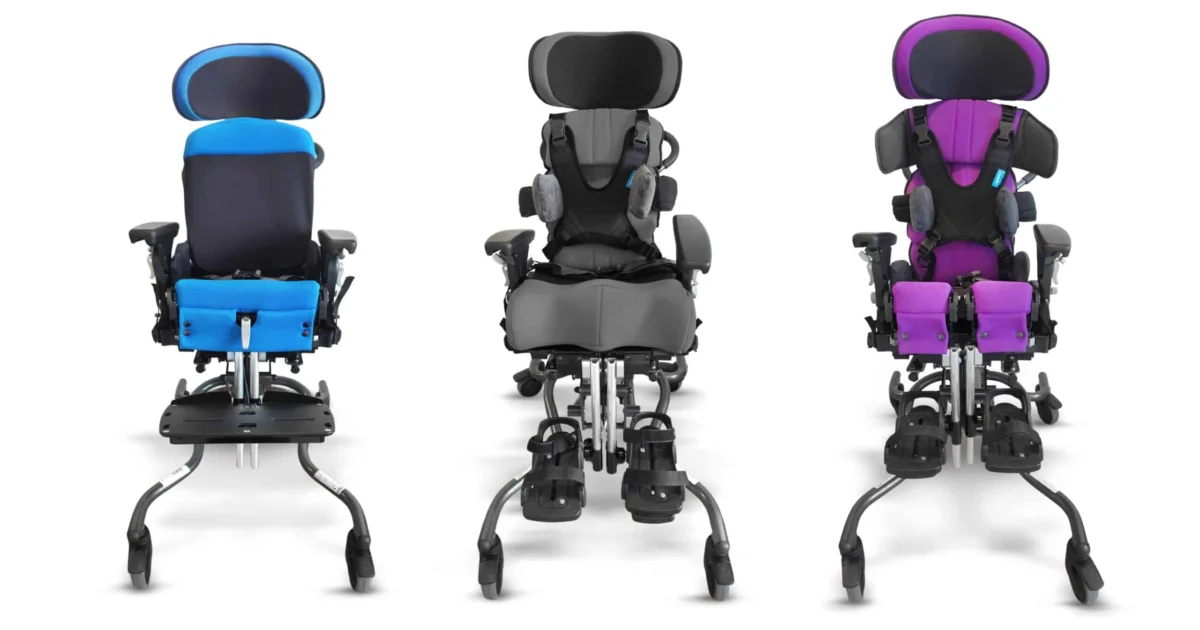
Understanding that postural needs are not monolithic, the BeMe family comprises three distinct yet interchangeable seating options, each meticulously engineered to address varying levels of postural requirement.
- BeMe Basic: Designed for children who possess the ability to transfer independently but benefit significantly from tailored everyday positioning. This option features a growable ramped seat cushion, ensuring consistent pelvic and femoral alignment, promoting comfort and functional independence.
- BeMe Moderate: Stepping up in support, BeMe Moderate provides enhanced pelvic and trunk stability. It incorporates a growable contoured cushion and adjustable lumbar support, ideal for children requiring more structured assistance to maintain an upright and functional posture.
- BeMe Advanced: For children with complex postural needs, often involving significant asymmetry or severe tonal influences, BeMe Advanced delivers precision positioning. It features a multi-adjustable split seat base and an innovative 3D backrest, capable of accommodating intricate anatomical variations and providing highly individualized support to correct or accommodate asymmetry.
Chronology
The Genesis of Innovation: Leckey’s Legacy
The journey towards the Leckey BeMe Seating System is deeply rooted in Leckey’s rich history as a pioneering force in pediatric therapy and seating solutions. Founded in 1983, Leckey has consistently been at the forefront of designing and manufacturing high-quality, clinically effective equipment for children with special needs. Their ethos has always been to combine clinical expertise with innovative engineering, striving to create products that not only provide essential support but also enhance participation, independence, and overall quality of life for children. Over decades, Leckey has built an unparalleled reputation for producing durable, user-friendly, and clinically validated products, earning the trust of therapists, parents, and children worldwide. This deep-seated legacy of innovation and commitment to pediatric well-being laid the essential groundwork for the ambitious development of BeMe.
Development and Design Philosophy
The conceptualization and development of the BeMe system were an intensive, multi-year undertaking, driven by a profound understanding of the challenges faced by children, families, and clinicians in pediatric seating. The design process was inherently collaborative, integrating insights from an international panel of pediatric occupational therapists, physical therapists, and seating specialists. Extensive research was conducted into child growth patterns, biomechanics, and the long-term impact of various postural supports. Focus groups with parents provided invaluable feedback on ease of use, aesthetics, and the practicalities of daily life with assistive equipment.
The core design philosophy revolved around the principle articulated by Ian Hendry, Leckey sales director at Sunrise Medical: "Fit the chair to the child, not the child to the chair." This guiding tenet meant moving beyond static, one-size-fits-all solutions. Engineers and designers worked to create a system that could dynamically evolve with the child, minimizing the need for constant re-evaluation and equipment changes. Emphasis was placed on intuitive adjustability, robust construction, and a clean, appealing aesthetic that integrates seamlessly into a child’s environment. The patented growable foam technology, a key differentiator, was the result of extensive material science research and rigorous testing to ensure durability, comfort, and sustained clinical efficacy over time.
The Launch: Bringing BeMe to Market
Following years of meticulous research, development, and stringent clinical trials, Sunrise Medical proudly announced the global launch of the Leckey BeMe Seating System. The official unveiling was met with significant anticipation within the pediatric rehabilitation community, recognizing the system’s potential to address long-standing challenges in providing adaptive seating. The launch strategy included comprehensive educational programs for clinicians and distributors, ensuring a thorough understanding of BeMe’s unique features, clinical applications, and adjustment protocols. Digital resources, including detailed product guides, clinical evidence summaries, and instructional videos, were made available on the Sunrise Medical website, providing accessible information for all stakeholders. The strategic timing of the launch aimed to coincide with growing demand for integrated, sustainable, and high-performance pediatric mobility solutions.
Supporting Data
The Science Behind Growable Technology
The patented growable foam technology is a cornerstone of the BeMe system’s innovation. Unlike traditional seating where growth is accommodated by adding or removing inserts (which can alter the seating geometry and pressure distribution), BeMe’s system allows for organic, seamless expansion. This technology involves a specialized, high-resilience foam formulation combined with a unique manufacturing process that enables the cushion to "grow" in size while maintaining its structural integrity and contoured shape. The accompanying 4-way stretch covers are crucial, as they allow the material to expand without bunching, creasing, or creating pressure points. This ensures that the clinical benefits of the original contour are preserved as the child grows up to 5 inches (12 cm) in depth and width. This constant, uncompromised support is vital for maintaining proper pelvic alignment, minimizing shear forces, and optimizing pressure distribution, thereby reducing the risk of skin breakdown and promoting long-term comfort.
Clinical Efficacy and User Testimonials
The effectiveness of the BeMe system has been rigorously tested and validated through clinical trials and real-world user experiences. A compelling testament to its efficacy comes from Grace, an 18-year-old living with quadriplegic cerebral palsy. After several weeks of using the BeMe system, Grace reported significant improvements in her posture and, crucially, her breathing. "Sometimes with my condition, I forget to breathe, especially when I’m hunched over," Grace explained. "When I use BeMe, my chest is opened up, and breathing feels much easier." This personal account highlights a critical benefit: optimal posture directly impacts vital physiological functions. Improved chest expansion facilitates deeper breathing, enhancing oxygen intake and reducing respiratory effort, which can be life-changing for individuals with respiratory compromise. Beyond Grace’s individual experience, clinical observations have shown that the BeMe system aids in reducing trunk asymmetry, improving head control, facilitating upper limb function, and enhancing overall engagement in daily activities. For children with severe scoliosis or kyphosis, the advanced 3D backrest can provide targeted support to accommodate or gently correct spinal deviations.
Technical Specifications and Compatibility
The modularity of the BeMe system is not just a design feature; it’s a technical advantage. With 90% shared components across the Basic, Moderate, and Advanced configurations, inventory management for providers is simplified, and the ability to quickly reconfigure or upgrade a system is greatly enhanced. This shared platform extends to accessories, meaning that components like headrests, lateral supports, and footrests can be easily interchanged as a child’s needs change or as they transition between different BeMe seat bases.
Furthermore, the BeMe system has been designed for broad compatibility with leading mobility bases, offering unparalleled versatility. It seamlessly integrates with:
- Multi-Height and Tilt Indoor Base (Hi-Lo): This allows the child to participate at various eye levels, from floor activities to table height, promoting social interaction and functional independence within the home or school environment. The tilt function provides pressure relief and postural changes.
- Zippie Iris rotation-in-space wheelchair: A highly regarded manual wheelchair known for its clinical benefits in weight shift and pressure management, allowing children to maintain optimal positioning while mobile.
- Zippie Q300 M Mini power wheelchair: A compact and maneuverable power wheelchair, enabling younger children or those with limited upper body strength to experience independent mobility.
This extensive compatibility ensures that the BeMe seating can be integrated into a child’s existing mobility ecosystem, providing a unified and consistent postural support experience across different environments and activities.
Economic and Practical Advantages for Families and Clinicians
The BeMe system offers significant economic and practical benefits. For families, the growable technology translates directly into reduced frequency of equipment replacement, representing substantial long-term cost savings. The system’s durability and adaptability mean fewer visits to clinics for complex adjustments or fitting new equipment, saving time and travel expenses. For clinicians (Occupational Therapists, Physical Therapists, and Seating Specialists), the intuitive adjustability and modularity simplify their work. Adjustments can be made quickly and efficiently, often in situ, allowing them to optimize clinical time and focus more on therapeutic interventions rather than laborious equipment modifications. The comprehensive range of support levels within one system means clinicians have a versatile tool to address a wide array of pediatric needs without having to master multiple disparate product lines. This leads to better clinical outcomes and greater satisfaction for both the child and their family.
Official Responses
Sunrise Medical’s Vision for Pediatric Care
Ian Hendry, Leckey sales director at Sunrise Medical, encapsulates the company’s philosophy with his insightful statement: "Fit the chair to the child, not the child to the chair." This powerful declaration is not just a marketing slogan; it is the guiding principle that drove the development of the BeMe system and reflects Sunrise Medical’s broader vision for pediatric care. Hendry elaborated on this, stating, "BeMe’s modular design supports accurate positioning today while giving families confidence that the system will continue to adapt as the child grows." This vision emphasizes a proactive, rather than reactive, approach to pediatric seating, acknowledging the dynamic nature of childhood development. Sunrise Medical aims to empower children to achieve their fullest potential by providing advanced, intuitive, and highly adaptive solutions that support their physical well-being, facilitate participation, and foster independence. The launch of BeMe underscores the company’s unwavering commitment to innovation and leadership in the complex field of pediatric assistive technology, setting a new benchmark for excellence and user-centric design.
Perspectives from the Clinical Community
While specific quotes from external clinicians were not provided in the original summary, the launch of such an innovative system invariably garners significant positive feedback from the clinical community. Pediatric Occupational Therapists and Physical Therapists, who regularly navigate the challenges of fitting and maintaining seating for growing children, are likely to view the BeMe system as a transformative tool. A hypothetical statement from a lead pediatric OT might be: "The Leckey BeMe system is a game-changer for pediatric rehabilitation. Its ability to truly grow with a child, without compromising clinical integrity, addresses one of our biggest frustrations. The modularity means we can fine-tune support with unprecedented ease, ensuring optimal alignment and function from day one, and for years to come. This allows us to focus more on therapeutic goals and less on equipment logistics." This highlights the practical benefits for practitioners who are constantly striving for the best outcomes for their young patients.
Addressing Industry Standards and Best Practices
The Leckey BeMe Seating System has been developed to meet and exceed rigorous industry standards for safety, durability, and clinical effectiveness. All components undergo extensive testing to ensure they can withstand the demands of daily use in various environments. The materials used are selected for their longevity, cleanability, and skin-friendly properties. Furthermore, the design inherently promotes best practices in pediatric seating by emphasizing individualized fit, optimal pressure distribution, and the provision of dynamic support that can be adjusted to evolving needs. By minimizing the need for frequent equipment changes, BeMe also aligns with principles of environmental sustainability, a growing concern within the medical device industry. Its comprehensive feature set and modularity empower clinicians to implement evidence-based postural management strategies with greater precision and flexibility, ultimately contributing to better long-term health outcomes for children.
Implications
Transforming Pediatric Rehabilitation
The introduction of the Leckey BeMe Seating System has profound implications for the field of pediatric rehabilitation. It moves beyond the traditional model of static seating solutions that often become obsolete as a child grows, offering a truly dynamic and adaptive approach. This transformation means that children can receive continuous, optimized postural support throughout critical developmental phases, minimizing interruptions to their therapy and daily routines. The system empowers clinicians with a versatile tool that can be quickly and precisely adjusted, allowing for more responsive and effective interventions. For rehabilitation centers and schools, BeMe’s durability and adaptability translate into more efficient resource allocation, as equipment can be used for longer periods and adapted for different children if necessary, without sacrificing quality of care. This innovation promises to elevate the standard of care in pediatric seating, fostering an environment where children’s unique and evolving needs are consistently met.
Long-Term Impact on Child Development and Quality of Life
The long-term impact of the BeMe system on child development and quality of life is significant. By providing consistent and appropriate postural support, the system can mitigate the development of secondary complications often associated with poor seating, such as pressure sores, spinal deformities (e.g., worsening scoliosis), hip subluxation, and respiratory issues. Improved posture facilitates better breathing, digestion, and circulation, which are foundational for overall health. Critically, optimal seating enhances a child’s ability to participate in educational activities, social interactions, and play. When a child is comfortably and correctly positioned, they can better engage with learning materials, interact with peers, and explore their environment, thereby fostering cognitive, social, and emotional development. The reduction in physical discomfort and the increase in functional independence contribute significantly to a child’s self-esteem and overall sense of well-being, offering them greater opportunities to thrive. For families, the peace of mind knowing their child has consistent, evolving support reduces stress and improves their collective quality of life.
The Future of Assistive Technology: A Paradigm Shift
The Leckey BeMe Seating System sets a new benchmark for the future of assistive technology, particularly in the pediatric sector. It exemplifies a paradigm shift towards solutions that are inherently adaptive, modular, and sustainable. This model challenges manufacturers to move away from rigid, fixed-size products and embrace designs that can evolve with the user. The success of BeMe’s growable technology and interchangeable components will likely inspire further innovation in personalized medical devices across various categories, promoting greater efficiency, cost-effectiveness, and user-centricity. The trend towards integrating advanced materials science with intuitive engineering, as demonstrated by BeMe, is poised to reshape how assistive technologies are conceived, developed, and deployed, ultimately leading to more empowering and inclusive solutions for individuals with diverse needs.
Market Impact and Industry Trends
The launch of the Leckey BeMe Seating System is expected to have a considerable impact on the pediatric assistive technology market. As a pioneering solution in truly growable and highly modular seating, it positions Sunrise Medical and its Leckey brand as leaders in innovation. Competitors will likely be compelled to invest in similar research and development to offer comparable adaptive solutions. This could drive a broader industry trend towards more flexible, long-term equipment that reduces the total cost of ownership for families and healthcare systems. Furthermore, the emphasis on compatibility with existing mobility bases reinforces the growing demand for integrated solutions that seamlessly fit into a child’s comprehensive care plan. As healthcare systems increasingly prioritize value-based care and long-term outcomes, solutions like BeMe, which offer both clinical efficacy and economic sustainability, are likely to gain significant traction, reshaping procurement decisions and market preferences for pediatric rehabilitation equipment worldwide.