






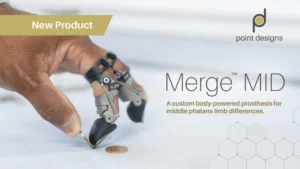



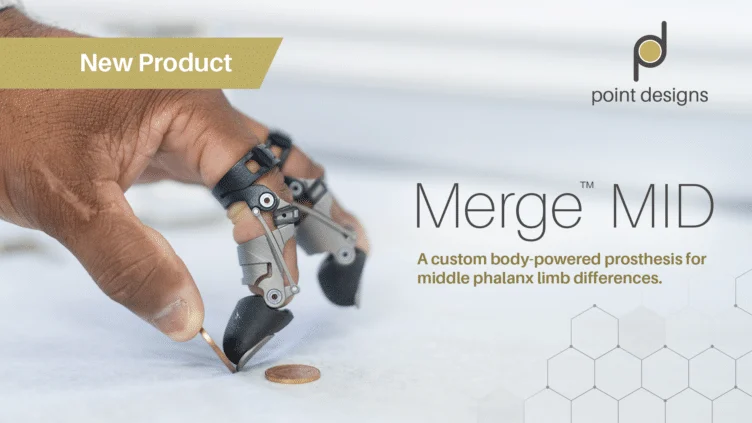
BOULDER, CO – [Date of Publication] – In a significant advancement for individuals living with partial-hand amputations, Point Designs, a leader in prosthetic innovation, has officially launched the Merge MID. This groundbreaking custom body-powered finger prosthesis is engineered to restore crucial function and foster independence for patients who have experienced middle-phalanx amputations of digits 2 through 5. The introduction of the Merge MID marks a pivotal moment, directly addressing a long-standing clinical gap where a vast majority of affected individuals have historically lacked suitable prosthetic solutions.
The Merge MID is not merely a device; it represents a meticulously crafted solution designed to integrate seamlessly with a patient’s residual anatomy, offering a sophisticated yet intuitive return to critical hand functions. For an estimated 13,000 patients annually experiencing middle-segment amputations, the prospect of receiving an effective prosthetic has been dismally low, with fewer than 4% currently benefiting from such interventions. Point Designs’ latest offering is poised to dramatically shift this paradigm, bringing advanced prosthetic engineering to a population that has been underserved for too long.
Main Facts: Addressing a Critical Clinical Gap
The launch of the Merge MID by Point Designs is a testament to focused innovation aimed at solving a specific and pressing need within the prosthetics community. This section delves into the core attributes of the Merge MID, the profound unmet needs it seeks to alleviate, and the underlying philosophy guiding its design.
The Merge MID: A Tailored Solution
At its core, the Merge MID is a custom-fabricated, body-powered finger prosthesis. The "custom" aspect is paramount, signifying that each device is uniquely molded and fitted to the individual patient, ensuring optimal comfort, control, and aesthetic integration. Unlike off-the-shelf solutions, the Merge MID’s bespoke nature accounts for the unique contours and characteristics of each patient’s residual limb, maximizing proprioception – the body’s sense of its own position and movement – and overall user experience.
The term "body-powered" refers to the ingenious mechanism by which the prosthesis operates. Instead of relying on external power sources like batteries or motors, the Merge MID harnesses the natural movements of the patient’s own body. Specifically, it utilizes a cable-driven system actuated by the remaining active motion of the metacarpophalangeal (MCP) or proximal interphalangeal (PIP) joint of the amputated digit. This means that a subtle flexion or extension of the residual finger segment translates into a corresponding, functional movement of the prosthetic digit. This intuitive control mechanism offers several advantages, including immediate feedback, greater durability due to fewer complex electronic components, and reduced maintenance, liberating users from the constraints of battery life and charging cycles.
The Merge MID is engineered to restore a range of vital functions, from basic grasping and pinching to more nuanced manipulation of objects. For individuals with middle-phalanx amputations, the loss of the distal portion of a finger significantly impacts fine motor skills, grip strength, and the ability to perform activities of daily living (ADLs) such as typing, buttoning clothes, or holding utensils. By providing a functional extension, the Merge MID empowers patients to regain a significant degree of dexterity and independence that was previously lost.
Unmet Needs in Partial-Hand Amputations
The statistics paint a stark picture: approximately 13,000 patients annually experience middle-segment amputations across digits 2-5, yet fewer than 4% receive a prosthetic solution. This significant disparity highlights a critical void in available, effective, and accessible prosthetic options. Several factors contribute to this unmet need. Historically, the complexity of fitting partial-hand prostheses, coupled with the limited availability of specialized devices that can effectively mimic the intricate mechanics of natural finger movement, has deterred both clinicians and patients. Many existing solutions have been either purely cosmetic, offering no functional benefit, or overly cumbersome and impractical for daily use.
Furthermore, the focus of prosthetic research and development has often skewed towards major limb amputations, leaving partial-hand and finger amputations as a relatively underserved niche. The Merge MID directly confronts this oversight, recognizing that even the loss of a single finger segment can profoundly impact an individual’s quality of life, professional capabilities, and psychological well-being. The lack of suitable devices has not only limited physical function but has also contributed to feelings of frustration, isolation, and diminished self-esteem among amputees. Point Designs’ commitment with the Merge MID is to bridge this gap, offering a clinically validated and patient-centered solution.
Core Functionality and Design Philosophy
The design philosophy behind the Merge MID is rooted in "proven prosthetic engineering" seamlessly integrated with "body-powered solutions that work seamlessly with patients’ residual anatomy." This approach prioritizes functionality, durability, and intuitive control. The custom fabrication process, which involves a detailed review of patient measurements and photographs by Point Designs’ clinical team, is crucial for confirming candidacy and ensuring optimal outcomes. This meticulous pre-assessment guarantees that the prosthesis is not just a fit, but the right fit for the individual’s specific amputation level, residual finger length, and active PIP joint motion.
The mechanism of action is elegant in its simplicity and effectiveness. When a patient with sufficient residual finger length and active PIP joint motion flexes their remaining digit, the Merge MID’s internal linkages translate this motion into the flexion of the prosthetic finger. This direct correlation between natural body movement and prosthetic function creates a highly intuitive and responsive experience, minimizing the cognitive load often associated with operating complex prosthetic devices. The materials used are selected for their strength, lightness, and biocompatibility, ensuring both robustness for daily use and comfort against the skin. The overall design aims for minimal bulk, allowing the prosthesis to integrate discreetly into the hand, reducing social stigma and enhancing user confidence. The Merge MID is a testament to the belief that effective prosthetics should enhance life, not complicate it.
A Chronology of Innovation and Patient-Centric Development
The journey to the Merge MID is not an overnight phenomenon but the culmination of years of dedicated research, development, and a steadfast commitment to improving the lives of individuals with partial-hand amputations. Point Designs’ history is characterized by a persistent drive to innovate within a highly specialized field.
Point Designs’ Legacy in Prosthetics
Point Designs was founded on the principle of restoring function and independence for people with partial-hand amputations. Since its inception, the company has carved out a niche as a leader in creating specialized prosthetic solutions that address the unique challenges of digit and partial-hand loss. Their earlier products, often focused on distal finger amputations and specialized grasping mechanisms, have consistently emphasized robust engineering, custom fit, and practical functionality. The company’s reputation has been built on understanding the intricate biomechanics of the hand and translating that knowledge into devices that genuinely enhance a user’s capabilities. This foundation of expertise and a patient-first approach laid the groundwork for the ambitious undertaking of the Merge MID. Their prior successes have demonstrated a deep understanding of materials science, biomechanical engineering, and the delicate balance required to create prosthetics that feel like a natural extension of the body.
The Genesis of Merge MID
The decision to develop the Merge MID was driven by a clear recognition of a significant unmet clinical need. While Point Designs had already made strides in other areas of partial-hand prosthetics, the middle-phalanx amputation segment, particularly for body-powered solutions, remained largely unaddressed by high-quality, custom-fit options. Market research, coupled with direct feedback from prosthetists, hand therapists, and patients themselves, highlighted the immense demand for a reliable and functional device for this specific level of amputation. Many individuals were either left without a solution or offered devices that were inadequate in terms of function, comfort, or durability.
The concept for the Merge MID began with the challenge of leveraging existing body-powered principles – known for their reliability and intuitive control – and adapting them to the nuanced requirements of a middle-phalanx amputation. The goal was to create a prosthesis that could effectively utilize the residual motion of the proximal interphalangeal (PIP) joint, a critical pivot point that often remains intact after such an amputation. This presented unique engineering hurdles, requiring innovative linkage designs and precise calibration to translate the relatively small range of motion from the residual digit into a functional, powerful grip in the prosthetic segment. The vision was clear: to offer a solution that was not only mechanically sound but also aesthetically acceptable and seamlessly integrated into the user’s daily life.
From Concept to Clinical Reality: The Development Process
The development of the Merge MID followed a rigorous, multi-stage process, emblematic of Point Designs’ commitment to excellence. It began with extensive research and development, involving biomechanical modeling, advanced CAD/CAM (Computer-Aided Design/Computer-Aided Manufacturing) techniques, and material selection. Early prototypes were often 3D-printed, allowing for rapid iteration and testing of various designs and mechanisms. Engineers worked closely with clinical experts – prosthetists, occupational therapists, and hand surgeons – throughout this phase to ensure that the evolving design met both technical specifications and real-world clinical requirements.
This iterative design process involved numerous cycles of prototyping, internal testing for durability and function, and crucial feedback loops from a network of clinical collaborators. These collaborators provided invaluable insights into patient needs, fitting challenges, and desired functional outcomes. Adjustments were made to optimize everything from the strength-to-weight ratio of the materials to the ergonomics of the custom socket and the responsiveness of the linkage system. User trials, albeit informal initially, played a significant role in refining the prosthesis, focusing on comfort, ease of use, and the ability to perform a wide range of tasks. The objective was not just to create a functional device but one that truly "works—really works—for everyone involved," as articulated by the company’s leadership. This comprehensive approach ensured that by the time the Merge MID reached its official launch, it was a robust, clinically validated solution ready to make a tangible difference in patients’ lives.
Supporting Data: The Stark Reality of Partial-Hand Amputations
The decision to develop and launch the Merge MID is underpinned by compelling statistical data and a deep understanding of the functional, economic, and psychosocial burdens associated with partial-hand amputations. This section explores the quantitative and qualitative evidence that highlights the critical need for advanced prosthetic solutions like the Merge MID.
Incidence and Prevalence: A Closer Look
According to various epidemiological studies and national health registries, upper limb amputations, particularly those involving digits and partial hands, represent a significant portion of all amputation cases. While comprehensive, granular data for middle-phalanx amputations specifically can be challenging to isolate, the approximate figure of 13,000 patients per year experiencing middle-segment amputations of digits 2-5 underscores a substantial population group. These injuries often result from occupational accidents (e.g., machinery, power tools), traumatic events, or sometimes medical conditions. The high incidence rate means that a considerable number of individuals face daily challenges related to their amputation, yet as the initial article states, fewer than 4% currently receive an effective prosthetic solution. This "unmet need" is not a minor oversight but a major gap in healthcare provision for a population facing life-altering injuries. The prevalence of such injuries, particularly among working-age individuals, further emphasizes the societal impact and the urgency of developing effective rehabilitation tools.
The Economic and Social Burden of Amputation
The consequences of middle-phalanx amputation extend far beyond the physical loss. Economically, individuals without functional prostheses may face significant barriers to returning to work, particularly in professions requiring fine motor skills or manual dexterity. This can lead to lost income, increased reliance on disability benefits, and a reduction in overall economic productivity. The cost of long-term rehabilitation, therapy, and psychological support for individuals struggling to adapt without adequate assistive devices also places a burden on healthcare systems and insurance providers.
Socially and psychologically, the impact can be profound. Amputations, even partial ones, can lead to body image issues, reduced self-esteem, and social anxiety. The inability to perform simple, everyday tasks can foster feelings of dependence and frustration. Participation in hobbies, sports, and social activities may become difficult or impossible, leading to isolation. The Merge MID’s potential to restore function can therefore have a ripple effect, empowering individuals to reclaim their independence, re-engage with their communities, and improve their overall mental well-being, ultimately reducing the broader societal burden associated with these injuries.
The Efficacy of Prosthetic Intervention: What the Data Shows
Clinical research consistently demonstrates the benefits of prosthetic intervention for individuals with limb loss. Studies indicate that appropriately fitted and utilized prostheses can significantly improve functional outcomes, enhance quality of life, and reduce the psychological distress associated with amputation. For partial-hand amputations, specific benefits include improved grip strength, enhanced dexterity, and the ability to perform bimanual tasks more effectively. Prosthetic use can also help prevent compensatory movements that might lead to secondary musculoskeletal issues in other parts of the body.
While the data for the Merge MID specifically is nascent given its recent launch, the underlying principles of body-powered prosthetics have been well-established. These devices offer a direct, intuitive connection between the user’s intent and the prosthetic’s action, often leading to higher rates of acceptance and consistent use compared to more complex systems that may require extensive training or external power. The efficacy of a custom-fit, body-powered solution for middle-phalanx amputations, therefore, lies in its ability to provide a durable, reliable, and user-friendly tool that directly addresses the functional deficits, allowing patients to regain a sense of normalcy and capability.
The Gap in Body-Powered Solutions
The statistic that fewer than 4% of middle-segment amputees receive a prosthetic solution highlights not just a general lack of access, but a specific gap in suitable solutions. For middle-phalanx amputations, the remaining bone structure and joint motion often make body-powered prosthetics an ideal choice. They are typically lighter, more durable, less expensive than externally powered (myoelectric) devices, and do not require batteries, making them suitable for a wider range of environments and activities. However, the complexity of designing a robust, custom-fit, and highly functional body-powered device for such a specific and anatomically intricate amputation level has been a significant barrier.
Many existing body-powered options for partial-hand loss have been either too generic, failing to provide the precision needed for mid-phalanx loss, or custom solutions that were prohibitively expensive or difficult to fabricate consistently. The Merge MID fills this void by bringing "proven prosthetic engineering" – a combination of advanced design, materials, and manufacturing processes – to the body-powered category for this specific amputation level. It represents a targeted innovation that leverages the inherent advantages of body-powered systems while overcoming the historical challenges of custom fabrication and functional efficacy for a previously underserved patient population.
Official Responses: Vision and Commitment from Point Designs
The launch of the Merge MID is more than just a product release; it is a declaration of Point Designs’ unwavering commitment to its core mission and a reflection of its foundational principles. The company’s leadership and its development team emphasize a vision rooted in patient empowerment and rigorous innovation.
Leadership Perspectives: Levin Sliker’s Vision
Levin Sliker, Vice President and General Manager of Point Designs, articulates the company’s ethos with clarity and conviction: "We’ve always been driven by a single mission: to restore function and independence for people with partial-hand amputation." This statement is not merely corporate rhetoric but reflects a deep-seated commitment that permeates every aspect of the company’s operations. Sliker’s emphasis on expanding this mission into the body-powered solutions category with the Merge MID underscores a strategic broadening of their impact.
His assertion that the Merge MID "reflects our commitment to rigorous engineering, clinical collaboration, and genuine patient-centered design, delivering something that works—really works—for everyone involved," provides a comprehensive overview of the company’s developmental philosophy. "Rigorous engineering" speaks to the precision, material science, and biomechanical understanding that underpins the device. It implies extensive testing, quality control, and an unyielding pursuit of mechanical excellence. "Clinical collaboration" highlights the essential partnership with prosthetists, therapists, and surgeons who provide invaluable real-world insights and ensure the device is practical and effective in a clinical setting. Finally, "genuine patient-centered design" is perhaps the most critical element, signifying that the end-user’s needs, comfort, and functional goals are at the absolute forefront of every design decision. This holistic approach is what Sliker believes truly sets the Merge MID apart and ensures its effectiveness.
The Engineering Ethos Behind Merge MID
The development of the Merge MID is a testament to Point Designs’ sophisticated engineering capabilities. The "rigorous engineering" mentioned by Sliker involves several key aspects. Firstly, it entails advanced material selection, ensuring that the prosthesis is not only lightweight and comfortable but also robust enough to withstand the rigors of daily use. Materials must be biocompatible, durable, and capable of holding intricate shapes, often achieved through specialized polymer blends or aerospace-grade composites.
Secondly, the biomechanical engineering behind the Merge MID is crucial. Understanding the subtle movements of the residual finger and translating them into a functional grasp requires precise kinematic modeling and linkage design. The goal is to create a mechanical advantage that allows for powerful grip with minimal effort from the user, while also mimicking the natural range and speed of a human finger. This involves intricate gear ratios, pivot points, and cable routing to ensure smooth, responsive action. The custom fabrication process itself relies heavily on advanced manufacturing techniques, including 3D scanning, CAD modeling, and often additive manufacturing (3D printing) or precision CNC machining to create perfectly tailored sockets and components. This blend of cutting-edge technology and deep anatomical understanding is what enables the Merge MID to integrate so seamlessly with the patient’s residual anatomy.
Clinical Collaboration: A Cornerstone of Success
Point Designs recognizes that even the most brilliantly engineered device is only as good as its clinical application. This understanding drives their strong emphasis on "clinical collaboration." Throughout the development cycle, the company engaged closely with a network of prosthetists, hand therapists, and orthopedic surgeons. These clinical partners provided critical feedback on design iterations, evaluated prototypes in simulated and real-world scenarios, and offered insights into patient specific needs and challenges.
This collaborative model ensures that the Merge MID is not just a technological marvel but a practical, fittable, and therapeutically effective tool. Prosthetists, who are responsible for the fitting and ongoing care of patients, offered invaluable perspectives on ease of measurement, fitting protocols, and adjustment mechanisms. Hand therapists provided input on how the device could best support rehabilitation goals and improve functional independence. This symbiotic relationship between engineers and clinicians is vital for transforming innovative concepts into real-world solutions that truly meet the diverse needs of patients and the practitioners who serve them.
Patient-Centered Design: Beyond Mechanics
The concept of "genuine patient-centered design" is fundamental to Point Designs’ philosophy. It extends beyond simply creating a functional device; it encompasses the entire patient experience. This means considering not only the mechanical performance of the prosthesis but also its comfort, aesthetics, ease of donning and doffing, and its psychological impact. For the Merge MID, patient-centered design translates into a custom fit that minimizes pressure points and maximizes comfort, allowing for prolonged wear. It also means a design that is as discreet and aesthetically pleasing as possible, reducing potential self-consciousness and enhancing body image.
Feedback from patients, gathered through various channels, plays a crucial role in this iterative design process. Questions about how the prosthesis feels during different activities, its durability in daily life, and any challenges encountered are meticulously collected and analyzed. This direct patient input ensures that the final product addresses not just the physical deficit but also the emotional and social dimensions of living with an amputation. Point Designs’ commitment to this principle underscores their understanding that a successful prosthetic solution must truly empower the individual, enabling them to live a fuller, more independent life.
Implications: Reshaping the Landscape of Partial-Hand Prosthetics
The introduction of the Merge MID is poised to have far-reaching implications, not just for the individuals who will directly benefit from it, but also for the broader healthcare landscape, the prosthetic industry, and the community of practitioners. This innovation represents a significant step towards a more inclusive and effective future for partial-hand amputation care.
Enhanced Quality of Life and Functional Restoration
The most immediate and profound implication of the Merge MID is the potential for significantly enhanced quality of life for patients with middle-phalanx amputations. Restoring even a single functional finger can dramatically improve a person’s ability to perform activities of daily living (ADLs), such as dressing, eating, personal hygiene, and household chores. This newfound independence can alleviate the burden on caregivers and foster a greater sense of self-sufficiency and dignity.
Beyond basic tasks, the Merge MID can enable a return to hobbies, sports, and professional activities that were previously impossible. For musicians, artists, technicians, or manual laborers, the functional extension provided by the prosthesis can be career-sustaining. The psychological benefits are equally significant; regaining function can lead to increased self-esteem, reduced anxiety and depression, and improved social integration. Patients often report a renewed sense of wholeness and confidence, moving beyond merely coping with their amputation to actively thriving. This restoration of function is not just about mechanics; it’s about restoring a sense of self and capability.
Economic Impact and Healthcare Savings
While the initial investment in a custom prosthesis might seem substantial, the long-term economic benefits can be considerable. By enabling individuals to return to work or maintain their employment, the Merge MID can reduce reliance on disability benefits and increase tax contributions. For employers, retaining skilled employees who have suffered an amputation can prevent the costs associated with hiring and training new staff.
From a healthcare perspective, improved functional independence can lead to a reduction in the need for ongoing therapy, long-term care, and interventions for secondary complications arising from compensatory movements or disuse. The psychological well-being fostered by effective prosthetic use can also mitigate mental health costs. Thus, the Merge MID represents a sound investment that can yield significant economic returns by fostering productivity and reducing healthcare expenditures over an individual’s lifetime.
Future Directions and Market Expansion
The success of the Merge MID is likely to catalyze further innovation within the partial-hand prosthetics market. By demonstrating the feasibility and demand for high-quality, custom body-powered solutions for specific amputation levels, Point Designs is setting a new benchmark. This could encourage other companies to invest in similar research and development, leading to a broader array of options for patients in the future.
Furthermore, the Merge MID’s streamlined custom fabrication process, which relies on patient measurements and photographs for candidacy review and ordering, could become a model for efficient, accessible custom prosthetic delivery. This approach has the potential to expand market reach, making advanced custom solutions available to a wider geographic area and reducing logistical barriers that previously limited access. The focus on body-powered technology also reinforces its relevance in an era often dominated by complex, high-tech myoelectric devices, proving that elegant mechanical solutions still hold immense value.
Empowering Patients and Practitioners
The Merge MID empowers both patients and the prosthetists who serve them. For patients, it provides a tangible tool for regaining control over their lives, offering a pathway to greater independence and participation. It shifts the narrative from disability to capability. For practitioners, the Merge MID offers a robust and effective solution for a previously challenging clinical presentation. It equips prosthetists with a high-quality, custom-fit option that they can confidently recommend, knowing it is backed by rigorous engineering and patient-centered design.
Point Designs’ commitment to providing clinical resources and support for candidacy assessment and ordering further empowers practitioners, making the integration of the Merge MID into their practice as seamless as possible. This collaborative approach ensures that the expertise of the company is transferred effectively to the clinicians on the front lines, ultimately benefiting the patient.
Call to Action and Accessibility
The availability of the Merge MID for order through Point Designs’ streamlined custom fabrication process marks the culmination of years of effort. Patients and practitioners are encouraged to visit the Merge MID page on Point Designs’ website for comprehensive information regarding candidacy, ordering procedures, and clinical resources. This direct access model aims to simplify the process of obtaining this life-changing device. By making advanced prosthetic solutions more accessible and effective, Point Designs is not just launching a new product; it is reaffirming its mission to restore function and independence, truly working to bridge the gap for a deserving and long-underserved population. The Merge MID stands as a beacon of hope and a testament to what dedicated innovation can achieve in the field of prosthetic care.