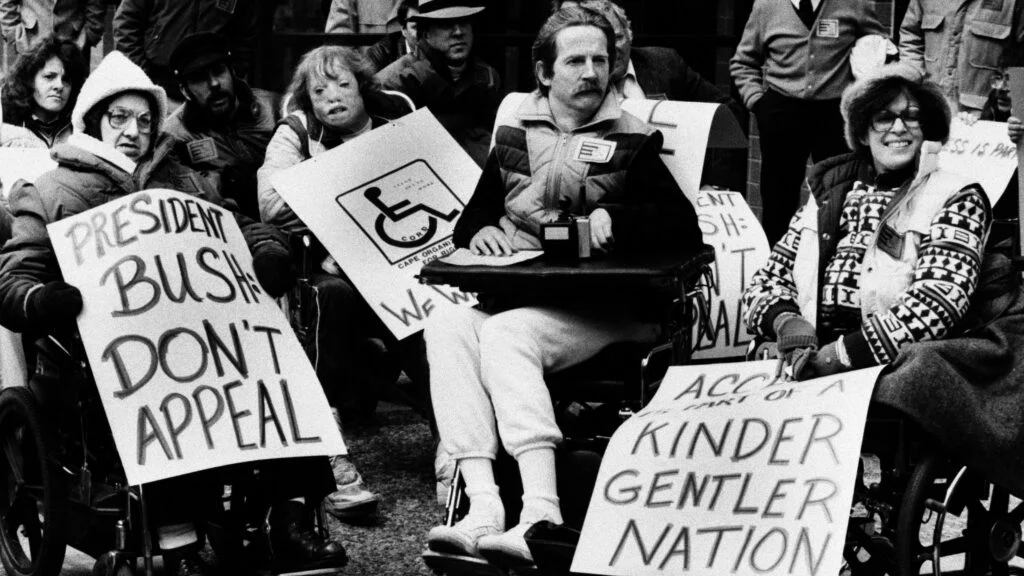
In a move that has sent shockwaves through the civil rights community, the Trump administration has released a Department of Justice (DOJ) legal memo that challenges the foundational principles of disability integration in the United States. The document, issued by the Office of Legal Counsel (OLC), explicitly disputes the existence of an "integration mandate," a legal pillar that for decades has guaranteed the right of people with disabilities to receive care in their own homes and communities rather than being sequestered in state-run institutions.
The memo, drafted in response to an inquiry from White House officials, acknowledges that its interpretation is "out of step" with current federal court precedents. Nevertheless, legal experts view the guidance as a calculated opening salvo in a broader campaign to dismantle the legal infrastructure—most notably the 1999 Supreme Court decision Olmstead v. L.C.—that prevents the forced institutionalization of Americans with disabilities.
The Core Facts: Challenging the "Integration Mandate"
The "integration mandate" is not merely a policy suggestion; it is the culmination of decades of advocacy and litigation. It holds that under the Americans with Disabilities Act (ADA) and Section 504 of the Rehabilitation Act of 1973, the unnecessary segregation of people with disabilities constitutes illegal discrimination.
The OLC memo, authored by Principal Deputy Assistant Attorney General Lanora Pettit, argues that this mandate is not an absolute requirement, particularly concerning individuals with "severe mental illness or disabilities." By reframing community-based care as a discretionary service rather than a civil right, the administration is effectively providing a roadmap for states to revert to institutional models of care.
While the memo lacks the force of law—meaning it cannot unilaterally overturn Supreme Court rulings or statutes—it serves as a powerful signal of the executive branch’s intent. It suggests that the DOJ will likely abandon its role as the primary federal enforcer of Olmstead claims, leaving individuals with disabilities without their most powerful advocate when states move to cut community support services.
A Chronology of the Struggle for Community Living
The fight for the right to "live in the world" has been a central tenet of American civil rights history for over half a century.
- 1966: Jacobus tenBroek, founder of the National Federation for the Blind, publishes "The Right to Live in the World," articulating the moral and legal argument that individuals with disabilities have an inherent right to participate in society.
- 1973: The Rehabilitation Act is signed into law, marking the first time the federal government explicitly enshrined the concept of integration into U.S. law.
- 1990: The Americans with Disabilities Act (ADA) is passed, providing comprehensive civil rights protections and laying the groundwork for future litigation regarding integration.
- 1999: The Supreme Court issues its landmark Olmstead v. L.C. decision. The Court rules that the ADA requires states to provide community-based services rather than forcing individuals into institutions, provided that such care is appropriate and that the state has the resources to provide it.
- 2025: Lanora Pettit joins the DOJ OLC after serving in the office of Texas Attorney General Ken Paxton.
- 2026: Texas files a lawsuit challenging the federal integration mandate. Simultaneously, the Trump administration slashes state Medicaid allocations, triggering a wave of budget cuts for home-based care across the country.
- 2027: The DOJ releases the OLC memo, signaling a shift in federal enforcement philosophy just one day after the 27th anniversary of the Olmstead ruling.
Supporting Data and Economic Realities
The timing of this legal challenge is particularly precarious given the current state of Medicaid funding. Last year, the administration implemented significant cuts to Medicaid, the primary funding source for home and community-based services (HCBS).
Data from the Government Accountability Office (GAO) consistently demonstrates that community care is not only more humane but significantly more cost-effective than institutionalization. Despite this, the economic burden of these cuts is already being felt at the state level:
- Ohio and Maryland: Both states have moved to propose wage cuts for caregivers, threatening the viability of the home-care workforce.
- Idaho: The state has considered the total discontinuation of various community care programs, which would force thousands of residents back into state-run facilities.
Critics of the DOJ memo point out a glaring contradiction: while the administration cites a desire to combat homelessness as a justification for increased state control over institutionalization, the data they reference does not support the claim that de-institutionalization is the primary driver of the current homelessness crisis. Instead, experts argue that the lack of affordable housing and the stripping away of community support systems are the true culprits.
Official Responses and Expert Analysis
The reaction from the legal and advocacy communities has been one of alarm. Jennifer Mathis, deputy director for the Bazelon Center for Mental Health Law, characterized the memo as "potentially devastating for the rights of people with disabilities."
Jennifer Lav, director of the Disability Practice Area at the National Health Law Program, echoed these sentiments, noting that while the administration cannot change the law by "fiat," the memo represents a "frontal attack on basic tenets of the disability rights movement."
The memo’s author, Lanora Pettit, has faced scrutiny due to her background. Having served in the Texas Attorney General’s office—a state that has been actively litigating against the federal integration mandate—her role in drafting this guidance suggests a coordinated effort between the executive branch and state-level legal challenges.
A Justice Department spokesperson declined to comment on the memo. However, former federal officials warn that the document is a "dog whistle" to lower courts. "The danger is that judges, particularly in conservative jurisdictions, will look at this memo and feel empowered to narrow their interpretation of the ADA," says one constitutional scholar.
Implications: The Loss of Federal Guardrails
The most immediate danger is the loss of the DOJ’s enforcement power. For years, the federal government has intervened in state-level cases where people with disabilities were being denied community care. If the DOJ steps back, individual plaintiffs will be forced to shoulder the entire legal burden of defending their right to live at home.
For families like that of Alison Barkoff, a prominent disability rights lawyer, the stakes are deeply personal. Her brother, Evan, who lives with Down syndrome, relies on a Medicaid HCBS waiver to maintain his independence—a waiver he waited over a decade to receive.
"Without Olmstead, Evan would not have a job, a girlfriend, or his own apartment," Barkoff said. "He would be in a facility. That is what is at stake here—the difference between a full, integrated life and being locked away."
The Road Ahead
As the Supreme Court remains a potential venue for challenges to the integration mandate, the disability community is bracing for a protracted legal battle. With the federal government shifting its stance, the protections that have defined the last 27 years are increasingly fragile.
If the administration succeeds in dismantling the "mandate," the result could be a return to a pre-1970s landscape where institutionalization was the default, and individual autonomy was a privilege rather than a guaranteed right. Advocates are now calling for Congress to codify the Olmstead decision into permanent, bulletproof legislation, fearing that without such an action, the right to live in the community may soon become a relic of the past.
As states face the deepest Medicaid cuts in history, the lack of federal "guardrails" means that the most vulnerable populations are now, for the first time in generations, standing entirely on their own.