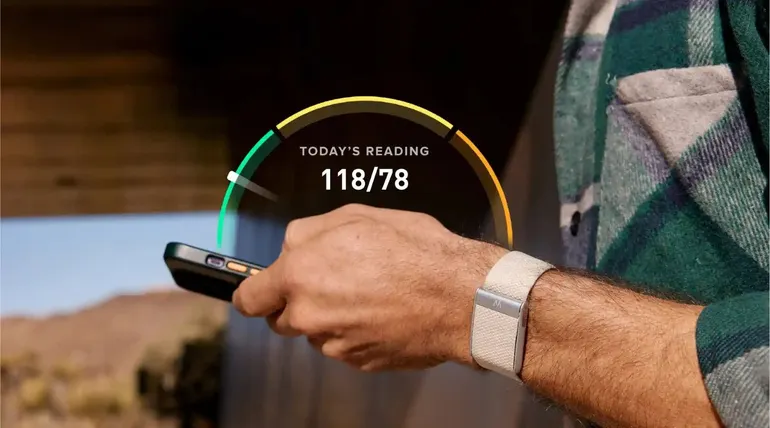
In the rapidly evolving landscape of wearable technology, the boundary between "general wellness" and "clinical diagnosis" has long been a gray area. However, a recent high-stakes confrontation between the U.S. Food and Drug Administration (FDA) and fitness tracking giant Whoop has served as a landmark case, effectively redrawing the regulatory map for consumer health devices.
What began as a contentious warning letter in July has culminated in a significant policy shift, signaling a new era where the FDA acknowledges the nuances of consumer-facing health metrics. This article explores the progression of this dispute, the technical adjustments made by Whoop, and the broader implications for the $20 billion wearable tech industry.
The Core Conflict: Where Does Wellness End and Medicine Begin?
For years, companies like Whoop, Apple, and Fitbit have walked a tightrope. They aim to provide users with actionable health insights without triggering the rigorous, costly, and time-consuming pre-market approval processes required for Class II medical devices.
In July 2024, the FDA challenged this status quo by sending a warning letter to Whoop regarding its blood pressure insights feature. The agency’s stance was clear: blood pressure is a fundamental clinical marker used to diagnose hypertension and cardiovascular disease. By providing daily systolic and diastolic estimates, the FDA argued that Whoop was encroaching on territory that required clinical validation and regulatory oversight.
The letter ignited a firestorm in the medtech community. Critics of the company argued that Whoop was playing "fast and loose" with clinical data, potentially misleading users who might rely on non-clinical estimates to manage a serious health condition. Conversely, proponents—including Whoop CEO Will Ahmed—argued that the FDA’s rigid classification hindered innovation and limited the consumer’s ability to monitor their own health trends.
A Chronology of the Dispute
The Initial Launch
Whoop introduced its blood pressure insights feature to widespread fanfare in 2023. The feature utilized proprietary algorithms to estimate blood pressure based on heart rate variability (HRV) and blood flow patterns recorded during deep sleep. Unlike a traditional cuff-based sphygmomanometer, the feature was framed as a wellness tool meant to track long-term trends rather than provide acute, diagnostic readings.
The July Warning
The FDA’s warning letter shattered the company’s confidence in its "wellness-only" positioning. The agency categorized the feature as an unauthorized medical device, citing the inherent clinical risks associated with incorrect blood pressure monitoring. The directive sent a shockwave through the industry, with many analysts predicting that Whoop would be forced to pull the feature entirely to avoid further litigation or market exclusion.
The Winter Pivot
Throughout the latter half of 2024, Whoop engaged in a series of technical and regulatory negotiations. During this period, the company implemented subtle but critical changes to the feature’s user interface. By adjusting "dial boundaries"—the visual representations of blood pressure ranges—Whoop sought to explicitly distance its data from clinical classification, ensuring users understood that the information was for informational purposes only.
The January Resolution
The conflict reached a surprising resolution in January 2025. Following a period of review, the FDA issued new guidance that effectively validated the arguments made by Whoop and other industry leaders. The agency concluded that blood pressure measurements, when used exclusively for general wellness and not for diagnostic or treatment purposes, do not necessarily require the same regulatory classification as clinical medical devices.
Supporting Data and Technical Nuance
The technical heart of the Whoop controversy lies in how the data is generated. Whoop’s technology does not use traditional inflatable cuffs; instead, it uses photoplethysmography (PPG) sensors to measure volumetric changes in blood flow.
While the accuracy of PPG for blood pressure estimation has been a subject of intense scientific debate, Whoop maintained that its algorithms were refined enough to provide meaningful "insights." According to data provided by the company during its defense, the trends identified by their sensors showed a strong correlation with traditional cuff-based measurements over extended periods.
However, the "danger" identified by the FDA was not the accuracy of the device, but the interpretation of the data. If a user sees a "high" reading on their Whoop strap, they might delay visiting a doctor or, conversely, seek unnecessary medical intervention. By adjusting the visual presentation of these metrics, Whoop addressed the "human factor" of the equation, creating a buffer between raw data and clinical interpretation.
Official Responses and Stakeholder Perspectives
The CEO’s Stance
Will Ahmed, CEO of Whoop, remained a vocal defender of the technology throughout the crisis. In a candid post on LinkedIn, Ahmed reflected on the intensity of the pressure the company faced.
"When the FDA first issued the warning letter, many experts advised Whoop that removing the feature was the only path forward," Ahmed wrote. "But we believed in the strength of science and our responsibility to the members who rely on it."
Ahmed’s persistence was not just about saving a feature; it was about defining the company’s identity as a leader in "human performance" rather than a traditional hardware manufacturer. He emphasized that the collaboration with the FDA would continue, noting that Whoop intends to pursue formal regulatory pathways for future technologies that move beyond "wellness" and into "medical" territory.
The Regulatory Perspective
The FDA’s pivot in January is a testament to the agency’s ability to adapt to rapid technological change. Historically, the FDA has been criticized for being slow to catch up with the pace of Silicon Valley. By creating a clear distinction between diagnostic tools and wellness monitoring, the agency has provided a framework that encourages innovation while maintaining guardrails against patient harm.
The MedTech Expert Consensus
Industry analysts suggest that the Whoop case will be taught in boardrooms for years to come. "This was a masterclass in regulatory navigation," says Sarah Jenkins, a senior analyst at a leading medtech consultancy. "Whoop didn’t just fight the FDA; they engaged with them. They accepted that their previous presentation was too close to a medical diagnosis and successfully transitioned to a model that the FDA could accept."
Broader Implications: The Future of Wearables
The resolution of the Whoop/FDA dispute has profound implications for the future of wearable technology.
1. The Rise of "Hybrid" Devices
We are likely to see a shift toward devices that clearly partition their features. Manufacturers will adopt a "dual-track" strategy: some features will be marketed as strictly "wellness" (avoiding FDA scrutiny), while others will undergo the full, rigorous FDA clearance process to be marketed as legitimate medical tools.
2. User Interface as Regulatory Compliance
The "dial boundaries" adjustment mentioned by Whoop highlights a new reality: software design is now a regulatory tool. How a number is presented—the color coding, the warning text, the contextual disclaimers—is now as important as the accuracy of the sensor itself.
3. Increased Transparency
The saga has set a new standard for transparency. Companies will now have to be more proactive about explaining the limitations of their algorithms to the public. As users become more "data-literate," they will demand to know the difference between a "wellness insight" and a "clinical measurement."
4. Regulatory Maturity
The FDA’s willingness to issue updated guidance suggests a growing maturity in how it regulates digital health. By acknowledging that wellness data has value to the healthcare ecosystem, the agency is fostering an environment where wearables can act as a "first line of defense," potentially catching cardiovascular issues long before a patient visits a doctor.
Conclusion: A Milestone for Digital Health
The Whoop warning letter saga was never really about a single feature. It was a litmus test for the entire digital health industry. It asked a fundamental question: Can a device be both a fitness companion and a health-monitoring tool without becoming a medical bureaucracy?
The answer, as of 2025, is a cautious "yes."
Whoop’s success in maintaining its blood pressure insights feature, albeit in a modified form, represents a victory for the company, but it also represents a win for the user. By successfully navigating the regulatory minefield, Whoop has paved the way for more sophisticated health monitoring in consumer devices. As the industry looks forward, the lessons learned from this clash will undoubtedly shape the next generation of health-tech, ensuring that as our devices get smarter, the regulations governing them grow alongside them.
For the consumer, this means more data, more insights, and perhaps most importantly, more clarity on what that data actually means for their long-term health. The boundary between wellness and medicine is no longer a wall—it is a bridge, and both the FDA and the innovators at companies like Whoop are now working to ensure that bridge is safe to cross.