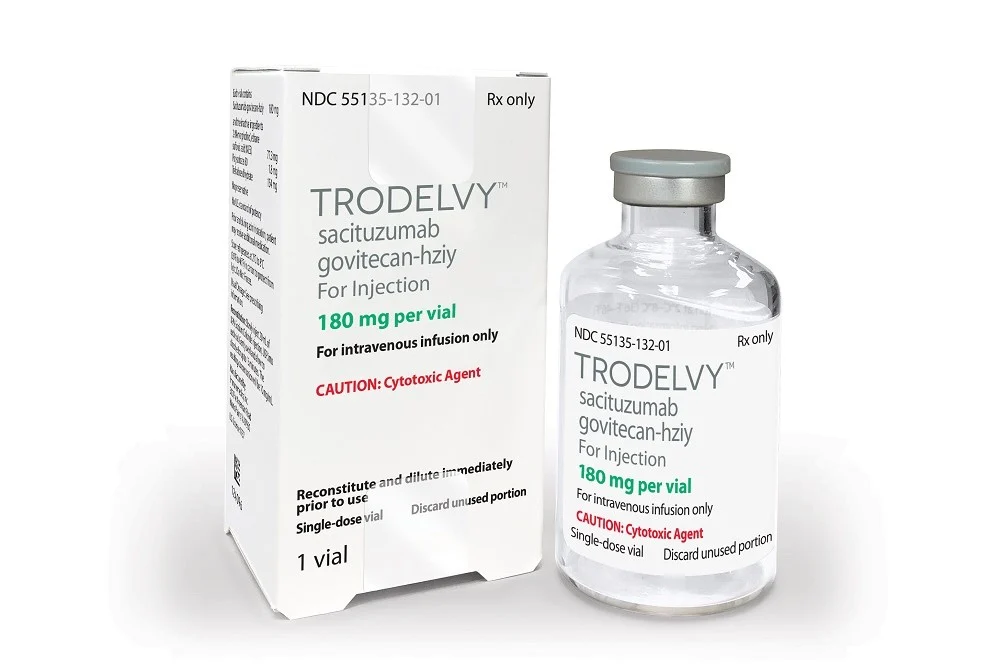
In a landmark decision for oncology, the U.S. Food and Drug Administration (FDA) has officially expanded the label for Gilead Sciences’ Trodelvy (sacituzumab govitecan-hziy), marking a pivotal shift in the standard of care for triple-negative breast cancer (TNBC). This regulatory milestone transitions the drug from a third-line salvage therapy—where it has served patients since 2020—to a first-line treatment option.
This expansion not only bolsters Gilead’s therapeutic portfolio but also intensifies a high-stakes competitive landscape involving antibody-drug conjugates (ADCs) targeting the TROP2 protein. As clinicians gain more flexibility in how they treat this aggressive malignancy, the approval signifies a move toward more personalized, combination-based oncology care.
The Clinical Landscape: Addressing an Aggressive Disease
Triple-negative breast cancer remains one of the most challenging diagnoses in oncology. It is defined by the absence of estrogen receptors, progesterone receptors, and human epidermal growth factor receptor 2 (HER2). Because these tumors do not respond to hormonal therapies or HER2-targeted agents, patients have historically relied on chemotherapy or, more recently, PD-1 checkpoint inhibitors like Merck’s Keytruda (pembrolizumab).
The aggressive nature of TNBC means that many patients experience rapid disease progression. Consequently, moving effective therapies from late-stage use to the first-line setting is a primary objective for the pharmaceutical industry. By reaching patients earlier in their treatment journey, therapies like Trodelvy have the potential to significantly improve progression-free survival (PFS) and overall quality of life.
Chronology: The Evolution of Trodelvy and the TROP2 Market
The path to this week’s regulatory win was built on years of clinical investigation and market development.
- 2020: The Initial Breakthrough. Trodelvy received its first FDA approval as a third-line treatment for metastatic TNBC, becoming the first-ever TROP2-targeting antibody-drug conjugate to hit the market.
- 2021–2024: Label Expansion. Gilead successfully demonstrated efficacy in other indications, including metastatic urothelial cancer and metastatic HR-positive, HER2-negative breast cancer, solidifying the drug’s role as a blockbuster asset with global revenues reaching $1.4 billion in 2025.
- May 2026: The Arrival of Datroway. AstraZeneca and Daiichi Sankyo received accelerated approval for Datroway, a rival TROP2-directed ADC. This launch provided a critical alternative for patients ineligible for immunotherapy, putting immediate pressure on Gilead to move Trodelvy into the first-line space.
- 2027: The First-Line Pivot. The FDA’s latest decision allows Trodelvy to be used as a monotherapy or in combination with both the traditional intravenous Keytruda and the newer subcutaneous version, Keytruda Qlex.
Supporting Data: Why This Decision Matters
The FDA’s approval of Trodelvy is underpinned by robust clinical data evaluating its efficacy across varying PD-L1 statuses. While immunotherapy has transformed TNBC treatment, a significant segment of the patient population is ineligible for checkpoint inhibitors due to tumor biology or pre-existing conditions.
Trodelvy functions as a "Trojan Horse" of cancer therapy. As an antibody-drug conjugate, the monoclonal antibody portion binds specifically to the TROP2 protein—which is overexpressed in many TNBC cells—while the payload (a potent chemotherapy agent) is internalized directly into the tumor cell. This targeted approach allows for higher concentrations of toxic agents at the tumor site while potentially sparing healthy tissues.
The clinical testing provided by Gilead showed that pairing Trodelvy with Keytruda offered a potent one-two punch. The ability to administer this regimen alongside the subcutaneous version of Keytruda (Qlex) is a significant logistical win, as it reduces the infusion time for patients, thereby lowering the burden of care in busy infusion centers.
Competitive Dynamics: Trodelvy vs. Datroway
The oncology market is currently witnessing a "TROP2 arms race." While Gilead’s Trodelvy enjoyed a significant head start, the rapid rise of the AstraZeneca/Daiichi Sankyo collaboration with Datroway has changed the calculus.
Datroway has been aggressive in its clinical development, securing three FDA approvals in just 18 months. Beyond TNBC, its utility in EGFR-mutated non-small cell lung cancer (NSCLC) and HR-positive, HER2-negative breast cancer has made it a versatile competitor.
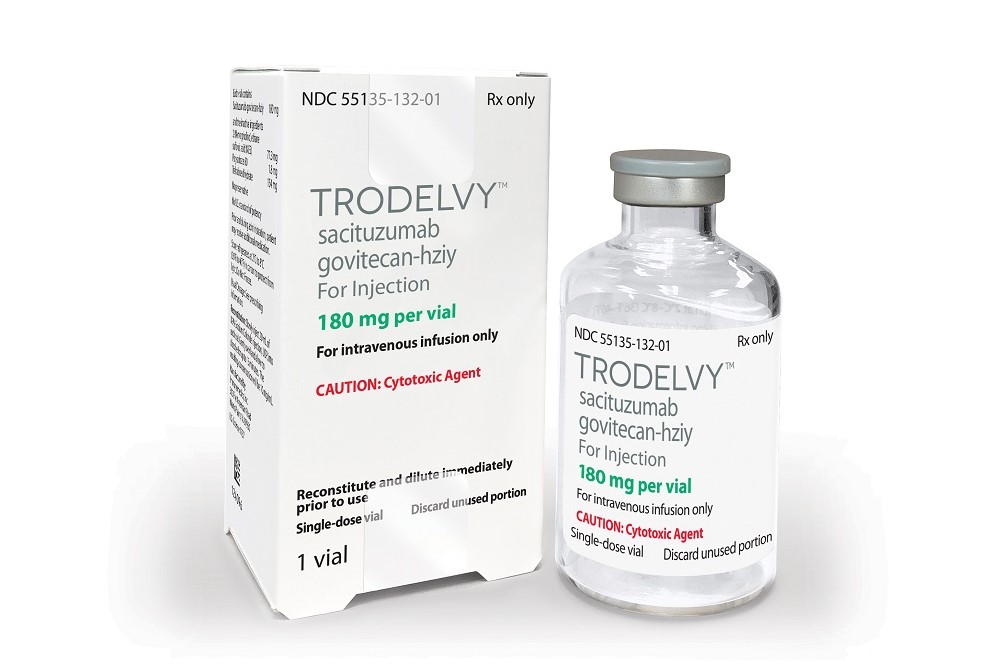
Industry analysts suggest that the competition will now shift to real-world clinical performance and combination potential. While Trodelvy is now approved in combination with Keytruda for first-line TNBC, Datroway is currently evaluating its own combination studies with the Merck blockbuster. The upcoming results of these Phase 3 trials will likely determine which drug becomes the preferred backbone for first-line combination therapy in the coming years.
Official Responses and Clinical Impact
The medical community has reacted with cautious optimism. Dr. Sara Tolaney, chief of the division of breast oncology at the Dana-Farber Cancer Institute and a principal investigator of the Trodelvy studies, emphasized the transformative nature of the news.
"This approval is heartening news for patients and the clinical community," Dr. Tolaney stated. "I believe it offers a practice-changing first-line treatment option for all patients across PD-L1 status."
For clinicians, the primary benefit is the expansion of the "toolkit." Being able to treat patients with a combination of an ADC and an immunotherapy, regardless of their PD-L1 protein expression, removes a significant barrier that previously restricted access to advanced therapies.
Implications for the Future of Cancer Care
1. The Shift to Earlier Intervention
The success of this regulatory push underscores a broader trend in oncology: "front-loading" the most potent therapies. By moving Trodelvy to the first-line setting, the medical community is moving away from a sequential "wait-and-see" approach and toward an aggressive, multi-modal strategy from the moment of diagnosis.
2. The Rise of Subcutaneous Administration
The integration of Keytruda Qlex (the subcutaneous version) into the treatment regimen is not merely a convenience feature; it is an economic and operational one. Subcutaneous administration reduces chair time, allowing clinics to see more patients and reducing the physical and psychological toll on individuals undergoing treatment.
3. Financial and Market Outlook
With Trodelvy generating $1.4 billion in 2025—a 6% year-over-year increase—the first-line approval is expected to serve as a significant growth catalyst. Gilead’s ability to defend its market share against the Datroway juggernaut will rely on the drug’s long-term safety profile and the strength of the clinical data supporting its use in combination with immunotherapy.
4. Improving Patient Equity
Perhaps the most important implication is the expansion of eligibility. By providing an alternative to patients who cannot tolerate or do not respond to immunotherapy alone, this approval narrows the gap in care equity. It ensures that the most advanced targeted therapies are available to a broader demographic of patients, regardless of their tumor’s specific checkpoint protein profile.
Conclusion
The FDA’s approval of Trodelvy for first-line triple-negative breast cancer represents a significant victory for both Gilead Sciences and the patient community. As the competition between TROP2-directed ADCs intensifies, the ultimate beneficiaries are patients, who now have more options, more flexibility, and better-integrated treatment regimens at the earliest stages of their battle against cancer.
While the scientific community awaits further data from the ongoing Datroway combination studies, the current landscape is clear: the era of highly specific, combination-based ADC therapy has arrived, and it is fundamentally altering the prognosis for one of the most aggressive forms of breast cancer.