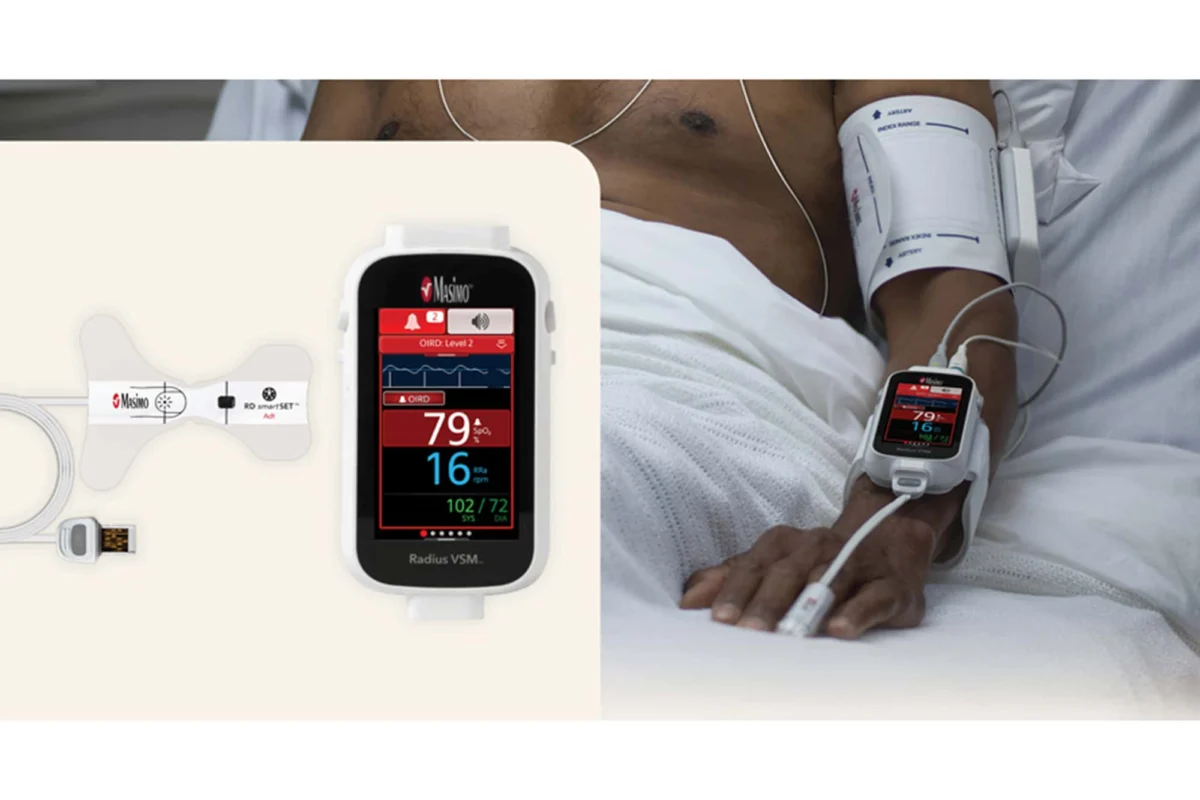
In a significant development for clinical monitoring technology, medical technology leader Masimo has announced that it has received U.S. Food and Drug Administration (FDA) 510(k) clearance for a sophisticated new capability designed to detect Opioid-Induced Respiratory Depression (OIRD) via its Radius VSM wearable patient monitor. This advancement marks a critical shift in how hospital systems monitor patients undergoing opioid-based pain management, moving from reactive, episodic spot-checks to proactive, continuous physiological pattern analysis.
Main Facts: The Intersection of Wearable Tech and Patient Safety
The core of this breakthrough lies in the integration of advanced pattern recognition algorithms into the Radius VSM—a modular, tetherless, and wearable vital signs monitor. Unlike traditional pulse oximetry, which often triggers alarms based on threshold-crossing of individual parameters (such as a drop in SpO2 levels), the new Masimo feature utilizes the "smartSET" pulse oximetry sensor platform. This system evaluates complex physiological relationships and trends over time.
By shifting the focus from isolated data points to comprehensive pattern recognition, the technology is designed to alert clinicians to the subtle, early-stage physiological indicators that precede acute respiratory failure. For hospitals, this means the potential to intervene before a patient enters a critical state of hypoxia or apnea, thereby reducing the burden of "alarm fatigue" while simultaneously increasing the sensitivity of patient surveillance.
Chronology: The Evolution of Monitoring and Regulatory Milestones
The path to this FDA clearance is part of a broader trajectory in respiratory monitoring. Historically, hospital-based monitoring for non-ICU patients receiving opioids has been limited by the physical constraints of bedside monitors.
- The Pre-Digital Era: Historically, nurses conducted manual assessments of respiratory rate and sedation levels at scheduled intervals. These intermittent checks were frequently insufficient to catch the rapid, often silent, onset of OIRD.
- The Introduction of Continuous Monitoring: Over the last decade, the clinical community—led by groups like the Anesthesia Patient Safety Foundation—began advocating for continuous electronic monitoring for all patients receiving postoperative opioids.
- The Emergence of Radius VSM: Masimo introduced the Radius VSM to address the need for mobility in patient care. By removing the tether to a wall-mounted monitor, patients could ambulate earlier in their recovery, which is a known factor in reducing postoperative complications.
- The Path to OIRD Clearance: Following the successful deployment of the Radius VSM, Masimo engineers focused on the integration of artificial intelligence and machine learning—specifically, pattern recognition algorithms—to interpret the wealth of data captured by the sensors. The recent FDA 510(k) clearance represents the successful culmination of clinical validation and regulatory review, certifying the efficacy of this algorithm in a clinical environment.
Supporting Data: Understanding the Clinical Burden of OIRD
Opioid-Induced Respiratory Depression remains a preeminent safety concern in the modern healthcare environment. According to various clinical studies, the incidence of OIRD in postoperative patients is surprisingly common, yet frequently under-reported due to the difficulty of clinical diagnosis during the initial stages.
The Mechanism of Risk
Opioids act on the central nervous system, specifically depressing the respiratory drive in the brainstem. As a patient drifts into a state of deep sedation, their respiratory rate often slows, and the depth of their breaths becomes irregular. If left undetected, this can lead to hypercapnia (excess carbon dioxide in the blood) and severe hypoxia, eventually resulting in respiratory arrest.
The Role of Pattern Recognition
Traditional monitoring often relies on SpO2 (oxygen saturation) levels. However, SpO2 can be a "lagging indicator." By the time a patient’s oxygen levels drop significantly, they may already be in respiratory distress. The Masimo Radius VSM’s pattern recognition capability is designed to bridge this gap. By analyzing the "smartSET" data, the system looks for:
- Irregular Breathing Patterns: Identifying the transition from normal rhythmic breathing to the dysrhythmia often associated with opioid sedation.
- Multivariate Correlation: Examining the relationship between pulse rate, oxygen saturation, and pleth variability index (PVI) to differentiate between benign movement and pathological depression.
Official Responses and Clinical Perspective
The leadership at Masimo has positioned this development as a foundational change in patient care. Dr. Basil Matta, chief medical officer at Masimo, highlighted the significance of the update in a recent press statement.
"Opioid-Induced Respiratory Depression remains a critical patient-safety concern," Dr. Matta noted. "With OIRD detection, Masimo is bringing advanced pattern recognition to continuous, wearable monitoring to help clinicians identify earlier changes in a patient’s respiratory status that may not be apparent through traditional approaches."
The clinical community has generally responded with optimism. Many hospital systems have struggled with the balance of maintaining patient safety while allowing for the mobility required for rapid recovery. By integrating OIRD detection into a wearable, the technology offers a solution that respects the patient’s comfort while providing the clinical surveillance that physicians require.
Implications for Modern Healthcare Facilities
The deployment of OIRD-capable monitors has several profound implications for hospitals, ranging from patient outcomes to operational workflows.
1. Improved Patient Outcomes
The primary implication is the potential for a significant reduction in "rescue events." By alerting nursing staff to the earliest signs of respiratory decline, interventions—such as stimulating the patient or adjusting the medication dosage—can occur before the patient requires a Code Blue or transfer to the Intensive Care Unit (ICU).
2. Operational Efficiency and Workflow
Hospitals are currently plagued by alarm fatigue, where nurses become desensitized to the constant noise of monitors. Because the Masimo system uses intelligent pattern recognition, it is designed to filter out transient data artifacts that would typically trigger a false alarm on a standard device. This allows nursing staff to focus their attention on genuine clinical changes, effectively improving the signal-to-noise ratio in high-acuity wards.
3. Expansion of Care Areas
Because the Radius VSM is modular and tetherless, the ability to monitor for OIRD is no longer confined to the ICU or the Step-Down Unit. Patients can be safely monitored on general medical-surgical floors, where opioid therapy is common but monitoring resources are traditionally lower. This expands the scope of patient safety, ensuring that the same high standard of surveillance follows the patient through every stage of their hospital stay.
4. Integration with Centralized Monitoring
The ability to send escalating alarms to centralized monitoring stations is a game-changer for hospital logistics. In a busy surgical wing, one central monitor technician can oversee the status of dozens of patients, receiving tiered alerts that indicate the severity of the respiratory compromise. This allows for a more efficient allocation of human resources, as clinicians can prioritize their response based on the data-driven urgency of the alert.
Future Outlook: The Next Frontier in Wearable Surveillance
As Masimo rolls out this new capability, the medical industry will be watching closely to see how the technology performs in diverse clinical settings. The success of this FDA-cleared feature underscores a broader trend: the transition of the hospital monitor from a static, bedside "anchor" to a dynamic, intelligent, and wearable companion.
In the future, we may see the integration of further physiological parameters—such as capnography (the measurement of exhaled carbon dioxide)—into these wearable platforms. For now, however, the combination of the Radius VSM and advanced OIRD detection represents a major leap forward. By leveraging the power of pattern recognition, Masimo is not only addressing a critical safety gap but is also defining the future of patient monitoring in an era where data-driven, continuous surveillance is the gold standard for quality care.
For hospitals aiming to modernize their clinical safety protocols, the adoption of this technology serves as a testament to the fact that patient monitoring is no longer just about tracking vital signs—it is about synthesizing complex data into actionable intelligence that saves lives.