











Published: June 25, 2026
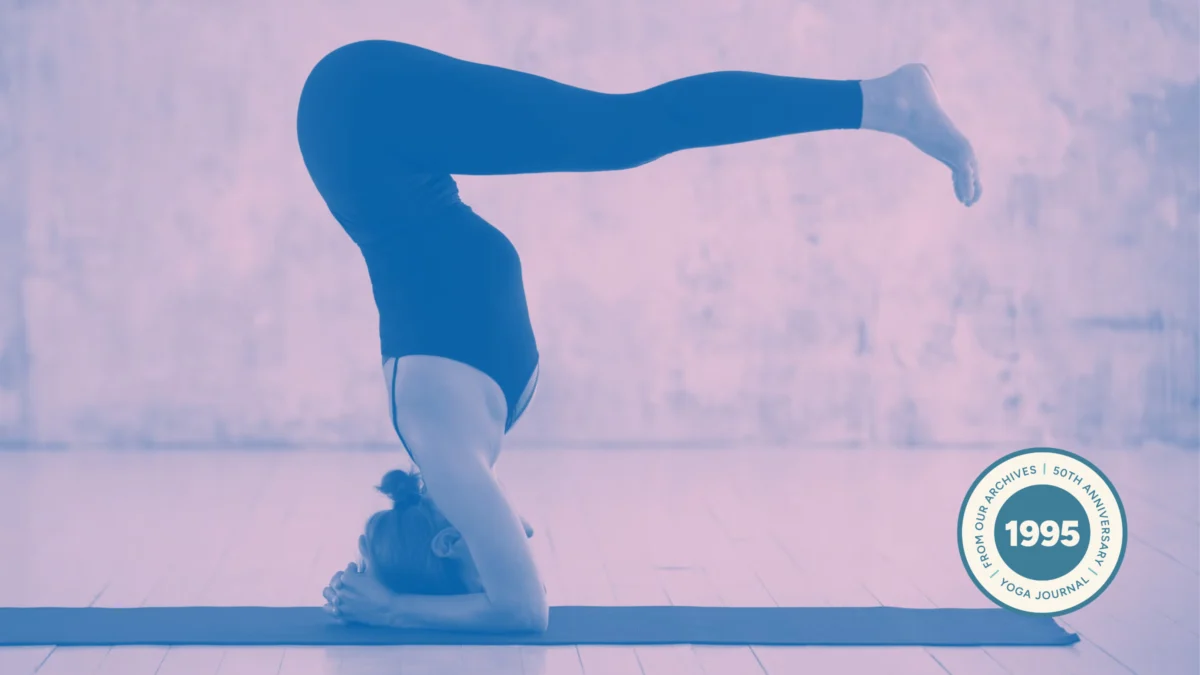
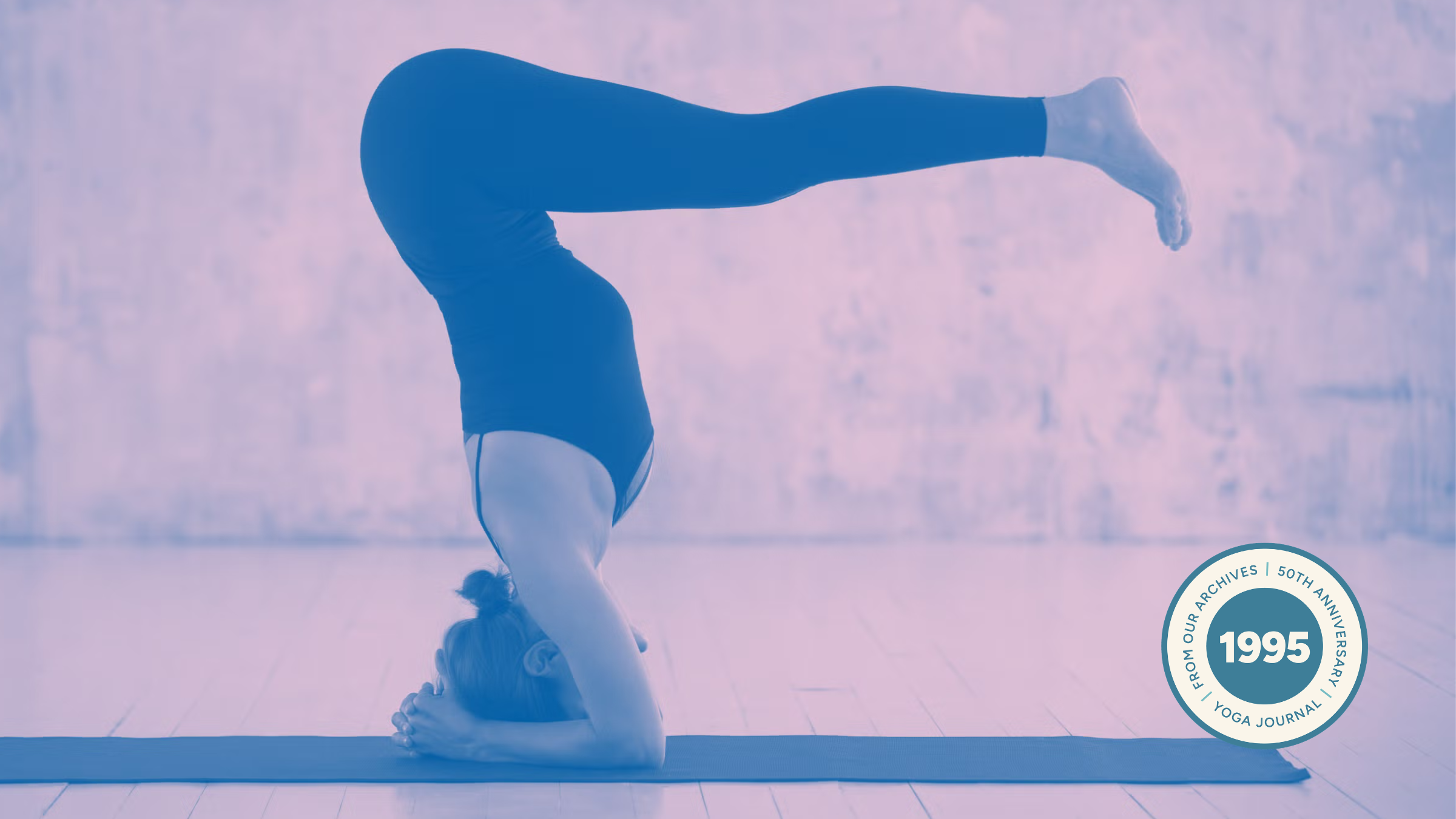
In the vast lexicon of yogic asanas, few postures demand as much structural integrity and energetic awareness as Urdhva Dandasana, or Raised Staff Pose. First featured in the May-June 1995 issue of Yoga Journal, this elegant inversion serves as a sophisticated variation of the foundational Headstand (Sirsasana). As we revisit this archival insight, the posture remains a vital case study in spinal health, core stabilization, and the subtle interplay between the body’s physical architecture and its energetic circuits.
The Main Facts: Defining the Staff
At its essence, Urdhva Dandasana is an exercise in geometric precision. The name itself is derived from the Sanskrit Urdhva, meaning "raised" or "elevated," and Danda, meaning "staff"—a reference to the spine, the primary pillar of human uprightness.
When performed, the practitioner forms an inverted “L” shape. The head and torso act as the vertical stem, braced by the forearms, while the legs extend parallel to the floor, forming a horizontal beam. This configuration is not merely an aesthetic feat; it is a rigorous test of the body’s ability to maintain a neutral, elongated spine while inverted, requiring significant shoulder girdle strength and a refined understanding of the pelvic floor’s role in core stability.
A Chronology of Practice: From Foundation to Elevation
The mastery of Urdhva Dandasana is not an overnight endeavor. It is the result of a long, deliberate "dance" of variations that build upon one another over time.
1975–1995: The Archival Context
The practice of Sirsasana variations has been a cornerstone of modern yoga since its widespread adoption in the West. During the mid-90s, instructors emphasized a transition from basic inverted poses to more dynamic, muscularly engaged variations. The archival records reflect a shift toward “informed practice,” where the practitioner is encouraged to understand the anatomical "why" behind the movement.
1995–2026: Evolution of Technique
While the mechanical principles of the pose have remained constant, modern biomechanics have refined our approach to the neck and shoulders. Today, the emphasis on the “spinal circuit”—the flow of energy between the coccyx and the manubrium—is supported by a greater understanding of ideokinetic movement, a field popularized by pioneers like Mabel Todd and John Rolland. The journey to the pose now includes more sophisticated preparatory work, ensuring that the spine is never forced into a position of vulnerability.
Supporting Data: Anatomical and Energetic Foundations
To safely execute Urdhva Dandasana, one must prepare the specific body regions that act as the pillars of the pose: the coccyx (tailbone) and the sternum.
The Coccyx and the Root
The coccyx, often dismissed as a vestigial remnant, is considered in yoga to be the gateway to the root chakra. Rather than the outdated, harmful instruction to "tuck the tail," modern practice advocates for the "kangaroo tail" approach: lengthening the coccyx toward the floor (or ceiling, depending on the inversion) to maintain the natural, healthy curve of the lumbar spine. This movement, when paired with the firming of the inner buttocks, creates the foundational stability required for a balanced inversion.
The Sternum and the Manubrium
The upper portion of the sternum, known as the manubrium, acts as a primary point of focus. Beginners frequently misinterpret "opening the chest" as pushing the lower ribs forward, which causes spinal compression. Instead, lifting the manubrium—the "handle" of the sternal sword—allows the ribs to suspend naturally from the collarbones, opening the thoracic cavity without straining the lower back.
The Inner Thighs: The Engine of Stability
The inner thighs are the "action organs" (karma-indriya) of this pose. Using a yoga block between the thighs during preliminary Tadasana (Mountain Pose) work helps the practitioner learn to channel energy upward toward the sternum. By firming the inner thighs, the yogi creates a "spinal circuit" that stabilizes the core, allowing the legs to remain light and controlled while in the inverted "L" position.
Professional Perspectives on Safety
The consensus among seasoned yoga educators remains firm: inversion practice should ideally be learned under the direct supervision of a qualified teacher. Because Sirsasana variations involve significant weight-bearing on the cervical spine if done incorrectly, the "professional response" to this posture is one of extreme caution.
"The head should touch the floor only with the lightest of intentions," suggests the instructional archives. "Most of the weight must be borne by the forearms and shoulders." If a practitioner feels the need to ‘muscle’ through the posture, it is a sign that the preparatory strength in the shoulders is not yet sufficient. Using a wall for support is not a sign of weakness, but a sophisticated tool for developing the necessary proprioception to move into the full, unsupported pose safely.
Implications: The Spinal Circuit as a Barometer
The practice of Urdhva Dandasana carries implications that extend far beyond the yoga mat. The spinal circuit is described by practitioners as a "barometer" for one’s internal state. When the spine is aligned and the circuit is "switched on," the practitioner experiences a sense of clarity and stability that reflects their ability to navigate the challenges of daily life.
The Psychological Component
The Vishvasara Tantra famously notes: "What is here, is there. What is not here is nowhere." This philosophical anchor is central to the practice of Raised Staff Pose. By focusing on the integration of the coccyx and the sternum, the yogi is effectively practicing mindfulness in a high-stress environment. The posture demands that the practitioner stay present; any lapse in focus manifests immediately as a loss of balance or a sinking of the pelvis, providing instant, non-verbal feedback.
Long-Term Health Benefits
The health benefits of this inversion, when practiced with proper form, are multifaceted:
- Neurological Rejuvenation: By inverting the body, the practitioner facilitates a change in blood flow, which is traditionally viewed as rejuvenating to the brain and the glands located within the skull.
- Musculoskeletal Integrity: The pose strengthens the shoulders, the erector spinae, and the deep core musculature, providing a counter-balance to the slumping postures of modern, desk-bound living.
- Energetic Cultivation: Through the systematic engagement of the legs and the lengthening of the spine, the body purifies its subtle circuits, leading to an increased sense of overall vitality.
Conclusion: The Path Forward
Urdhva Dandasana remains a masterclass in balance—both physical and metaphorical. Whether one is a beginner utilizing a wall for support or an experienced practitioner exploring the full expression of the pose, the goal remains the same: to find the "strong and light" experience that allows for sustained, mindful practice.
As the years pass, the lessons preserved in these archives continue to hold relevance. By respecting the anatomical boundaries of the body and embracing the subtle, energetic currents that define the spinal circuit, the yogi does more than just master a pose; they cultivate a deeper relationship with their own physical and energetic nature, ensuring that the "staff" of the spine remains both strong enough to support them and flexible enough to allow for growth.