











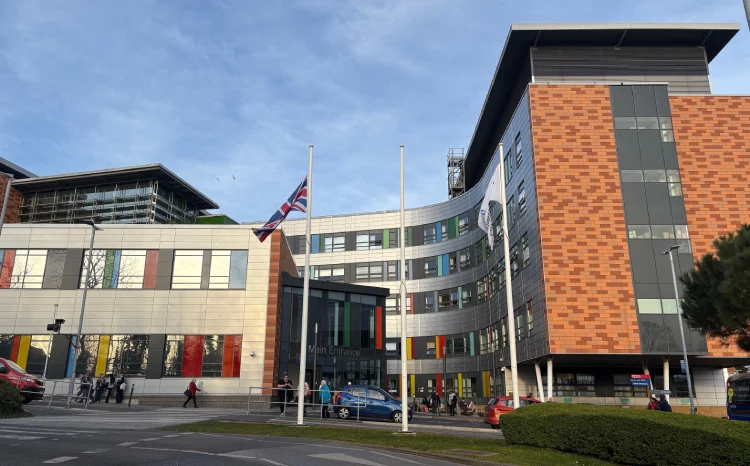
The National Health Service (NHS) in England is currently grappling with a crisis of unprecedented proportions as a historic, record-breaking heatwave pushes hospital infrastructure to its absolute breaking point. As temperatures climb to levels previously unseen in the UK, NHS trusts are reporting systemic failures across their estates, ranging from the collapse of vital cooling systems to the shutdown of life-saving diagnostic equipment and the overheating of essential IT networks.
The situation has become so dire that multiple trusts have been forced to declare "critical incidents"—a formal designation that signals that a hospital can no longer guarantee the delivery of safe, high-quality care without urgent external intervention or the temporary suspension of non-essential services.
The Met Office Red Warning: A Climate Milestone
The crisis is unfolding against the backdrop of the Met Office’s first-ever Red Warning for Extreme Heat. This alert, which covers three consecutive days, has turned the focus of national health policy toward the vulnerability of Victorian-era hospital buildings and modern facilities alike. The warning zone encompasses much of southern England, stretching from the coastal regions of Kent to the inland hubs of Oxford, Winchester, and Brighton.
Meteorologists have described the current weather pattern as a "heat dome" of exceptional intensity, one that has tested the structural resilience of the UK’s public services. For the NHS, the heat is not merely an environmental discomfort; it is a direct operational threat to the delicate hardware required to keep modern medicine functioning.
Chronology of a Systemic Failure
June 24, 2026: Portsmouth Hospitals University NHS Trust
The first major domino to fall was the Queen Alexandra Hospital, managed by the Portsmouth Hospitals University NHS Trust. On June 24, the Trust took the sobering step of declaring a critical incident. The root cause was the failure of several industrial-grade chiller units, which are the backbone of the hospital’s environmental control systems.
In an official statement, the Trust noted that the loss of cooling capacity had led to dangerously elevated temperatures in several clinical wings. The impact was immediate and widespread, affecting digital systems and core clinical services. Most concerning was the disruption to operating theatres, cardiac catheter laboratories, and diagnostic scanning facilities, where precise temperature control is a prerequisite for patient safety.
June 25, 2026: Norfolk and Norwich University Hospitals
By the following day, the crisis had migrated to the Norfolk and Norwich University Hospitals NHS Foundation Trust. Here, the heat proved catastrophic for the hospital’s medical imaging capabilities. The Trust reported that it had "no working MRI scanners" across its Norwich sites. The cooling systems designed to prevent the superconducting magnets in the MRI machines from overheating proved insufficient against the combination of extreme ambient heat and high humidity.
The administrative fallout was swift. At least 254 outpatient appointments were cancelled in a single day, forcing clinical staff to scramble for alternative arrangements. Chris Cobb, the Trust’s chief operating officer, admitted that the situation was dire, noting that operational teams were reaching out to neighboring healthcare providers to share the burden of diagnostic scanning. He added a chilling caveat: the problem might not be resolvable in the short term, as the cooling systems remained vulnerable as long as the heatwave persisted.
Supporting Data: Infrastructure Under Siege
The failure at Portsmouth and Norwich is emblematic of a wider, systemic fragility within the NHS estate. Across the country, reports have emerged of IT server rooms—the "brains" of modern hospitals—reaching critical temperatures.
One physician, speaking to The Guardian under the condition of anonymity, described a near-collapse of digital infrastructure on Wednesday. "We thought we were going to lose everything," the doctor explained. "We were instructed to shut down all non-essential computers, printers, and even lights to reduce the thermal load on the building. We were essentially reverting to pen and paper in the middle of a modern, digitalized hospital because the servers were screaming for mercy."
This reliance on aging infrastructure is a point of long-standing concern. Many NHS buildings were constructed long before climate change was factored into building codes, leaving them ill-equipped to handle the increasingly frequent "heat events" seen in the 2020s.
Official Responses and Tactical Adjustments
In the wake of the disruptions, the leadership at affected trusts has sought to balance transparency with the need to maintain public confidence. Mark Orchard, deputy chief executive and chief financial officer at Portsmouth Hospitals University NHS Trust, emphasized the complexity of the task at hand.
"The unprecedented pressures created by the current heatwave, combined with the failure of a number of our chiller units, have led to significant disruption across several of our services," Orchard stated. "Our teams are working around the clock to repair the affected equipment, restore systems safely, and ensure we continue to provide safe care for our patients. This is a monumental effort given the conditions."
Meanwhile, Digital Health News has reached out to the Department for Health and Social Care and NHS England for a comprehensive update on how they intend to support trusts that are nearing the limits of their technical capacity. As of the time of writing, the government is focusing on emergency mitigation—prioritizing the maintenance of power to life-support systems and ensuring that emergency surgery capacity remains online despite the cooling failures.
Implications: The Long-Term Challenge for the NHS
The current heatwave serves as a stark wake-up call regarding the climate resilience of the UK’s healthcare infrastructure. The implications are three-fold:
1. Digital Resilience and Cooling
Modern medicine is increasingly dependent on high-performance computing, from electronic patient records (EPRs) to complex diagnostic imaging. If the cooling infrastructure is not upgraded to meet the demands of a warming climate, the NHS will continue to face the risk of "digital blackouts," where medical staff are unable to access patient data, imaging results, or scheduling software.
2. Estates Modernization
The NHS is currently managing a multi-billion pound backlog of maintenance. The recent failures demonstrate that "estates maintenance" is not just about aesthetics or comfort—it is a matter of patient safety. Investment in climate-proof infrastructure, such as reinforced HVAC systems and heat-reflective building materials, must now be considered a priority in future capital funding cycles.
3. The Future of Patient Care
The cancellation of hundreds of appointments in Norfolk and Norwich highlights the human cost of infrastructure failure. Every cancelled scan or procedure represents a delay in diagnosis or treatment, which can have long-term consequences for patient outcomes. As heatwaves become more frequent, the NHS must develop a robust "Heatwave Operational Framework" that allows for the seamless transfer of diagnostic services between trusts before a critical incident is reached.
Conclusion: A Turning Point
The events of June 2026 have underscored a fundamental vulnerability in the NHS: its dependence on physical infrastructure that was built for a different climate. As the heatwave continues to test the resolve and ingenuity of clinical and estates teams alike, the focus must shift from reactive emergency management to a proactive strategy of climate-resilient healthcare design.
The courage and adaptability of NHS staff, who are currently managing patient care in sweltering conditions while juggling failing equipment, remain the primary factor keeping the system functional. However, as the temperature rises, so too does the urgency for a structural overhaul that ensures the NHS can withstand the climate realities of the 21st century.
For now, the message from the NHS is one of caution: patients should continue to attend appointments unless informed otherwise, but the system is under extreme duress. The "Red Warning" from the Met Office has served as a warning not just for the public, but for the very institutions that protect them. The question remains whether the lessons of this heatwave will translate into the necessary investment to secure the future of the nation’s health services.