










Updated: June 26, 2026
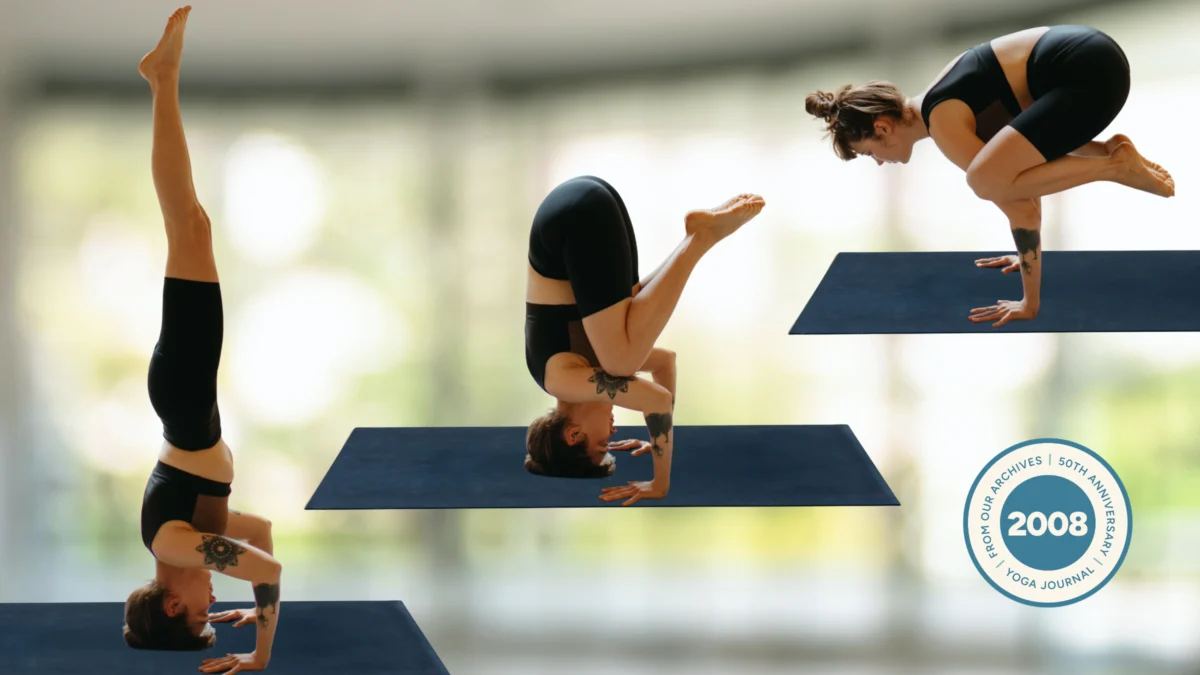
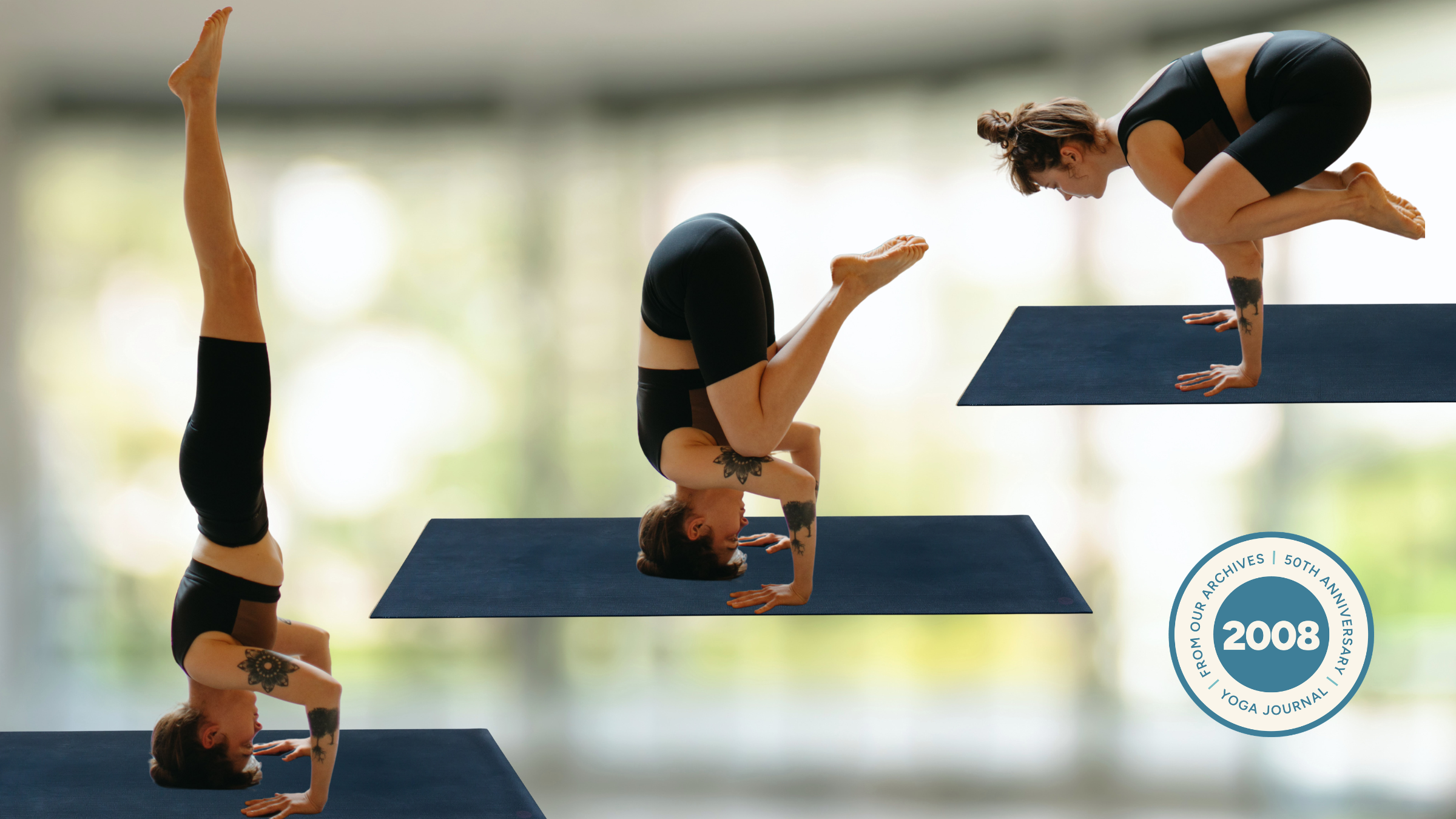
In the intricate architecture of yoga, few transitions demand as much technical precision, physical strength, and mental fortitude as the movement from Sirsasana II (Tripod Headstand) to Bakasana (Crane Pose). Often described by practitioners as the experience of "flying," this sequence serves as a litmus test for a yogi’s ability to remain present under pressure.
Originally published in the November 2008 issue of Yoga Journal, this masterclass remains a cornerstone of the Yoga Journal archives, offering a timeless perspective on how our behavior on the mat mirrors our patterns in life. The practice is not merely an exercise in muscular engagement; it is a profound study in the kleshas—the obstacles or "illusions"—that prevent us from experiencing the truth of the present moment.
The Philosophy of the Transition: Moving Beyond Habit
The journey into Crane Pose from Tripod Headstand often elicits two polarized reactions among students: the paralyzing fear of failure or the reckless impatience to "get there." In the practice of yoga, both responses are recognized as conditioned habits.
Students who feel defeated before they begin often impose self-imposed ceilings on their own growth. Conversely, those who rush the preparation frequently rely on brute force, turning what should be a light, birdlike movement into a labored, heavy struggle. Both reactions are essentially stories we tell ourselves, distancing us from the objective reality of the pose.
The true value of this sequence lies in the capacity to approach it with a neutral, empty mind. By observing these habitual responses, students can begin to dissolve the patterns that follow them off the mat and into their daily lives. Yoga, in this context, is not the pursuit of a perfect shape, but the cultivation of an observant, courageous, and balanced mind.
Chronology of the Practice: Building the Foundation
To approach this advanced transition safely, one must build a foundation through consistent preparation. The following sequence is designed to bridge the gap between simple inversion and high-level arm balance.
1. Preparation: Sun Salutations and Shoulder Openers
Before engaging in deep inversions, the body must be sufficiently warm. A series of Sun Salutations (Surya Namaskar) is recommended to generate heat and improve joint mobility. For those with tight shoulders—a common impediment to arm balances—incorporating Gomukhasana (Cow Face Pose) or Reverse Prayer can provide the necessary release.
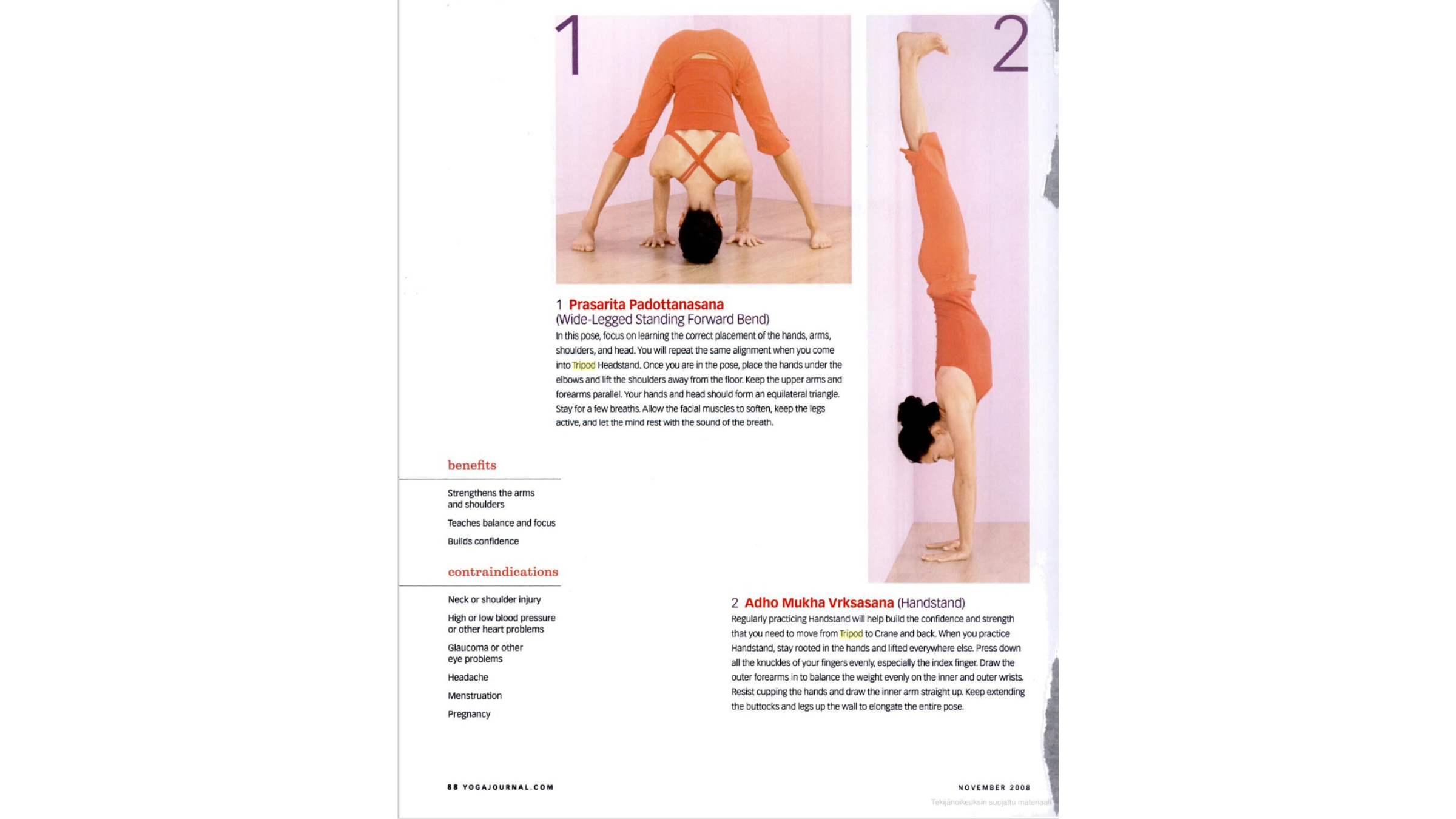
2. Wide-Legged Standing Forward Bend (Prasarita Padottanasana)
Prasarita Padottanasana is an essential precursor to Tripod Headstand. The arm placement required here—palms shoulder-width apart, elbows stacked directly over wrists—is identical to the foundation of the headstand. By practicing this "modest inversion," students learn to form an equilateral triangle with their head and hands, ensuring structural integrity before they leave the ground.
3. Handstand (Adho Mukha Vrksasana)
Handstand serves as the primary strength builder for this sequence. By utilizing the wall, practitioners can refine the alignment of the forearms and shoulders. A critical technical note: to avoid over-taxing the wrists, practitioners should focus on lifting the inner arms and rooting the index fingers. This "center line of energy" creates the lift necessary to prevent the collapse that often occurs when the shoulders tire.
4. Crane Pose (Bakasana)
Before attempting the full balance, students should practice a modified "Cat Pose" on the floor. This mimics the spinal rounding required for Crane Pose. In the actual transition to Bakasana, the focus shifts to the connection between the knees and the upper arms. Success depends on maintaining a rounded spine and moving the navel toward the spine without hardening the abdominals.
5. Tripod Headstand (Sirsasana II)
The transition begins in earnest here. From a stable base, the student must lift into the Tripod. The key to the transition is the ability to lower the legs halfway down while maintaining the integrity of the thoracic spine. If the back rounds prematurely, the structural foundation is lost, and the transition to Crane becomes physically impossible.
Supporting Technical Data: The Mechanics of Balance
The physics of this transition requires a sophisticated understanding of stacking. In arm balances, weight distribution is paramount. If the bones are not stacked precisely, the practitioner must compensate with muscular effort, which leads to premature fatigue.
- The Triangle Base: The head and hands must form an equilateral triangle. If the head is placed too far forward or too far back, the neck is compromised.
- The Forearm Engagement: Drawing the outer forearms in prevents the elbows from splaying outward. This action automatically draws the shoulder blades into the back, creating a stable "socket" for the shoulders to rest in.
- The Center Line: During the transition, keeping the gaze fixed—either between the hands or straight ahead—helps maintain focus. A wandering gaze is often a precursor to a loss of physical balance.
Expert Perspectives on Growth and Learning
In teaching this sequence, instructors emphasize that the transition is a metaphor for life. If a student is solely motivated by the end result—the "flight"—they often ignore the nuanced alignment required for safety.
"If your only goal is to do the pose, you are merely exercising," notes the archival guidance. True practice begins when the student pauses to examine their tendencies. Whether it is the fear of falling or the ego-driven desire to master the movement, these moments of pause are the true "yoga." By stopping physically—and mentally—the practitioner gains the ability to find a new, more balanced frame of mind.
Implications for Personal Development
The implications of mastering this sequence extend far beyond the yoga studio. When a student learns to stay present in the middle of a difficult, inverted transition, they develop a mental resilience that translates into other areas of life.
- Mindfulness: The transition from Headstand to Crane requires a "reset" of the mind. As the legs descend, the practitioner must consciously let go of the previous position and prepare for the next. This ability to shift focus is a hallmark of emotional intelligence.
- Resilience: Every attempt—whether successful or not—provides data. Understanding that failure is just an exploration of boundaries allows the student to approach their life with less attachment to "getting there."
- Systematic Growth: By breaking down complex movements into manageable stages, practitioners learn that progress is rarely linear. It is a systematic exploration of one’s abilities, building confidence one breath at a time.
Conclusion: The Journey Is the Destination
Ultimately, the transition from Tripod Headstand to Crane Pose is not about the final position. It is about the "flight" of letting go—letting go of fear, of desire, and of the need to control the outcome.
For those who find themselves struggling, the advice remains consistent: take a step back, focus on the alignment of the preparations, and stay committed to each stage of the sequence. By observing the habits that arise during the practice, you can clear the path for deeper self-study. In the end, as the archives remind us, "learning is all there is." Whether you are inverted or balanced, the practice of remaining present is the most rewarding achievement of all.