








The landscape of American public health policy is undergoing a profound transformation as the Centers for Disease Control and Prevention (CDC) implements a new, controversial charter for its Advisory Committee on Immunization Practices (ACIP). This influential panel, long considered the gold standard for clinical guidance on vaccines, now faces a structural overhaul that critics argue threatens the integrity of evidence-based medicine, undermines established scientific consensus, and risks eroding public trust in immunization programs across the United States.
The updated charter, which serves as the foundational legal document governing the committee’s operations, introduces sweeping changes to the panel’s mission, administrative oversight, and membership composition. By expanding the committee’s scope to include "non-vaccine interventions" and shifting direct authority to the CDC Office of the Chief of Staff, the agency has ignited a firestorm of protest from the nation’s leading infectious disease societies.
The Evolution of a Regulatory Conflict
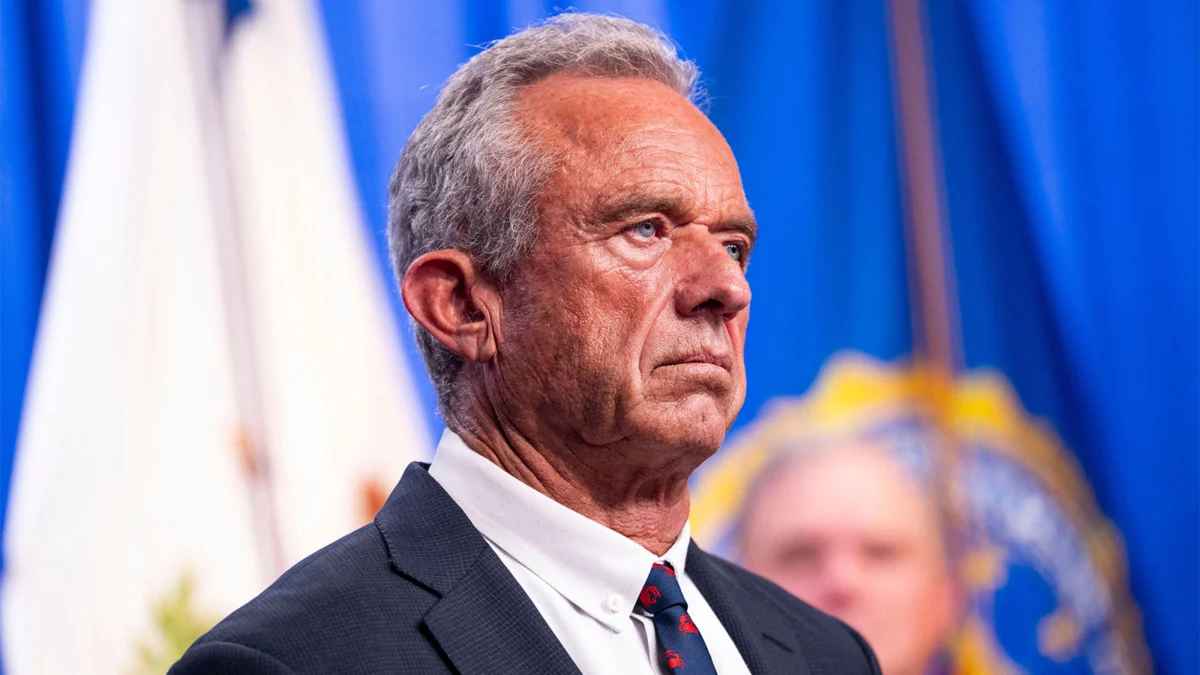
The implementation of this charter follows a period of unprecedented turbulence for the ACIP. In March, a federal judge issued a scathing ruling, finding that Department of Health and Human Services (HHS) Secretary Robert F. Kennedy Jr. had likely violated federal administrative procedures by summarily ousting the committee’s long-standing members. That purge, which replaced subject-matter experts with individuals harboring known skepticism toward established vaccine science, prompted a series of legal challenges led by the American Academy of Pediatrics (AAP).
The current charter is, in many ways, an attempt to stabilize the committee after the failure of an earlier version released in April. That previous draft, which explicitly mandated that the panel focus on "vaccine harms" and "toxicology," was quietly withdrawn by HHS following intense public and professional backlash. While the new version retreats from the most inflammatory rhetoric of the April draft, policy experts warn that it preserves the structural architecture that allows for greater political interference in what was once a technocratic, science-driven process.
Structural Realignment: Governance and Oversight
One of the most significant changes in the new charter is the relocation of administrative support for the ACIP. Previously, the committee was supported by the CDC’s National Center for Immunization and Respiratory Diseases (NCIRD)—a body comprised of career scientists and experts with decades of experience in epidemiology and immunology.
Under the new mandate, support for the ACIP is shifted to the CDC’s Office of the Chief of Staff and other centralized agency components, at the explicit discretion of the CDC director. Legal experts suggest this is not a mere administrative housekeeping task.
"That is a meaningful governance change that signals greater political involvement," says Richard Hughes IV, lead counsel on the AAP’s ongoing lawsuit against HHS. "By moving the committee’s support structure away from the specialized expertise of the NCIRD and into the direct orbit of the Chief of Staff, the agency is effectively insulating the decision-making process from the very experts best qualified to evaluate vaccine data."
Furthermore, the charter eliminates the long-standing requirement for the committee to hold at least three meetings per year. Instead, the document grants the Designated Federal Officer, in consultation with the Chair, the power to schedule meetings at their discretion. Critics argue that this lack of a mandatory meeting cadence creates unpredictability, allowing the agency to delay or accelerate guidance based on political exigencies rather than public health needs.
The "Liaison" Problem: Shifting the Balance of Influence
The composition of the ACIP’s 33 nonvoting liaison organizations has also come under intense scrutiny. Liaison representatives play a critical role in providing stakeholder input, representing various medical and public health interests. The new charter has added four organizations identified by public health experts as having explicit anti-vaccine leanings:
- The Association of American Physicians and Surgeons (AAPS)
- The Independent Medical Alliance
- The Medical Academy of Pediatrics and Special Needs
- Physicians for Informed Consent
Dorit Reiss, PhD, a law professor at the University of California San Francisco, argues that the inclusion of these groups fundamentally alters the committee’s environment. "The charter incorporates organizations that have historically campaigned against the scientific consensus on vaccine safety," Reiss noted. "By granting them a formal seat at the table, the CDC is providing a veneer of legitimacy to fringe theories that have been soundly rejected by the broader scientific community."
Notably, the American College of Obstetricians and Gynecologists (ACOG)—a stalwart of maternal and child health—is absent from the list. ACOG withdrew its liaison status in February, a move that highlights the growing chasm between traditional professional medical organizations and the current trajectory of federal vaccine policy.
Official Responses: The Scientific Community Speaks Out
The Infectious Diseases Society of America (IDSA), representing thousands of experts in the field, has been the most vocal critic of the new charter. In a formal statement issued in collaboration with the Pediatric Infectious Diseases Society, the Society for Healthcare Epidemiology of America, and the Society of Infectious Diseases Pharmacists, the coalition warned that the document’s emphasis on "gaps or limitations in vaccine data" is a coded strategy for obstructionism.
"The new charter inappropriately emphasizes potential gaps or limitations in vaccine data," the statement read. "This language could be used to delay, rescind, or refuse to make evidence-based vaccine recommendations, effectively paralyzing the committee’s ability to respond to emerging health threats."
The societies also pointed to the softening of language regarding the "publication of vaccine recommendations." Historically, the ACIP’s recommendations have served as the cornerstone for insurance coverage mandates and state-level immunization requirements. By weakening the explicit link between the committee’s output and its use in informing coverage, the charter creates a path for insurance providers to limit access to recommended vaccines, citing the committee’s own hesitance or "limitations" as justification.
Implications for Public Health and Legal Precedent
The implications of these changes are broad and potentially long-lasting. By "softening" the requirements for evidence-based decision-making, the CDC risks creating a fragmented immunization landscape. If the ACIP loses its reputation as an objective arbiter of scientific truth, states and private insurers may begin to deviate from federal guidelines, leading to a patchwork of vaccine policies that could cause a decline in national vaccination rates.
Despite these concerns, legal observers like Reiss acknowledge that the new charter is a "tactical retreat" from the more extremist version proposed in April. The new document provides a more coherent, traditional structure for the committee’s functions and removes the explicit, pseudoscientific references to "vaccine injury" and "neurodevelopmental toxicology" that characterized the previous attempt.
However, the consensus among legal experts remains cautious. "It appears to be a revision of the paper trail," says Hughes. "They have cleaned up the language to make it more defensible in court, but they have preserved the structural changes—the change in reporting lines, the changes in membership, and the loss of meeting requirements—that are the real drivers of this politicization."
Looking Ahead
As the federal government continues to navigate the fallout from the judicial interventions of early 2025, the ACIP remains a focal point of the broader ideological battle over the role of government in public health. For clinicians, the current situation presents a significant challenge: how to maintain patient trust when the federal body responsible for vaccine safety guidance is being reshaped in real-time.
The coming months will likely see further legal action as the AAP and other medical societies continue to challenge the structural changes imposed by HHS. Whether these challenges succeed in restoring the committee to its former status as a purely scientific advisory body remains to be seen. In the interim, the public and the medical community are left to watch a critical piece of national infrastructure undergo a transformation that many fear could take a generation to reverse.
For now, the message from the scientific community is clear: the integrity of U.S. vaccine policy depends on a firewall between political administration and the objective assessment of clinical data. By blurring that line, the new charter risks the very foundation of the public health success stories that have defined the last century of American medicine.