











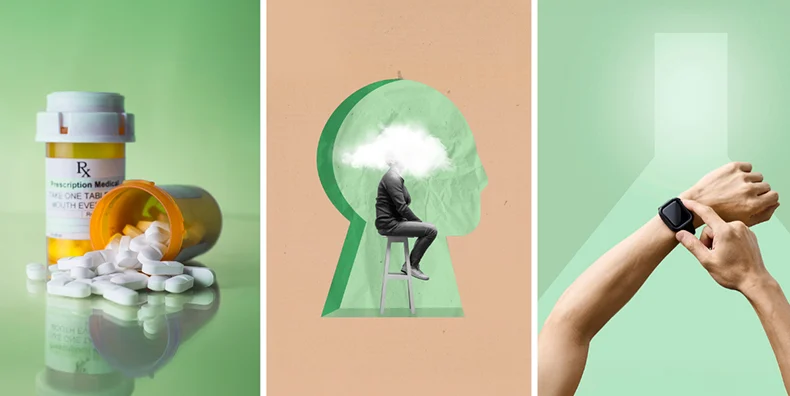
The landscape of bipolar disorder research is undergoing a seismic shift. For decades, the management of this complex psychiatric condition relied heavily on clinical intuition, trial-and-error prescribing, and retrospective patient reporting. However, a new era of "precision psychiatry" is emerging, fueled by the intersection of massive datasets, machine learning, and wearable technology.
Recent breakthroughs from international research teams in the Nordic regions, Maryland, and France are providing long-sought answers to three critical questions: Which medication combinations actually prevent hospitalization? Do psychiatric drugs cause the "brain fog" patients frequently report? And can the smartwatch on a patient’s wrist predict a manic or depressive episode before it begins?
By leveraging artificial intelligence (AI) to crunch data from hundreds of thousands of patients, researchers are finally moving toward a more objective, data-driven framework for bipolar care.
The Core Findings: A Triad of Innovation
Recent publications in Nature Mental Health, the International Journal of Bipolar Disorders, and the Journal of Affective Disorders have unveiled three major insights:
- Optimization of Maintenance Therapy: Adding second-generation antipsychotics or anticonvulsants to lithium significantly reduces the risk of psychiatric hospitalization compared to lithium monotherapy.
- Identifying Cognitive Culprits: While cognitive impairment is common in bipolar disorder, specific medications—namely ziprasidone, clonazepam, and benztropine—are more closely linked to "brain fog" than others, while lithium appears to have a neutral effect on cognition.
- Digital Phenotyping: Wearable devices, such as Fitbits, can detect physiological changes (heart rate variability and activity levels) that correlate with mood shifts, offering a potential early-warning system for episode prevention.
Chronology: From the "Gold Standard" to Data-Driven Polypharmacy
To understand the significance of these findings, one must look at the evolution of bipolar treatment. Since its discovery as a psychiatric treatment in 1949, lithium has remained the "gold standard." However, the 21st century has seen an explosion of new options, including atypical antipsychotics and various anticonvulsants.
The challenge for clinicians has been the lack of comparative, long-term data. Most clinical trials last only six to twelve weeks—far too short to determine how a drug prevents a hospitalization three years down the line. Furthermore, the "real-world" application of these drugs often involves polypharmacy (taking multiple medications), a practice that has lacked a robust evidence base until now.
In the last five years, the integration of national health registries (particularly in Scandinavia) and machine-learning algorithms has allowed researchers to observe patient outcomes over decades rather than weeks. This chronological shift from short-term trials to long-term "big data" analysis is what made the following studies possible.
Beyond Lithium: Supporting Data on Reducing Hospitalization
A landmark study published in Nature Mental Health by a Nordic research team represents one of the largest longitudinal analyses ever conducted in the field of bipolar disorder. By following 160,000 individuals in Sweden and Finland over an average of nine years, researchers sought to determine which medication regimens actually kept patients out of the hospital.
The Methodology: The "Self-As-Control" Design
One of the primary hurdles in psychiatric research is "confounding by indication"—the tendency for the most severely ill patients to be prescribed the most aggressive treatments. This often makes those treatments look less effective than they are. To bypass this, the Nordic team used an intra-individual design, comparing the risk of hospitalization for each specific patient during periods when they were on a medication versus when they were off it.
Key Data Points:
The study found that while lithium remains highly effective, three specific combination therapies outperformed lithium alone in reducing psychiatric hospitalizations:
- Lithium + Quetiapine (Seroquel)
- Lithium + Valproate (Depakote)
- Lithium + Olanzapine (Zyprexa)
For the subset of 20,000 patients who had discontinued lithium—often due to side effects like kidney issues or thyroid dysfunction—the researchers identified two "standout" combinations that provided the best protection against relapse:
- Quetiapine + Lamotrigine (Lamictal)
- Olanzapine + Valproate
These findings provide a vital roadmap for clinicians when the "gold standard" of lithium monotherapy fails or is poorly tolerated.
The Cognitive Cost: Analyzing Medication and "Brain Fog"
For many living with bipolar disorder, the stabilization of mood is only half the battle. A persistent complaint is "cognitive impairment" or "brain fog"—difficulties with memory, focus, and processing speed. The question has always been: Is this a symptom of the disorder itself, or a side effect of the medication?
The Maryland Study
A research team in Maryland addressed this by studying 567 adults receiving care in community clinics. Participants underwent a battery of standardized neuropsychological tests. To isolate the impact of medication, the team employed a machine-learning tool to account for variables like education level, illness duration, and current symptom severity.
Supporting Data on Cognitive Impact:
The study analyzed 16 common medications. The results were telling:
- The Culprits: Three drugs were significantly linked to lower cognitive scores: Ziprasidone (Geodon), Clonazepam (Klonopin), and Benztropine (Cogentin).
- The Dose-Response Relationship: Benztropine, often prescribed to manage the movement-related side effects of antipsychotics, showed a strong "dose-response" relationship—the higher the dose, the more significant the cognitive decline.
- The Lithium Surprise: Despite its reputation for causing a "dulled" feeling in some patients, lithium showed no link to cognitive impairment in this large-scale study, suggesting that the "fog" patients feel on lithium may be attributable to other factors or specific to individual sensitivity rather than a general trend.
Biohacking Bipolar: The Role of Wearables in Prediction
The third pillar of recent research involves "digital phenotyping"—using digital traces to identify health patterns. A pilot study from France, published in the Journal of Affective Disorders, explored whether consumer-grade wearables (Fitbits) could predict mood episodes.
The Pilot Study Mechanics
Ten participants wore devices 24/7 for six months, tracking:
- Heart rate and Heart Rate Variability (HRV)
- Sleep duration and quality
- Step counts (physical activity)
Data Insights:
Using machine learning, the researchers attempted to "train" models to recognize the physiological signature of a mood episode.
- Depression Detection: The models were most successful at identifying depressive episodes, primarily through changes in Heart Rate Variability (HRV) and a significant drop in step counts.
- Hypomania Detection: Hypomanic episodes were slightly harder to flag but were often preceded by distinct changes in sleep architecture and resting heart rate.
- The "Early Warning" Gap: While the models could detect an episode once it had begun, their ability to predict an episode days before it manifested was less reliable. However, the study serves as a proof-of-concept that "passive monitoring" could eventually replace the need for manual mood charting.
Official Responses and Clinical Synthesis
While the research community has welcomed these findings, experts urge a balanced interpretation.
On Polypharmacy: Clinical commentators note that while the Nordic study supports the use of medication combinations, "more" is not always "better." The risk of metabolic side effects (weight gain, diabetes) associated with drugs like Olanzapine and Quetiapine must be weighed against the benefit of reduced hospitalization.
On Cognition: Dr. Emily P.G. Erickson, a mental health researcher and counselor, emphasizes that the Maryland study should empower patients to have more nuanced conversations with their psychiatrists. "If a patient feels their thinking is clouded, we now have data suggesting we should look closely at specific agents like benzodiazepines or anticholinergics (benztropine) rather than assuming it’s an inevitable part of the disorder," Erickson notes in her analysis of the data.
On Wearables: The French research team acknowledged the limitations of their small sample size (10 participants). They stressed that while the technology is promising, it is not yet ready for "clinical rollout." The goal is not for the watch to diagnose the patient, but for the watch to alert the patient to "call their doctor."
Implications: The Future of Bipolar Care
The implications of these three studies are profound for both providers and patients.
For Clinicians
The move toward AI-driven data analysis allows for "evidence-based personalization." Instead of guessing which drug to add when lithium fails, doctors can look to the Nordic data to see that a Quetiapine-Lamotrigine combination has a high statistical probability of success.
For Patients
These studies offer a sense of agency. The cognitive study, in particular, validates the patient experience of "brain fog" and identifies specific medications that may be adjusted to improve quality of life. Furthermore, the development of wearable monitoring suggests a future where the "burden of vigilance"—constantly checking oneself for signs of mania or depression—might be partially offloaded to technology.
The Path Forward
As we move toward 2030, the "precision" in precision psychiatry will only increase. The next step for researchers is to combine these three areas of study: using wearables to track the cognitive and physical effects of specific medication combinations in real-time.
By harnessing the power of large-scale data and AI, the medical community is finally beginning to decode the complexities of bipolar disorder, moving away from a one-size-fits-all approach toward a future of truly individualized mental health care.