










For the millions of individuals living with Ehlers-Danlos syndrome (EDS), the diagnostic journey is often characterized by a profound disconnect between their subjective experience of pain and the objective findings on standard medical imaging. A patient may present with debilitating neurological symptoms, chronic neck pain, or sensory disturbances, only to receive a clinical report stating: Cervical spine: Unremarkable. Thoracic spine: Unremarkable.
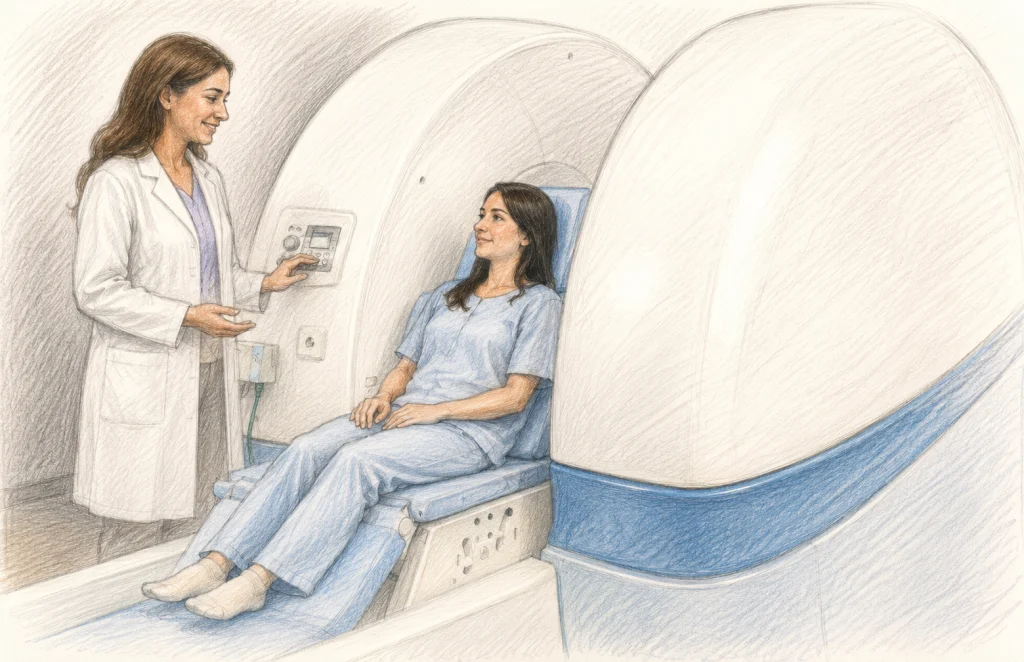
While standard magnetic resonance imaging (MRI) is a cornerstone of modern diagnostic medicine, its reliance on a supine—or lying down—position may fundamentally limit its utility for those whose pathology is rooted in the dynamic, weight-bearing mechanics of the human frame. As our understanding of connective tissue disorders evolves, a compelling argument is emerging for the use of upright, or positional, MRI (pMRI) to bridge the gap between patient symptoms and clinical visualization.
The Diagnostic Mismatch: Why Supine Imaging Often Fails
The frustration of the "unremarkable" scan is a recurring theme in the EDS community. Patients often spend years navigating a labyrinth of specialists, only to be told that their diagnostic results do not explain their level of disability.
The issue, however, is not necessarily with the radiologist’s interpretation or the technology’s inherent capability; it is a matter of diagnostic physics. Conventional MRI machines are designed to capture images of the body in a resting, horizontal state. For the vast majority of medical conditions, this is appropriate and highly accurate. However, Ehlers-Danlos syndrome is defined by systemic joint hypermobility and connective tissue laxity. In this context, spinal instability is frequently a dynamic, mechanical phenomenon.
A spine may appear perfectly aligned while a patient is lying flat, as the gravitational load on the vertebrae and supporting ligaments is effectively neutralized. Yet, the moment that same patient stands or sits, the weight of the head and torso engages gravity against weakened ligamentous structures, potentially triggering subluxations, disc compression, or nerve impingement. By imaging the spine in its least symptomatic state, we create a "diagnostic mismatch"—a clinical blind spot where the pathology exists, but the test is structurally incapable of capturing it.
Chronology of a Shifting Paradigm
The history of spinal imaging is a trajectory toward greater resolution and detail, yet it has remained largely static in terms of orientation.
- 1980s–1990s: The rise of high-field 1.5T and 3T MRI systems revolutionized the ability to visualize soft tissue. During this era, supine imaging became the gold standard, focusing heavily on signal-to-noise ratios and image clarity.
- Early 2000s: Clinicians began documenting the limitations of supine imaging for patients with complex, posture-dependent symptoms. Researchers noted that patients with Chiari malformation and occipitoatlantoaxial hypermobility often reported symptom relief when lying down, which correlated with the "normalization" of their scans in that same position.
- 2010s: The emergence of specialized upright, open-bore, and weight-bearing MRI systems allowed for the first systematic comparisons between positional and supine imaging. These early studies highlighted "occult" findings—abnormalities that only presented under the stress of gravity.
- 2025–2026: Recent systematic reviews and the integration of AI-assisted diagnostic protocols have brought the conversation to the forefront of neurosurgical discourse. Organizations like the CCI Foundation have begun to advocate for the inclusion of upright imaging in the evaluation of Craniocervical Instability (CCI), signaling a shift from experimental to potentially standard-of-care status for specific subsets of patients.
Supporting Data: The Science of Weight-Bearing
The transition toward upright imaging is supported by a growing body of evidence suggesting that gravity is the missing variable in many spinal assessments.
A 2025 systematic review identified nine seminal studies confirming that dynamic and upright MRI successfully identifies weight-bearing abnormalities that remain invisible during horizontal imaging. These include significant alterations in spinal alignment, the narrowing of the spinal canal (stenosis), and complex cerebrospinal fluid (CSF) flow dynamics.
In patients with EDS, the ligaments that act as the body’s "natural corset" are often unable to hold the vertebrae in place under tension. Research indicates that when a patient moves into an upright position, the "cranial settling" or "basilar invagination" often becomes apparent. Furthermore, studies on the lumbar spine have shown that disc bulging—often dismissed as minor or "age-related" in supine scans—can progress to significant nerve root compression when the patient is upright and weight-bearing.
The Trade-off: Resolution vs. Reality
Critics of upright MRI often point to the "field strength" issue. Conventional high-field MRIs (1.5T or 3T) provide exceptional, high-contrast images. Upright systems, due to their open design and technical requirements, typically operate at lower field strengths, ranging from 0.6T to 1.0T.
The result is a slightly less detailed image. However, proponents argue that a "perfectly clear" image of a spine that is not currently symptomatic is less valuable than a "slightly lower-resolution" image of a spine that is actively struggling under the weight of the body. For the clinician, the diagnostic utility of observing the spine in its functional state far outweighs the loss of marginal image detail.
Official Perspectives and Professional Consensus
The medical community is currently in a state of cautious transition. There is no broad, universal mandate to replace standard MRI with upright MRI; rather, the consensus is shifting toward a "supplemental" model.
The CCI Foundation and other advocacy groups emphasize that upright imaging should be considered when the clinical picture—the patient’s symptoms and neurological examination—strongly contradicts the findings of traditional MRI. This is particularly relevant for those presenting with:
- Symptoms that worsen as the day progresses.
- Neurological symptoms triggered by head rotation or specific postural changes.
- Documented history of EDS or other connective tissue disorders.
While large-scale, multi-center trials are still needed to provide definitive diagnostic criteria, the current professional consensus is that pMRI acts as a vital "functional" test. It does not replace the high-detail assessment of tissue pathology (such as tumor detection or inflammatory markers) provided by 3T scanners, but it serves as an essential tool for assessing the mechanics of the spine.
Implications for Patients and Healthcare Providers
For the patient, this shift in technology offers hope for validation. For the provider, it requires a more nuanced approach to ordering diagnostics.
Implications for Clinical Practice:
- Enhanced Triage: Providers should use upright MRI as a secondary tool when "unremarkable" supine scans fail to correlate with physical exam findings.
- Informed Consent: Patients must be educated on the differences between image resolution in high-field vs. upright systems so that expectations are managed regarding the clarity of the resulting images.
- Insurance Advocacy: Because access remains limited and coverage is inconsistent, clinicians play a critical role in providing the clinical justification necessary for insurance preauthorization.
When to Consider Upright MRI:
Patients and their doctors should discuss the necessity of upright imaging if:
- You experience sudden, sharp neurological symptoms (e.g., visual disturbances, dizziness, or numbness) when standing or sitting upright.
- Your symptoms consistently improve upon lying down.
- Your physical therapist or neurologist suspects instability that is not being captured in a stationary, supine position.
- You have a confirmed diagnosis of EDS and are experiencing unexplained, progressive spinal or neurological pain.
Key Takeaways for the EDS Community
The journey toward understanding the EDS-affected spine is moving toward a more dynamic, real-world perspective.
- The Spine is Dynamic: Standard supine MRI represents the spine at rest, which does not account for the mechanical instability inherent in EDS.
- Diagnostic Mismatch is Common: "Unremarkable" results in a horizontal scan do not rule out pathology that only occurs during weight-bearing.
- Utility of pMRI: Upright MRI provides a functional view of the spine that can reveal posture-dependent issues like cord compression and spinal alignment shifts.
- A Balanced Approach: Upright MRI is a tool to be used alongside—not necessarily in place of—traditional imaging to ensure the most complete diagnostic picture.
As we look to the future, the integration of AI, better access to upright facilities, and continued research into the biomechanics of connective tissue disorders will be paramount. For the EDS patient, this means moving away from a narrative of "unexplained pain" and toward a future where our diagnostic tools finally catch up to the reality of the lived experience.
Sources
- Health Quality Ontario. (2015). Positional magnetic resonance imaging for people with Ehlers-Danlos syndrome or suspected craniovertebral or cervical spine abnormalities. Ontario Health Technology Assessment Series.
- Henderson, F. C., et al. (2017). Neurological and spinal manifestations of the Ehlers-Danlos syndromes. American Journal of Medical Genetics Part C: Seminars in Medical Genetics.
- Lohkamp, L. N., et al. (2022). Craniocervical instability in Ehlers-Danlos syndrome—A systematic review of diagnostic and surgical treatment criteria. Global Spine Journal.
- Manjila, S., et al. (2026). Manjila Chiari Protocol 2.0 (MaChiP 2.0) for Artificial Intelligence Incorporating Dynamic and Static Craniospinal Imaging. Neuroimaging.
- Michelini, G., et al. (2018). Dynamic MRI in the evaluation of the spine: State of the art. Acta Bio-Medica.
- Milhorat, T. H., et al. (2007). Syndrome of occipitoatlantoaxial hypermobility, cranial settling, and chiari malformation type I in patients with hereditary disorders of connective tissue. Journal of Neurosurgery: Spine.
- Nicholson, L. L., et al. (2023). Reference values of four measures of craniocervical stability using upright dynamic magnetic resonance imaging. La Radiologia Medica.
- Niggemann, P., et al. (2011). Features of positional magnetic resonance imaging in tethered cord syndrome. Clinical Neuroradiology.
- Verderame, J., et al. (2025). Weight-bearing MRI of the cervical spine: A scoping review of clinical utility and emerging applications. European Journal of Radiology Open.