











For patients and families facing a cancer diagnosis, the medical landscape can feel overwhelming. Amidst the flurry of terminology and treatment protocols, one term often rises to the forefront: the "clinical trial." While it is frequently referenced, the reality of what a clinical trial entails—and how it might serve as a beacon of hope—is often misunderstood. Understanding these trials is not just about medical literacy; it is about empowerment.
The Foundation of Modern Medicine: What Are Clinical Trials?
At their core, cancer clinical trials are rigorous research studies designed to evaluate new methods of preventing, detecting, and treating cancer. They are the essential engine of medical progress. It is a fundamental truth of oncology that every treatment currently recognized as the "standard of care"—from foundational chemotherapy to cutting-edge immunotherapy—was once a concept tested within the framework of a clinical trial.
Clinical trials are not monolithic; they are as diverse as the disease itself. While many are designed to test the efficacy of novel pharmaceutical agents, others focus on refined surgical techniques, advanced radiation protocols, or the early detection of malignancy. Furthermore, a growing segment of research is dedicated to improving the quality of life for cancer patients, focusing on the mitigation of symptoms and the reduction of treatment-related side effects.
A Chronology of Progress: How Trials Evolve
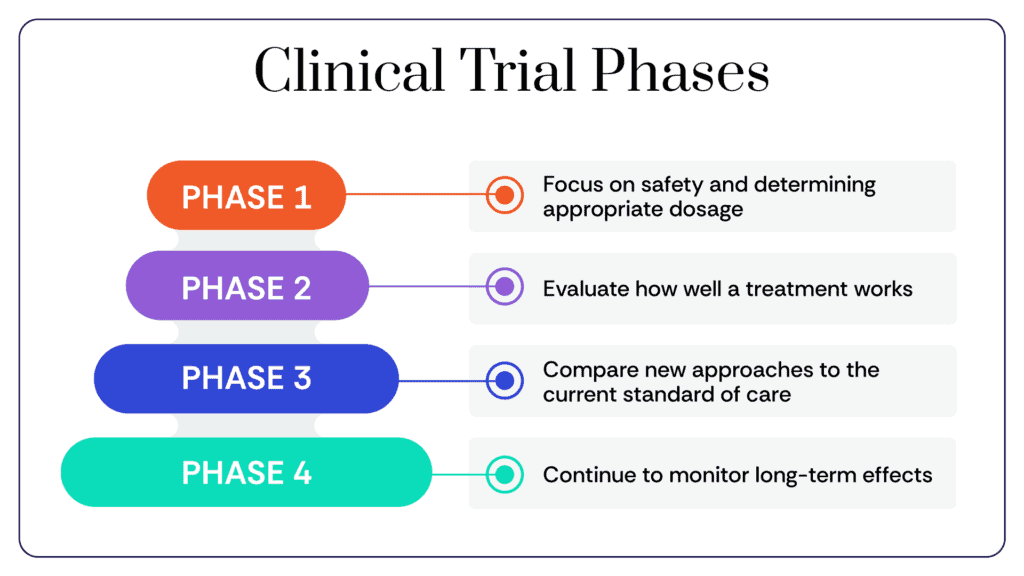
The journey of a new treatment from the laboratory to the patient’s bedside is a meticulously structured process, divided into distinct phases. Each phase builds upon the safety and efficacy data gleaned from the previous one:

- Phase I: These initial trials focus on safety. Researchers work to determine the highest dose that can be given safely without causing severe side effects. Small groups of patients are typically involved.
- Phase II: Once a safe dosage is established, the focus shifts to effectiveness. Researchers observe how the body reacts to the treatment and whether the cancer responds.
- Phase III: These are large-scale studies that compare the new treatment against the current "gold standard." These trials provide the definitive data required for regulatory approval (such as FDA authorization).
- Phase IV: Conducted after the treatment is on the market, these studies monitor long-term effects, benefits, and optimal use in the general population.
Why Clinical Trials Matter: Beyond the Lab
The decision to participate in a clinical trial is deeply personal, yet the implications are profound. For the individual patient, a trial may offer access to state-of-the-art therapies that are not yet available to the general public. In cases where standard treatments have failed to achieve the desired outcome, clinical trials provide a necessary alternative pathway.
Beyond personal benefit, there is an altruistic dimension to participation. As Kristin Kleinhofer, a Stage 4 Leukemia survivor, poignantly noted, “I began to look at clinical trials, and it wasn’t only that I was fighting for my life, but I really wanted to pay it forward, help cancer research, and help other cancer patients, even if it wasn’t going to work for me.” This spirit of contribution fuels the global effort to turn cancer from a terminal diagnosis into a manageable or curable condition.
Dispelling the "Last Resort" Myth
A pervasive misconception in the oncology community is that clinical trials are exclusively a "last resort" for patients who have exhausted all other options. This could not be further from the truth. Depending on the specific molecular profile of a tumor and the patient’s clinical history, a trial might be the optimal first-line or second-line treatment. Engaging in a conversation about trials early in the diagnostic process ensures that patients are not missing out on potentially superior, innovative interventions.
Supporting the Patient Journey: Resources and Advocacy
Navigating the trial landscape is a complex endeavor, but patients are rarely forced to walk this path alone. Clinical trial navigators and specialized resources, such as the CRI Clinical Trial Finder, provide essential support. These tools help patients synthesize their medical data, identify trials that match their specific genetic or clinical markers, and connect with institutions that are leading the way in oncology research.

Expert Perspective: The Voice of the Field
"Every miraculous breakthrough has come from clinical trials," asserts Dr. Joshua Brody of the Icahn School of Medicine at Mount Sinai. This sentiment is echoed by countless survivors, including Sharon Belvin, who credits her survival from Stage 4 Melanoma to her decision to enroll in a trial. "Clinical trials are the lifeline for long-term survival rates," she says. "There is no other way to move this field forward."
Critical Considerations: Weighing the Risks and Benefits
Before enrolling in a trial, patients must engage in an honest dialogue with their care team. Participation is a commitment that requires careful deliberation of several factors:
1. Medical Oversight and Potential Side Effects
While trials provide access to innovative medicine, they also require rigorous monitoring. Patients will often undergo more frequent testing and clinical evaluations. While this ensures that any side effect is identified quickly, it is also a significant time commitment. Furthermore, because these treatments are experimental, the full side-effect profile may not be entirely understood.
2. Eligibility Criteria
Not every patient is a candidate for every trial. Eligibility is determined by a strict set of criteria—including the patient’s overall health, the specific stage of cancer, and unique genetic biomarkers. These criteria are not intended to be exclusionary; rather, they are designed to ensure the safety of the participant and the statistical validity of the research.

3. Financial Implications
Financial concerns are a common barrier to entry. While the trial sponsor typically covers the cost of the experimental drug and any specialized tests required for the study, "routine care" costs—such as standard doctor visits or basic labs—may still fall under the patient’s existing insurance policy. It is critical to review the informed consent document and speak with a financial counselor at the clinical site to understand the exact breakdown of expenses.
Empowering the Patient: 10 Questions to Guide Your Conversation
When you meet with your doctor to discuss clinical trial options, preparation is your greatest asset. Print these questions and bring them to your next consultation to ensure a productive dialogue:
- Are there any clinical trials that might be right for me? Inquire specifically about trials matching your diagnosis, stage, and biomarkers.
- What is the goal of this clinical trial? Distinguish between trials focused on curative intent versus those focused on symptom management or quality of life.
- How does this trial treatment compare to my current options? Ask for a direct comparison of expected outcomes.
- What are the possible benefits for me? Ask the investigator about the primary endpoint they hope to achieve.
- What are the potential risks or side effects? Ensure you understand both common and rare potential reactions.
- What phase is the clinical trial in? Understanding the phase provides context for how much data has already been collected on the treatment.
- How long is the trial, and what does participation involve? Clarify the number of hospital visits, duration of travel, and intensity of the treatment schedule.
- What happens if the treatment doesn’t work? Discuss the "exit strategy" and what standard treatments remain available.
- What costs are covered? Gain absolute clarity on what is billed to the sponsor versus what is billed to your insurance.
- How will this affect my quality of life? Discuss the impact on your daily routine, ability to work, and overall comfort.
The Path Toward Possibility
The world of cancer research is moving at an unprecedented pace. Through the development of immunotherapy, targeted therapies, and precision medicine, we are seeing survival rates climb in ways that were deemed impossible only a decade ago.
Clinical trials represent more than just a medical procedure; they are a bridge between current limitations and future breakthroughs. Whether a trial leads to a personal recovery or contributes to the global bank of scientific knowledge, it is an act of profound courage and hope. By understanding the process, asking the right questions, and utilizing available resources, patients can take an active, informed role in their own care.
If you or a loved one are considering this path, remember: the journey toward the next great medical advancement often starts with a single, simple question. That question may be the key to opening the door to new possibilities, better outcomes, and a future where cancer is increasingly a manageable chapter rather than a final word.