











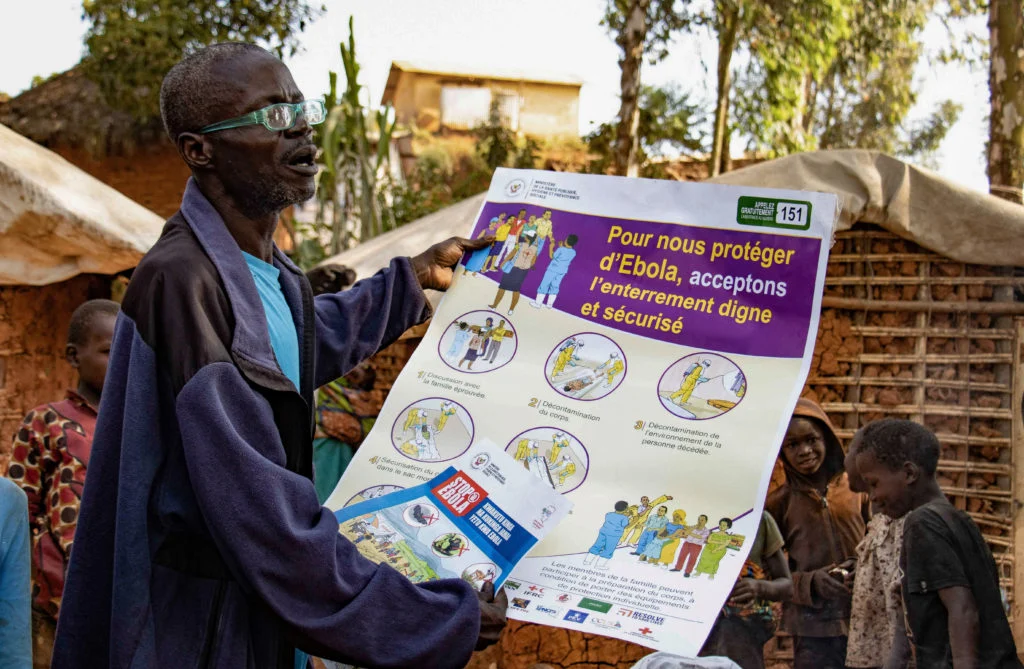
KINSHASA, Congo — The Democratic Republic of Congo is once again grappling with the terrifying reality of Ebola, as the Ministry of Health confirmed on Sunday that the national case count has climbed to 782. With 181 lives already lost to the virus, health officials are sounding the alarm, warning that these figures likely represent only a fraction of the true toll. As the outbreak spreads through the rugged, conflict-ridden terrain of the eastern provinces, the international community watches with growing concern, particularly given the unique and dangerous nature of the strain currently in circulation.
The Gravity of the Current Outbreak: Main Facts
The latest statistics released via the Ministry of Health’s official social media channels paint a grim picture. While 56 patients have successfully recovered, the current fatality rate stands at approximately 23%. However, the numerical data is complicated by the nature of the region’s geography and the delayed identification of the outbreak, which was not formally confirmed until May 15—weeks after the initial infections likely occurred.
The most significant hurdle facing medical teams is the alarming decline in contact tracing. Currently, the coverage rate has plummeted to 56%, a sharp decrease from the previous week. In the context of viral hemorrhaging fevers, where every missed contact is a potential new chain of transmission, this statistic suggests that the virus is moving faster than the responders can track it.
The Bundibugyo Challenge
Unlike the "Zaire virus," which has been responsible for the majority of the 16 previous Ebola outbreaks in the Congo, the current crisis is driven by the rare Bundibugyo strain. This distinction is critical: whereas medical researchers have developed and deployed effective vaccines and therapeutic treatments for the Zaire strain, the Bundibugyo virus currently lacks any approved vaccine or standardized treatment protocol.
Health experts are operating in a state of high uncertainty. The Bundibugyo virus, first identified in western Uganda in 2007, presents unique clinical challenges. Without a vaccine to provide prophylactic immunity or a proven drug regimen to lower the mortality rate, frontline workers are forced to rely exclusively on supportive care, aggressive barrier nursing, and rigorous infection prevention and control (IPC) measures to curb the spread.
A Chronology of the Crisis
The emergence of this outbreak follows a pattern seen in previous Congolese health emergencies, where silence and obscurity mask the early stages of a disaster.
- Mid-April: Retrospective epidemiological analysis suggests that the first cases began to emerge in the remote forests of the Ituri province.
- May 15: Following a surge in unexplained deaths, the Congolese Ministry of Health officially confirms the presence of the Bundibugyo virus, triggering a national and international alert.
- Late May: The virus spreads from Ituri into the neighboring provinces of North Kivu and South Kivu.
- Early June: The first cross-border cases are recorded in Uganda, escalating the crisis from a localized health issue to a regional emergency.
- Current Status: As of this weekend, responders are battling the virus across multiple fronts while navigating the logistical nightmare of a region characterized by dense, impassable forests and a displaced population.
Geography and Conflict: The Humanitarian Conundrum
The epicenter of the outbreak is the eastern province of Ituri, which currently accounts for more than 90% of all confirmed cases. However, the geography of Ituri is as much an enemy as the virus itself. The United Nations humanitarian office reports that nearly one million people have been displaced by ongoing armed conflict in the province.
This mass displacement creates a "perfect storm" for contagion. Families fleeing violence often move through dense, roadless forests, seeking shelter in informal camps or crossing into neighboring provinces. For contact tracers, this is a near-impossible task. Many of the remote villages where the virus is circulating can take days to reach by foot or motorbike, and the infrastructure is frequently destroyed by the same conflicts that drive the population into the bush.
Furthermore, the region is home to thousands of artisanal miners—a mobile, transient workforce that moves between remote, mineral-rich sites. These miners, often living in close quarters and lacking access to basic sanitation, act as unwitting vectors for the disease, carrying the virus across provincial and national borders before health authorities even realize a site has been compromised.
Official Responses and Local Resistance
The response to the outbreak has been hampered by more than just geography. Health workers on the ground report a volatile environment characterized by deep-seated skepticism and, in some cases, outright hostility from local populations.
In many communities, the presence of "outsiders" in protective gear is viewed with suspicion. Rumors and misinformation about the origin of the virus—often fueled by historical distrust of government and international institutions—have led to physical attacks on health personnel. Establishing the trust necessary for safe burials and patient isolation has become a monumental task.
On the international stage, the response has been equally fraught. Last month, U.S. officials attempted to streamline the process for handling American citizens exposed to the virus while working abroad. The proposed plan involved directing exposed personnel to a new 50-bed quarantine facility at the Laikipia Air Base in Kenya, rather than repatriating them to the United States. The proposal was met with fierce backlash from local Kenyan communities, leading to mass protests and eventually a court-ordered halt to the construction of the facility. The legal battle serves as a stark reminder that even in the effort to contain a global health threat, local sovereignty and community sentiment remain powerful forces that cannot be ignored.
Implications for Global Health Security
The current situation in the Congo serves as a sobering reminder of the gaps in global pandemic preparedness. The lack of a vaccine for the Bundibugyo strain highlights a "vaccine desert" where research and development dollars often bypass rare or regionally specific pathogens in favor of diseases with higher global market profiles.
Furthermore, the declining contact tracing rate indicates that the current containment strategy is failing. If the Congolese health system—already strained by conflict and poverty—cannot stabilize the tracing process, the risk of the outbreak becoming endemic to the region increases significantly.
The international community faces a choice: continue to treat this as a localized problem or provide the robust, integrated support—including logistical aid, security for health workers, and accelerated research funding for the Bundibugyo strain—necessary to stop the virus in its tracks.
As the Ministry of Health continues its work, the eyes of the world remain fixed on the eastern Congo. The numbers—782 cases, 181 deaths—are not just statistics; they are a reflection of a humanitarian crisis that demands urgent, coordinated, and respectful intervention. Without a shift in strategy that addresses the needs of the displaced, the fears of the local population, and the scientific void regarding the virus itself, the path to containment remains long and uncertain.
For now, the people of Ituri and the surrounding provinces remain on the front lines of a battle that is being fought with limited supplies, limited support, and a growing, silent threat that knows no borders.