




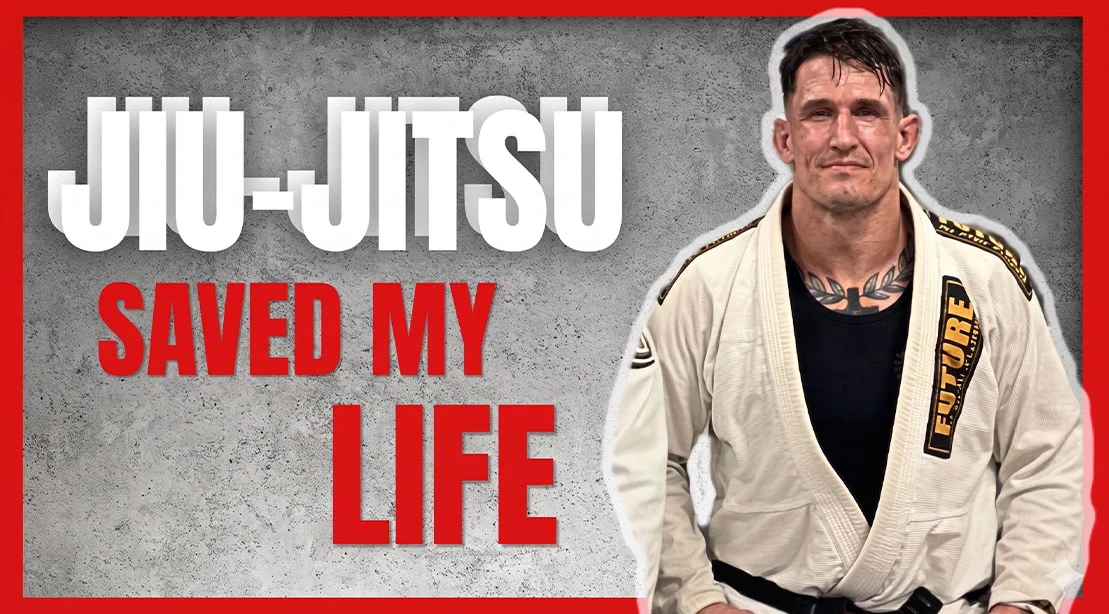
In the landscape of post-military life, the transition from the high-stakes environment of active combat to the nuanced, often quiet monotony of civilian existence remains one of the most significant challenges facing United States veterans. Recently, the Fit to Serve podcast, hosted by Tim Wilkins, provided a profound look into this journey through the eyes of retired U.S. Marine and founder of the Veteran Bushido Brotherhood (VBB), Jeric Fry.
Fry’s story is not merely one of service; it is a blueprint for survival, adaptation, and the relentless pursuit of community. By examining his trajectory—from his blue-collar roots in western Pennsylvania to the formation of a nonprofit dedicated to saving lives through jiu-jitsu—we gain critical insights into the mental, physical, and emotional infrastructure required to thrive after the uniform comes off.
The Reality of Service: A Chronology of Preparation
The Myth of Immediate Deployment
For many young recruits, the cinematic version of military service—signing a paper and finding oneself in the heat of battle within days—is a persistent myth. Jeric Fry’s experience serves as a sobering reminder of the logistical and physical realities of the Marine Corps.
"I went in thinking I was going to fly over and jump right into the fight," Fry noted during his conversation with Wilkins. However, the path to becoming a Marine is a grueling, iterative process defined by rigorous testing, technical education, and psychological conditioning. Fry’s upbringing in a blue-collar household instilled in him a work ethic that proved vital during his training, but he emphasizes that the transition into service is a marathon, not a sprint.
The time spent in boot camp was not merely a hurdle to clear; it was an essential period of physical acclimatization. Admitting he entered the pipeline "a little heavy," Fry highlights how the constant, relentless cardio of the training environment forged the physical foundation necessary for his future duties. It was a lesson in patience: the military does not rush the creation of a warfighter because the cost of error is far too high.
The Weight of Responsibility
As a gunner, Fry’s role necessitated a shift from personal ambition to profound collective responsibility. The psychological pressure of knowing that the lives of his peers and civilians depended on his precision and decision-making became the defining metric of his existence.
This reality crystallized for him while stationed aboard a ship, preparing for a rescue mission. Observing a "legitimate war zone" from a distance—where the skyline was punctuated by the disappearance of buildings—the abstraction of his training vanished. The gravity of the mission was no longer a theoretical exercise; it was an immediate, visceral reality. This moment marked a turning point in his service, where the questioning of his own readiness and the weight of command began to shape his character.
Fitness as an Anchor: The Scientific and Psychological Support
The intersection of physical health and mental stability is a recurring theme in military psychology, and Fry’s experience underscores why fitness is often referred to as an "anchor."
The "Man Stuff" Mentality
Fry describes the period of his deployment as a "simple life." Despite the inherent dangers, the structure provided a sense of purpose and clarity. The daily routine—work, lifting, and camaraderie—created a baseline for stability. He recounts his grandfather, a man who performed flyes with 75-pound dumbbells well into his 70s, as his primary inspiration.
The implication here is profound: fitness is not merely about aesthetics or athletic performance; it is a regulatory mechanism for the nervous system. For veterans who have experienced the chaotic nature of combat, the controlled environment of a gym provides a sanctuary. It is a space where the outcome is directly proportional to the effort invested, providing a sense of agency that can feel absent in civilian life.
The Crisis of Identity: Transitioning to the Civilian World
The Post-Service Vacuum
When Fry left the Marine Corps, he encountered a wall that thousands of veterans face annually: the lack of a clear, structured identity. Without a college degree and struggling to navigate a job market that failed to recognize the inherent value of his military experience, Fry found himself in a downward spiral.
"I was the coolest I was ever going to be at 25 years old," he lamented. This sentiment is common among veterans who feel they have reached their peak of significance during their time in service. The result is a dangerous void often filled by depression, survivor’s guilt, and substance abuse.
Fry’s transition included a stint in the plumbing industry, a job that provided a paycheck but failed to provide a sense of self. He was a man with a warrior’s skill set operating in a environment that did not require—or understand—his capacity for discipline and high-stakes problem solving.
The Power of Initiative
Fry’s recovery began when he stopped waiting for an opportunity and started creating one. Recalling his past as a barber at Quantico, he took his tools to a local barbershop, returning repeatedly until his persistence earned him a chair. This act of reclaiming his autonomy was the catalyst for his professional and emotional rebound. Within six months, he had successfully transitioned into a new career, proving that the adaptability learned in the service can be applied to civilian entrepreneurship if one is willing to push through the initial discomfort.
The Veteran Bushido Brotherhood: A New Mission
The most significant turning point in Fry’s life came with his introduction to Brazilian Jiu-Jitsu (BJJ). The mats provided more than just a workout; they provided a community of peers who were also struggling to navigate the complexities of life after the military.
Building a Community of Support
The Veteran Bushido Brotherhood (VBB) was born from this realization. By creating a nonprofit organization, Fry aimed to offer other veterans the same lifeline he found in the gym. The VBB focuses on the "Bushido" code—the way of the warrior—to help veterans find their footing through fitness, discipline, and, most importantly, human connection.
The implications of this initiative are far-reaching. By shifting the focus from "treating" veterans to "engaging" them, Fry is helping to destigmatize the process of seeking help. Jiu-Jitsu acts as a universal language for these men and women, allowing them to communicate their struggles through action rather than conversation, which can often be difficult for those dealing with PTSD.
"I’m here to spread this message, not because I want to or because I have an ego, but because I have to," Fry explained. "Because it saves lives."
Official Perspectives and Implications
Why Peer-Led Initiatives Matter
The success of the Veteran Bushido Brotherhood highlights a shift in how society addresses veteran mental health. While clinical approaches are necessary, peer-led organizations often achieve a higher level of trust and engagement. Veterans are more likely to open up to individuals who share a similar lexicon of experiences.
The VBB model serves as a case study for community-based interventions. By providing a physical space where veterans can exert themselves, learn a complex skill, and build deep interpersonal relationships, the VBB addresses the primary drivers of veteran suicide: isolation and lack of purpose.
The Broader Impact
As the conversation around veteran wellness continues to evolve, the lessons provided by Jeric Fry are increasingly relevant.
- Redefining Purpose: Veterans must recognize that the "mission" does not end with a discharge. Finding a new vehicle for that drive—whether through business, athletics, or service—is essential.
- Physicality as Therapy: The role of exercise in trauma recovery cannot be overstated. It provides a non-verbal method of processing stress and regulating cortisol levels.
- The Necessity of Community: Combat is a shared experience; recovery should be as well. The isolation that often accompanies the transition to civilian life is the primary enemy of mental health.
Conclusion
The interview between Tim Wilkins and Jeric Fry is more than a podcast episode; it is a testament to the resilience of the human spirit. From the grueling cardio of boot camp to the quiet intensity of a jiu-jitsu mat, Fry’s life has been a series of lessons in how to withstand pressure and forge a new path when the old one disappears.
For those currently serving, the takeaway is clear: prepare for the future not just by training your body, but by cultivating interests and relationships that exist outside the military structure. For those already in the transition, the lesson is equally vital: if the current environment does not provide a sense of purpose, do not be afraid to carve out your own.
Jeric Fry’s commitment to the Veteran Bushido Brotherhood ensures that his service continues long after his time in the Marine Corps. By turning his own "rock bottom" into a foundation for others, he is proving that even in the darkest periods of life, there is always a way to fight back—and, more importantly, a way to win.
To watch the full interview and learn more about the initiatives discussed, viewers are encouraged to visit the Muscle & Fitness YouTube channel and explore the resources provided by the Veteran Bushido Brotherhood.