











In the modern era, the "bedtime routine" has undergone a radical, and perhaps detrimental, transformation. For decades, experts cited work-related anxiety, personal stress, and the pressures of daily life as the primary culprits behind the epidemic of poor sleep. However, a groundbreaking new study from the healthy eating app Lifesum suggests that the paradigm has shifted. For Gen Z and millennials, the greatest barrier to restorative rest is no longer the weight of their worries, but the glow of their screens.
The research indicates that late-night digital habits—specifically the addictive cycle of "doomscrolling" and "TikTok snacking"—have officially surpassed traditional stressors as the leading obstacle to a good night’s sleep. As screens become an extension of our waking lives, the boundary between the day’s activities and the body’s need for rest is rapidly dissolving.
Main Facts: The Digital Disruptor
The Lifesum study paints a stark picture of the nighttime habits of younger generations. When asked to identify the behavior that most significantly disrupts their ability to fall or stay asleep, 29.5% of respondents pointed directly to scrolling through TikTok. In contrast, traditional stressors like overthinking and anxiety were cited by 19.4% of participants.
This phenomenon is not merely an occasional lapse in judgment; it is a pervasive lifestyle choice. The data reveals that nearly half (47.9%) of Gen Z and millennials engage in social media scrolling while in bed every single night. An additional 17.6% admit to this habit several nights per week. This creates a "perfect storm" for sleep deprivation: the blue light emitted by devices suppresses melatonin production, while the high-stimulation content of platforms like TikTok keeps the brain in a state of hyper-arousal, directly countering the biological necessity for a wind-down period.
Chronology: From Bedtime Rituals to Digital Overload
To understand how we arrived at this state, one must look at the evolution of the evening hour over the last two decades.
- The Pre-Digital Era: Historically, the hour before bed was reserved for low-stimulation activities—reading a book, listening to soft music, or practicing basic hygiene. These rituals acted as a psychological signal to the body that the day had concluded.
- The Rise of the Smartphone: With the proliferation of smartphones in the early 2010s, the "second screen" became a permanent fixture in the bedroom. Initially used for checking emails or casual browsing, the activity shifted toward long-form consumption.
- The Algorithm Era: The introduction of short-form, algorithmic video feeds—led by TikTok—changed the nature of the disruption. Unlike a book, which requires active engagement and has a natural "end," the endless scroll is designed to provide infinite rewards, creating a "flow state" that makes it nearly impossible for users to disengage.
- The Current Crisis: We are now at a point where the digital experience is not just a supplement to our evening; it has replaced the quiet reflection once afforded by the transition to sleep.
Supporting Data: The Anatomy of "TikTok Snacking"
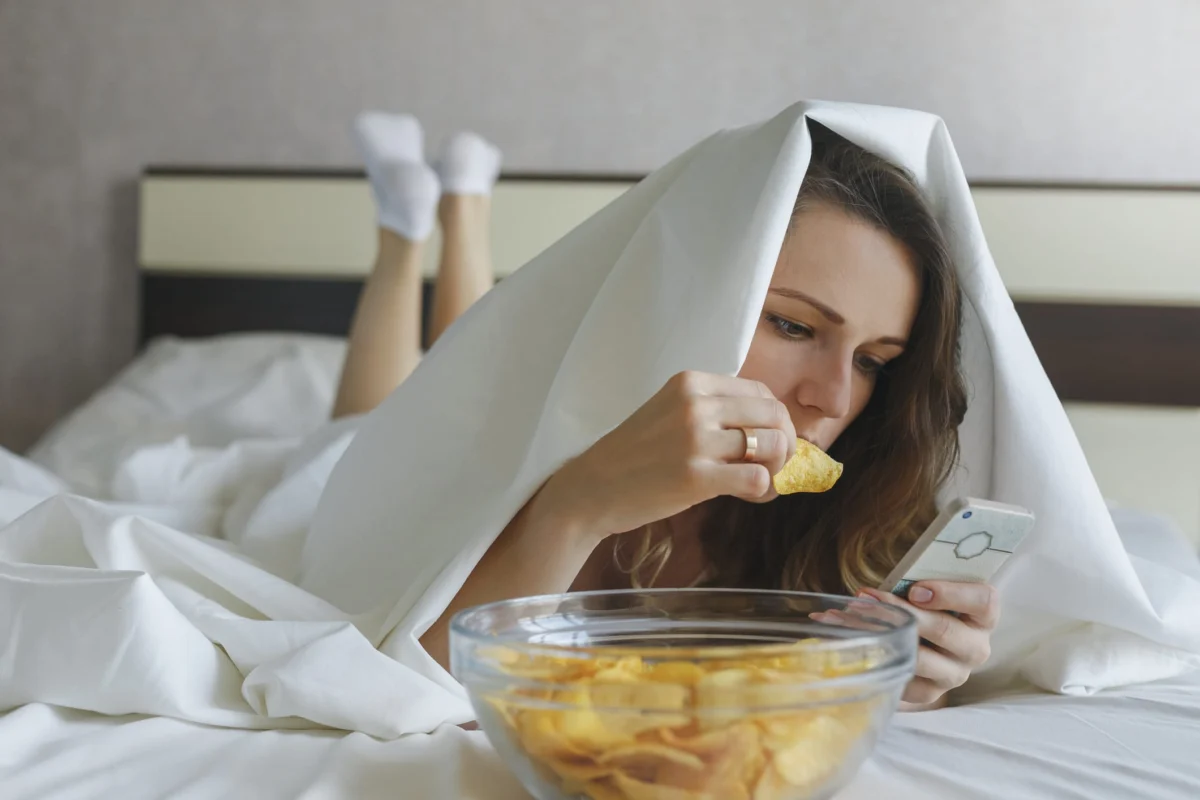
Perhaps the most alarming finding in the Lifesum report is the intersection of screen time and nutrition. Researchers have coined the term "TikTok snacking" to describe the habit of consuming food while simultaneously scrolling through social media feeds in bed.
The data is telling: nearly two-thirds (60.1%) of Gen Z respondents admit to eating while using their devices in the evening. This behavior appears to be driven by a desire for comfort rather than genuine physiological hunger. When asked about their food choices, respondents were almost evenly split between sweet (28.8%) and savory (28.9%) snacks.
This habit creates a compounding effect on sleep health. Consuming high-sugar or high-sodium foods late at night can spike blood glucose levels and cause indigestion, both of which are antithetical to deep, restorative sleep. When combined with the mental stimulation of the screen, the body is forced into a state of "alertness" at the very moment it should be entering a state of recovery.
Furthermore, the study highlights that screens are not the only factor. Caffeine remains a significant hurdle, with 33.1% of respondents citing it as their biggest sleep barrier. Alcohol consumption also plays a hidden role, with over a quarter (25.3%) of participants admitting to drinking alcohol within three hours of bedtime nearly every night. These substances, combined with the digital habits, create a complex landscape of sleep interference that goes well beyond simple anxiety.
Official Responses and Expert Analysis
Victoria Strandlund, a nutritionist at Lifesum, emphasizes that the modern lifestyle is fundamentally misaligned with human biological needs. In a recent press release regarding the findings, Strandlund noted, "Sleep no longer offers a break from the day. Instead, increasing numbers of young adults are affected by modern life, shaped by screens, stress, and constant stimulation."
Strandlund’s perspective is that the solution lies in a return to intentionality. "Small behavioral changes—particularly reducing late-night screen use and being mindful of nutrition—can improve sleep quality," she explained. The expert consensus suggests that it is not enough to simply "try to sleep"; one must actively curate an environment that promotes it. This includes setting firm digital boundaries and reconsidering the "comfort eating" habits that have become linked to late-night entertainment.
In response to these findings, Lifesum has entered a strategic partnership with the mental health and meditation company Calm. The goal is to provide users with a more holistic approach to health, bridging the gap between nutritional awareness and mindfulness. By integrating these services, the companies hope to help users replace the "TikTok scroll" with healthier, more restorative rituals like guided meditation or mindful breathing.
Environmental and Emotional Barriers
While screens are the primary focus of the study, the research also highlights that human behavior is multifaceted. Interestingly, 47.7% of respondents reported that sleeping with pets—once thought to be a comfort—actually disrupts their sleep. This suggests that the quest for a "perfect night" is being challenged by multiple external variables.
Furthermore, the emotional toll remains significant. More than half of the participants reported that stress, overthinking, or interpersonal arguments regularly interfere with their ability to rest. For 14.2% of the population, this is a nightly occurrence. The data suggests that while digital habits are a new layer of disruption, they are being laid over a foundation of existing, chronic stress, creating a "perfect storm" that is difficult to escape.
Implications: The Future of Sleep Health
The implications of this research are profound. If nearly half of the younger generation is sacrificing sleep for digital engagement, we are looking at a future with a significant public health deficit. Sleep is the bedrock of cognitive function, emotional regulation, and long-term physical health. Chronic sleep deprivation in Gen Z could lead to higher rates of anxiety, depression, and metabolic disorders in the coming decades.
The "TikTok snacking" phenomenon is a symptom of a larger issue: the commodification of our attention. Tech companies design their platforms to be addictive, and the convenience of modern life has made it incredibly easy to pair that addiction with poor nutritional choices.
To reverse this trend, we must move toward a culture of "digital hygiene." This includes:
- Establishing a "Digital Sunset": Setting a strict time—perhaps 60 minutes before bed—where all non-essential screens are turned off.
- Decoupling Screens from Food: Moving meals out of the bedroom and away from the phone to encourage mindful eating.
- Replacing Stimulation with Calm: Investing in analog alternatives for the bedtime period, such as reading, journaling, or low-impact stretches.
As we continue to navigate a world that is increasingly "always-on," the ability to "turn off" has become a radical act of self-care. The Lifesum study serves as a necessary wake-up call. We are currently in an era where we prioritize our connection to the digital world over our connection to our own bodies. By understanding the mechanisms behind our late-night habits, we can begin the process of reclaiming our rest, one night at a time.
The path forward is clear: the scroll must stop, the snacks must be put away, and the bedroom must be returned to its original purpose—a sanctuary for sleep. Only by addressing the digital habits that drive our modern restlessness can we hope to restore the quality of life that so many are currently sacrificing at the altar of the algorithm.