By Sree Roy
For decades, the polysomnography (PSG) performed within the sterile, monitored environment of a sleep laboratory has served as the undisputed gold standard for diagnosing sleep disorders. Clinicians have long operated under the assumption that the controlled nature of the lab—complete with EEG leads, environmental monitoring, and technician oversight—provides the most accurate "snapshot" of a patient’s sleep health. However, a groundbreaking exploratory analysis presented at the SLEEP 2026 conference is forcing the medical community to reconsider this paradigm.
The study, which utilized the innovative Onera Sleep Test System—a patient-applied, type II home sleep study patch—reveals that the laboratory environment may be inherently unrepresentative of a patient’s natural sleep architecture. By comparing side-by-side data from home and lab settings, researchers have uncovered significant discrepancies in sleep continuity and quality, suggesting that the "gold standard" may be inducing a "first-night effect" that clouds diagnostic precision.
The Core Findings: A Tale of Two Environments
The study involved a cohort of 52 adults across seven specialized sleep clinics in Germany. Participants underwent a full-night PSG in a clinical laboratory and a subsequent full-night study at home using the Onera patch-based system. To ensure data integrity, researchers only included subjects who achieved at least six hours in bed and a minimum of four hours of scorable data in both environments.
The results were stark. Despite the identical diagnostic technology being used in both settings, the "home-field advantage" proved to be a major variable in sleep performance.
- Sleep Continuity: Wake After Sleep Onset (WASO)—a key metric for sleep fragmentation—was slashed by more than half in the home setting. Subjects averaged 54.3 minutes of wakefulness in the lab compared to just 23.1 minutes in their own beds.
- Efficiency and Duration: Sleep efficiency improved from 81.1% in the lab to 89.1% at home. Furthermore, total sleep time increased significantly, rising from 378.6 minutes in the lab to 408.1 minutes at home.
- REM Sleep: The home environment fostered deeper, more consolidated sleep, yielding 91.1 minutes of REM sleep compared to 76.4 minutes in the clinical setting.
Perhaps most importantly, these dramatic shifts in architecture did not compromise the detection of sleep-disordered breathing. The mean apnea-hypopnea index (AHI) remained remarkably consistent, hovering between 28 and 29 events per hour across both settings. This indicates that while the environment changes how we sleep, the underlying pathology remains detectable regardless of where the study occurs.
A Chronology of the Research Paradigm
The evolution of this study reflects a broader shift in sleep medicine toward decentralization. Historically, the complexity of PSG equipment necessitated a supervised lab setting. The cables, glue, and constant monitoring by technicians were seen as essential barriers to entry for home-based diagnostics.
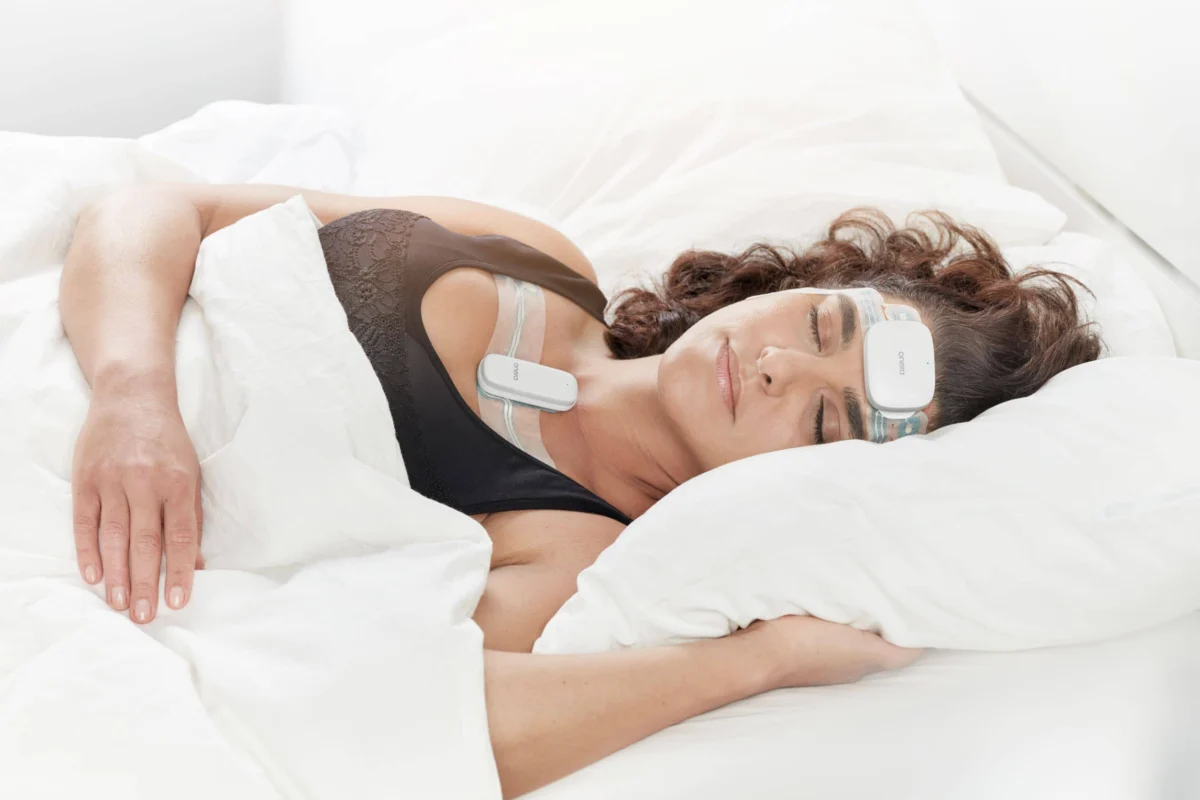
- The Rise of the Patch: The development of the Onera Sleep Test System—a lightweight, four-sensor array placed on the chest, abdomen, leg, and forehead—marked a turning point. Unlike legacy home apnea testing (HAT) devices, this type II system provides clinical-grade, multi-channel data.
- Validation Phase: Before the current comparison was possible, initial validation studies were required to prove that the patch-based sensors could match the signal quality of traditional wired PSG.
- The Comparative Analysis (2026): Researchers at seven German clinics systematically compared the two environments. By controlling for the "scorable" window, the team ensured that the data was not skewed by patients who simply failed to sleep at all in the lab.
- Data Refinement: Post-submission analysis of the SLEEP 2026 abstract allowed for the finalization of the WASO and sleep efficiency metrics, solidifying the conclusion that the lab environment serves as a significant stressor for many patients.
The "First-Night Effect" and Selection Bias
The scientific community has long acknowledged the "first-night effect"—a phenomenon where patients sleep poorly during their first encounter with a new, monitored environment. However, this study suggests the effect may be more pervasive and structurally altering than previously documented.
Steven Coughlin, PhD, clinical lead at Onera Health, notes that the study’s inclusion criteria likely resulted in an understatement of the true difference between lab and home sleep. "Patients who struggle most in the lab, for example, those with insomnia, were more likely to have fallen out of that scored subset," Coughlin explains. Because the study required a minimum of four hours of sleep for inclusion, those most severely impacted by the "lab effect" were effectively excluded from the final data set.
"If anything, that selection bias would have led to us understating the true differences between the two environments," Coughlin adds. "A change of that magnitude in how consolidated sleep was, simply from moving the recording from the lab into the patient’s own sleep environment, is striking. It underscores how unrepresentative a laboratory night might actually be of someone’s real sleep."
Official Perspectives: The Clinical Shift
For clinicians, the implications of this data extend beyond mere patient comfort. The objective is to secure the most "clinically faithful" representation of a patient’s health.
Bill Garner, vice president of global marketing at Onera Health, views this not as a death knell for the sleep lab, but as a necessary evolution of the diagnostic toolbox. "This data strengthens the case for home PSG being more than just a convenience," Garner says. "If a laboratory night is not representative of your habitual sleep, then recording a patient’s sleep in their own bedroom, in their own bed, is not just easier and more comfortable. It’s going to be more clinically faithful."
Garner is quick to address concerns regarding the potential displacement of sleep centers. The strategy, he argues, is one of capacity management. By moving routine sleep diagnostics into the home, sleep centers can optimize their resources for the patients who truly need them—those with complex comorbidities, those requiring titration, or those who cannot safely be tested at home.
"Home PSG is about making sleep labs more efficient and keeping in-lab beds for those that truly need them," Garner notes. "We are adding a tool to the diagnostic toolbox, not replacing the existing infrastructure."
Broader Implications for Sleep Medicine
The shift toward home-based, patch-style diagnostics carries several transformative implications for the field:
1. Improved Patient Compliance and Feedback
Patient comfort is directly linked to diagnostic success. In this study, 73% of subjects explicitly stated that their sleep in the laboratory was worse than their sleep at home. By reducing the "white coat" anxiety associated with sleep labs, clinicians may see higher completion rates and fewer "failed" studies. The Onera system, which can be self-applied in less than six minutes, removes the physical burden of cables and the psychological burden of being observed.
2. Scalability of Care
As the global prevalence of sleep apnea rises, the demand for sleep studies is outstripping the physical capacity of traditional sleep centers. Home PSG provides a scalable solution that allows clinics to process higher volumes of patients without the need for additional physical beds or overnight staffing.
3. Precision Diagnostics
If REM sleep and sleep continuity are negatively impacted by the lab environment, then current metrics for sleep architecture may be skewed across the board. By capturing sleep in a natural state, clinicians may obtain a clearer view of sleep-stage distribution, potentially leading to more accurate diagnoses of sleep-state misperception or subtle sleep disorders that remain hidden in the fragmented, lab-induced sleep of a traditional PSG.
Conclusion: Toward a New Gold Standard
The exploratory analysis shared at SLEEP 2026 does not necessarily invalidate the history of the sleep lab, but it does highlight its limitations. When the environment itself becomes a variable that alters the physiological outcome, the scientific validity of the test must be re-evaluated.
As technology continues to advance, the ability to replicate laboratory-grade monitoring in the home will likely become the new baseline for sleep medicine. By embracing this transition, the medical community can move toward a more representative, patient-centric model of care—one that recognizes the home as the most valid laboratory of all.
As Dr. Coughlin and Bill Garner suggest, the future of sleep medicine lies in "clinical faithfulness." If we want to understand how a patient truly sleeps, we must meet them where they sleep, rather than forcing them to adapt to the artificial confines of a clinic. The data is clear: the home environment provides a more accurate, comfortable, and efficient path to diagnosis, setting a new trajectory for the next generation of sleep health professionals.