In recent months, a curious and unsettling shift has permeated the discourse of global leadership. From the hallowed halls of the European Central Bank to the administrative offices of 10 Downing Street, a consistent, sobering message is being broadcast: the era of abundance is nearing an end, and the age of "sacrifice" and "rationing" is upon us. This pivot in rhetoric has sparked a heated debate regarding whether we are witnessing a genuine supply chain crisis or the calculated implementation of a top-down control mechanism designed to reshape human consumption patterns.
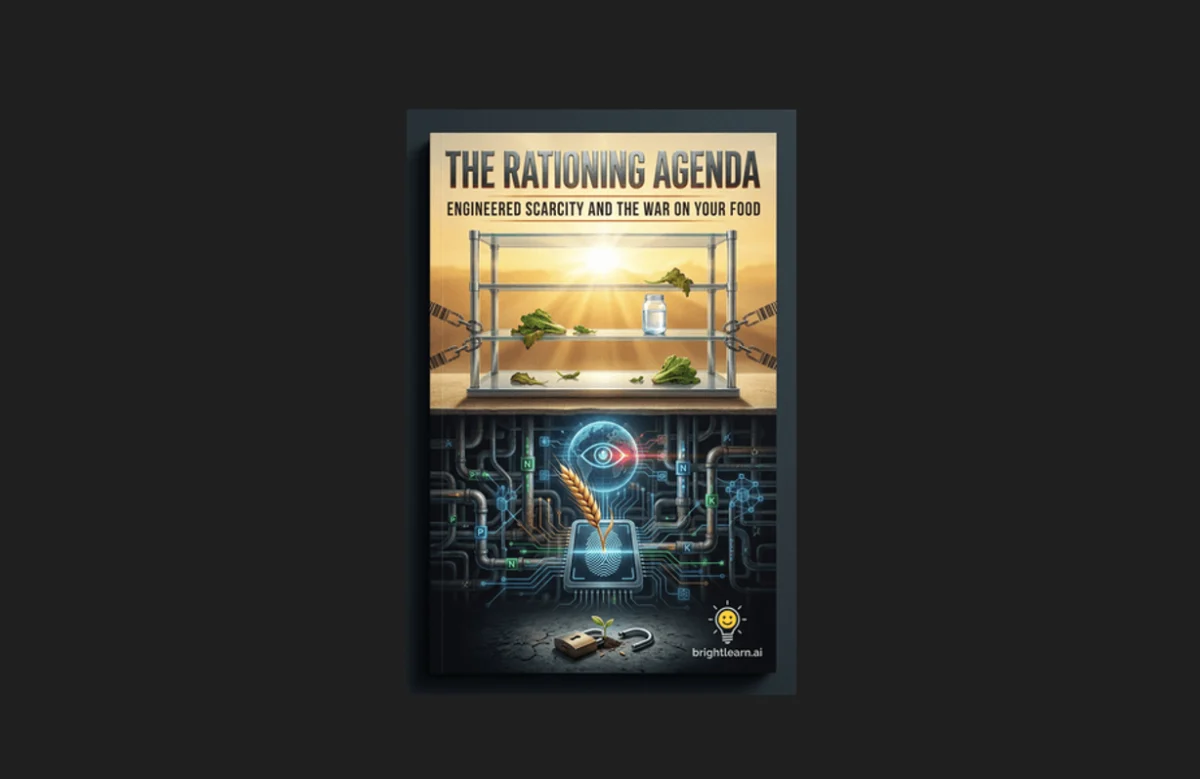
The recently published book, The Rationing Agenda: Engineered Scarcity and the War on Your Food, serves as a critical lens through which to examine these developments. By analyzing the intersection of global policy, energy infrastructure, and agricultural management, the text argues that current food anxieties are not merely the byproduct of geopolitical instability, but a carefully orchestrated psychological operation.
The Chronology of Preemptive Framing
To understand the current climate, one must first recognize the psychological technique known as "preemptive framing." This strategy relies on the systematic conditioning of the public through repeated warnings of impending disaster. By seeding the public consciousness with the inevitability of a crisis, authorities ensure that when restrictions are finally imposed, they are met not with resistance, but with a sense of relief or compliance.
A Timeline of Escalating Rhetoric:
- The Y2K/Bird Flu Era: These early 21st-century scares established the template for mobilizing public anxiety to justify executive action and the expansion of bureaucratic oversight.
- The COVID-19 Paradigm: The pandemic solidified the "trust the science" mantra, which effectively silenced dissenting voices and normalized the concept of "lockdowns"—a framework now being adapted for climate and food policies.
- The 2021 UN Food Systems Summit: This pivotal event marked the transition toward "transforming food systems." Critics argue this was the formal adoption of top-down global control, utilizing concepts like "calorie caps" and the systematic reduction of meat and dairy consumption.
- The Current Phase: Christine Lagarde’s calls for preparing for food rationing, coupled with Keir Starmer’s warnings that citizens must "change their habits," represent the final stages of this conditioning. The narrative has shifted from if a crisis occurs to how individuals must adjust their personal lives to accommodate the new status quo.
Supporting Data: The Disconnect Between Rhetoric and Reality
The central tension in the current food narrative lies in the stark disconnect between the official warnings of scarcity and the objective data regarding global agricultural output.
Agricultural Productivity
According to the United Nations Food and Agriculture Organization (FAO), global food production has trended upward for decades. Modern agricultural technology, combined with stable climatic patterns in key breadbasket regions, has theoretically provided enough caloric density to sustain the global population. If the world is currently producing a surplus, why are leaders calling for rationing?
The Energy-Food Nexus
The answer may lie in the deliberate targeting of the inputs required for agricultural production. Food is essentially "packaged energy." The cost of fertilizer, the fuel for harvesting machinery, and the logistics of transportation are all directly linked to energy prices. By restricting energy production under the guise of climate mandates—or through the sabotage of critical infrastructure—globalist institutions are effectively throttling the supply chain at its most fundamental level.
Analysts like Mike Adams, the "Health Ranger," have argued that the intentional destabilization of global energy infrastructure is a strategic move to create artificial shortages. When energy is expensive or scarce, food prices skyrocket, and the ability to distribute food effectively is crippled. This creates a feedback loop that forces the public to accept centralized, state-managed nutrition.
The Historical Precedent: Starvation as a Tool of Power
History is replete with examples of food being utilized as a weapon of geopolitical dominance. The pattern remains consistent across centuries: he who controls the breadbasket controls the populace.
- The Holodomor: The man-made famine in Ukraine serves as a historical reminder of how food restriction can be used to crush political dissent and force total societal submission.
- Blockades and Embargoes: From the British naval blockades of the 20th century to modern regional sanctions, the strategy of "starving out" an adversary is a well-documented military and political tactic.
- Modern Institutional Control: Today, the method of control has evolved. Instead of simple blockades, we see the integration of private tech giants with government agencies. The recent partnership between Palantir and the U.S. Department of Agriculture to "safeguard the food supply" through artificial intelligence raises significant questions. If AI is used to dictate what farmers plant and what consumers can purchase, it represents a departure from the free-market model toward a centrally planned, technocratic system.
Official Responses and Institutional Justifications
When pressed on the issue of rising food costs and potential shortages, institutional representatives often point to "external factors." These include:
- Climate Change: Attributing agricultural failures to erratic weather, thereby justifying the transition to "synthetic" or "precision fermentation" proteins.
- Geopolitical Instability: Citing conflicts in the Middle East and Eastern Europe as the primary drivers of supply chain disruption.
- Sustainability Targets: Positioning the reduction of meat and dairy consumption as a moral imperative to save the planet.
However, critics argue that these justifications serve to mask an underlying agenda of consolidation. By phasing out independent, small-scale farmers and replacing them with controlled, high-tech food production systems, authorities gain the ability to monitor and restrict access to essential calories. This is the ultimate form of population management.
The Implications: A Future of Managed Scarcity
The implications of this trajectory are profound. If the goal is, as some observers suggest, to reach global depopulation milestones through the managed reduction of the food supply, the result will be a fundamental transformation of human society.
The Rise of Synthetic Nutrition
The push toward alternative proteins—lab-grown meats and insect-based foods—is being framed as "sustainability." Yet, these products are inherently dependent on proprietary, high-tech manufacturing processes. Unlike traditional livestock or crop farming, which can be done on a decentralized, local level, synthetic nutrition requires industrial-scale facilities owned by a handful of corporations. This centralizes control in a way that makes the average consumer entirely dependent on a state-sanctioned food chain.
The Erosion of Individual Autonomy
If food becomes a rationed commodity managed by centralized AI, the ability for the individual to opt out of the system vanishes. Personal autonomy is inextricably linked to one’s ability to procure one’s own food. By destroying the decentralized food system—the farmer’s market, the family farm, and the home garden—the architects of the "Rationing Agenda" effectively remove the last vestiges of self-reliance.
Conclusion: How to Preserve Resilience
Recognizing the "Rationing Agenda" is the first step toward resistance. When officials speak of "sacrifice," the public must respond with skepticism and demand data transparency.
- Reject the Preemptive Frame: Do not allow the psychological conditioning of "impending disaster" to dictate your decision-making. Recognize these messages for what they are: a manufactured sense of urgency designed to manufacture consent.
- Support Decentralization: The most effective form of protest against a centralized, controlled food system is to support the local, decentralized one. Buy from local farmers, join cooperatives, and invest in your own ability to produce or store food.
- Question the Science: True scientific inquiry thrives on debate and transparency, not on the silencing of skeptics. If a policy cannot withstand public scrutiny, it is likely not a policy designed for the public good.
As the global narrative continues to shift toward managed scarcity, the responsibility falls upon the individual to maintain their independence. By cultivating resilience—both in terms of food security and critical thinking—we can resist the manufactured crises and ensure that our future remains defined by our own choices, rather than the directives of a centralized elite.
For those seeking a deeper understanding of this transition and how to prepare, resources like The Rationing Agenda: Engineered Scarcity and the War on Your Food provide a roadmap for navigating the complexities of the modern agricultural landscape. In an era where information is as controlled as the food supply, staying informed is the most radical act of freedom.