








Every July, the global disability community pauses to mark Disability Pride Month. It is a time for commemoration, celebration, and, crucially, a radical re-evaluation of how society views human value. Tied to the historic signing of the Americans with Disabilities Act (ADA) on July 26, 1990, this month is far more than a calendar marker; it is a declaration of presence and a demand for equity in a world that has historically relegated disabled people to the margins.
With the Centers for Disease Control and Prevention (CDC) reporting that one in four U.S. adults lives with a disability, this is not a niche demographic. It is a fundamental segment of the human experience. As the majority of people will experience a disability at some point in their lives, Disability Pride is a movement for everyone.
The Evolution of the Movement: From Silence to Advocacy
To understand the current state of disability rights, one must look at the timeline of advocacy that transformed the legal landscape of the United States.
A Chronology of Progress
- 1972: The Center for Independent Living is founded in Berkeley, California, by Ed Roberts and other activists. It establishes the "Independent Living Movement," which shifts the focus from medical institutionalization to self-determination.
- 1973: Section 504 of the Rehabilitation Act is passed, prohibiting discrimination based on disability in any program receiving federal funding.
- 1977: Activists orchestrate the "504 Sit-In," the longest peaceful occupation of a federal building in U.S. history. For 28 days, protesters in San Francisco forced the government to finally enact the regulations promised four years earlier.
- 1990: The Americans with Disabilities Act (ADA) is signed into law following the "Capitol Crawl," where activists discarded their mobility aids to climb the steps of the U.S. Capitol, physically demonstrating the barriers they faced daily.
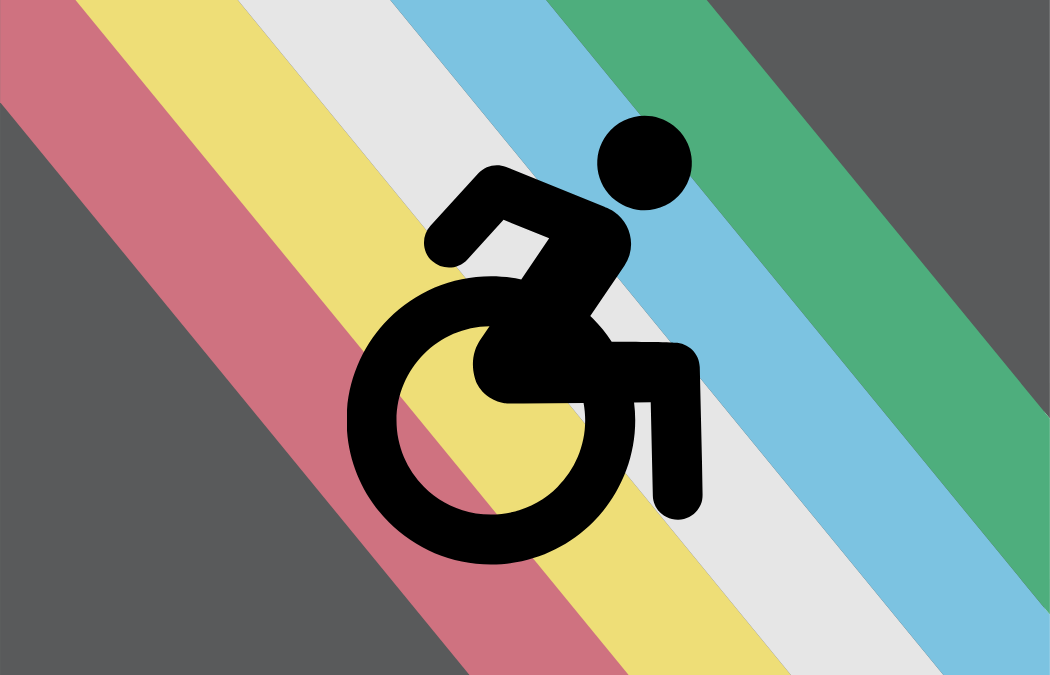
- 2019–2021: The Disability Pride Flag is introduced by Ann Magill, later refined to ensure high-contrast accessibility for those with visual impairments.
The World Works Better With Us: A New Framework for Inclusion
The theme for this year’s commemoration, “The World Works Better With Us,” selected by The Arc’s National Council of Self-Advocates (NCSA), challenges the common narrative that disability is a tragedy to be "fixed." Instead, it posits that disability is a natural part of human variation.
When accessibility is treated as an afterthought—or worse, a "burden"—everyone loses. This is best illustrated by the "Curb Cut Effect." Originally conceived to allow wheelchair users to navigate city streets, curb cuts are now utilized by parents with strollers, delivery workers hauling heavy goods, and travelers with luggage. Similarly, closed captioning, designed for the Deaf and hard-of-hearing community, has become a standard tool for language learners, commuters in noisy environments, and remote workers.
When we design for the most marginalized, the infrastructure of society becomes more robust, intuitive, and efficient for the entire population.
The Intersection of Identity: Disability Justice
While the traditional disability rights movement made significant legal strides, critics have noted that it often failed to account for intersectionality. The early movement was largely white, male-led, and centered on a specific vision of independence that did not always align with the realities of BIPOC, low-income, or chronically ill individuals.
In response, the Disability Justice movement emerged. Founded by activists like Patricia Berne and Leroy Moore, the framework, popularized by the performance project Sins Invalid, argues that ableism cannot be untangled from racism, classism, and other systemic oppressions. They introduced the "10 Principles of Disability Justice," which emphasize that any movement for liberation that leaves behind those with the most complex needs is fundamentally incomplete.
Data and Disparity: The Current Landscape
Despite the legal protections of the ADA, data suggests that the promise of the law remains unfulfilled.
- Employment Gaps: Disabled workers continue to face significantly higher unemployment rates compared to their non-disabled peers, often due to physical barriers in the workplace and discriminatory hiring practices.
- Institutionalization: Even today, thousands of people with disabilities remain trapped in institutions, despite the Supreme Court’s Olmstead v. L.C. decision, which ruled that the unjustified segregation of persons with disabilities constitutes discrimination.
- Medical Access: There are ongoing, systematic threats to the provision of necessary medical supplies, educational accommodations, and benefits, forcing the community to remain in a state of constant, defensive advocacy.
The Symbolic Power of the Disability Pride Flag
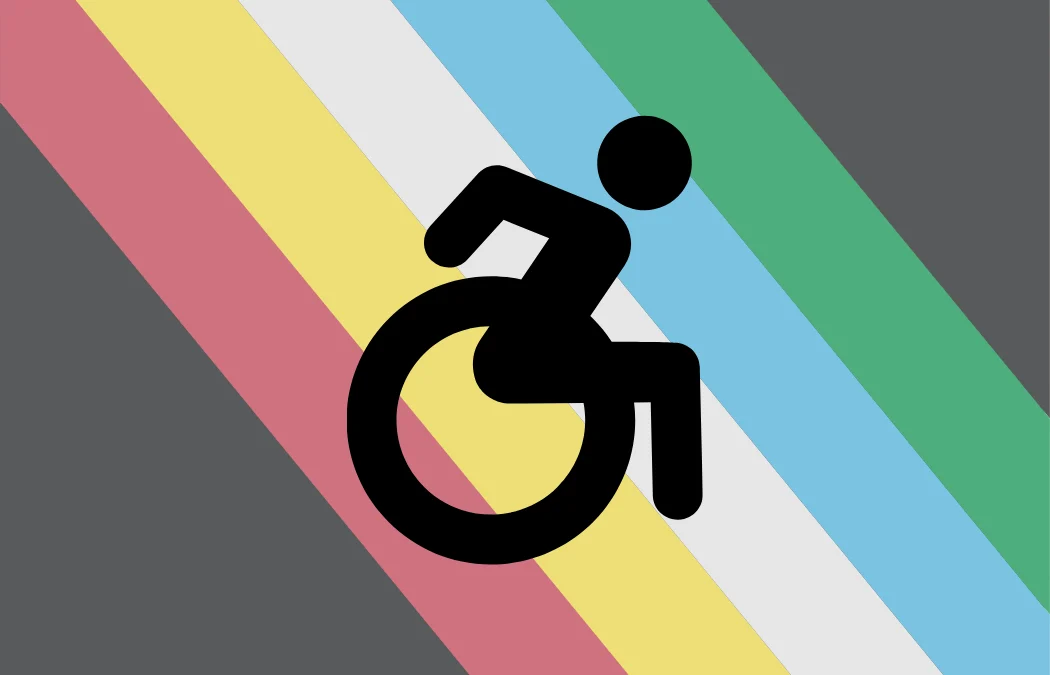
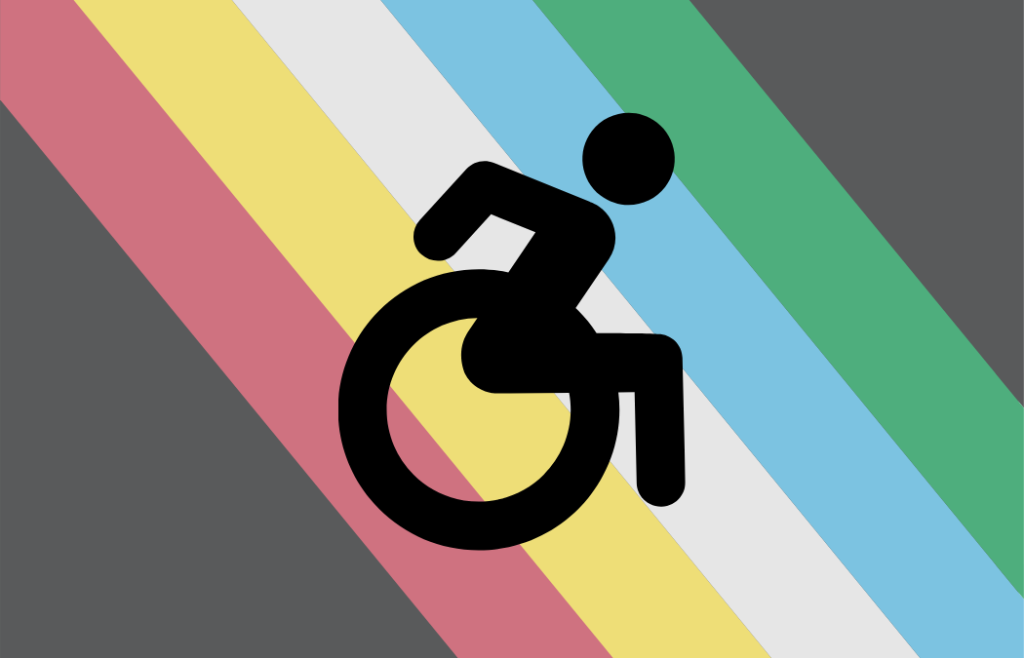
The flag serves as a visual beacon of this movement. Its design is intentional:
- The Charcoal Background: Symbolizes the mourning for those lost to violence, neglect, and systemic ableism.
- The Diagonal Stripes: Represent the act of "cutting across" societal barriers.
- The Colors: Red (physical disabilities), Gold (neurodiversity), White (invisible disabilities), Blue (psychiatric disabilities), and Green (sensory disabilities) represent the breadth of the community.
By using muted tones in the updated design, the community has ensured that the flag itself is a symbol of inclusivity, viewable by those with light sensitivities and visual impairments.
Implications: Moving Beyond "Pride" as a Feeling
The word "pride" is often misunderstood. For many in the disability community, the daily reality is one of grief, exhaustion, and frustration. Facing decades of unanswered inquiries, broken accessibility, and societal stigma is a heavy burden.
However, Disability Pride is not necessarily about an internal feeling of joy; it is an external act of defiance. It is the refusal to accept the shame that society projects onto disabled bodies. Shame creates isolation, keeping individuals quiet and disconnected. Pride acts as the antithesis; it is the acknowledgment that one’s existence has inherent value, regardless of productivity or "normativity."
Call to Action: How to Engage
Celebrating Disability Pride does not require being disabled; it requires being an active, informed ally. Here is how the community suggests participating:
- Educate Yourself: Research the history of the 504 Sit-In and the Disability Justice movement. Understand that the rights we enjoy today were hard-won through sacrifice.
- Advocate for Universal Design: Support policies that prioritize accessibility in public spaces, digital platforms, and workplaces.
- Center Disabled Voices: Follow, listen to, and compensate disabled creators and activists. Ensure that the "nothing about us without us" principle is applied in your own workplace and community organizations.
- Challenge Stigma: When you see ableist language or exclusionary practices, call them out. Recognize that accessible infrastructure is a public good, not a charitable concession.
Conclusion
As we observe Disability Pride Month in 2026, the mandate remains clear: The fight for civil rights is ongoing. The ADA was a foundation, not the ceiling. By embracing the principle that the world works better with us, we move toward a future where "independence" is redefined as "interdependence"—a society where every individual is supported, valued, and provided the tools to thrive.
The history of the disability movement is a history of innovation, courage, and relentless persistence. As we look toward the future, the goal is not just to be included in a broken system, but to help build a world that is fundamentally better for everyone.