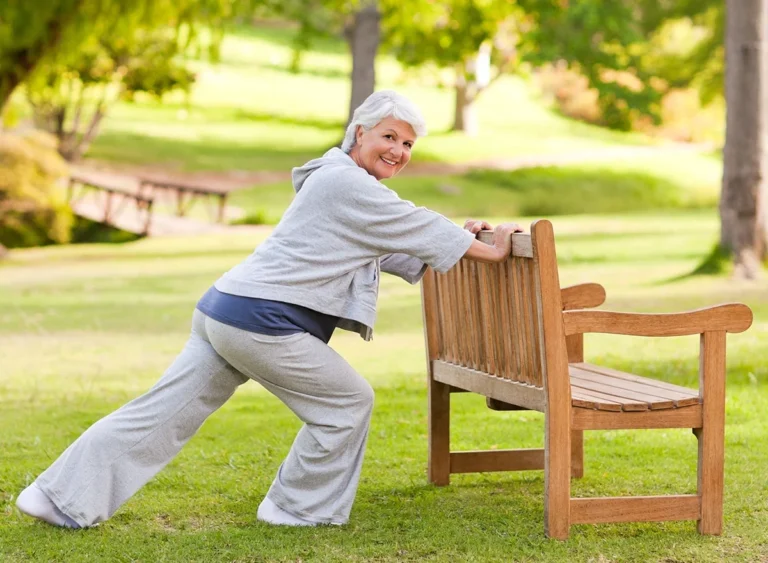











As we cross the threshold into our sixties and beyond, the physical landscape of our lives begins to shift. Tasks that were once performed with subconscious ease—climbing a flight of stairs, navigating an uneven sidewalk, or rising from a low-slung sofa—can suddenly demand a level of conscious effort that feels both new and, at times, daunting. While low-impact practices like yoga are universally celebrated for their role in improving flexibility, breathing, and joint health, there is an often-overlooked physiological reality: mobility is only half the battle. To truly maintain independence, the body requires raw, functional strength.
Building strength after 60 does not necessarily require a daunting trip to a commercial gym or the mastery of complex, heavy-load machinery. Instead, the solution can be found in the most accessible piece of equipment in your own home: the wall.
The Science of Structural Support: Why Wall Exercises Work
The concept of "wall-supported training" bridges the gap between sedentary living and high-performance athleticism. By utilizing a vertical surface for stability, individuals can engage their muscles under tension without the overwhelming fear of instability.
From a kinesiological perspective, the wall acts as a "biofeedback mechanism." It provides constant tactile cues regarding posture, spinal alignment, and depth. For an older adult, this means the brain can stop obsessing over the mechanics of balance and focus entirely on the activation of the target muscle groups: the quadriceps, glutes, hamstrings, and calves.
When you remove the instability inherent in free-standing exercises, you reduce the risk of injury while simultaneously allowing for higher "time under tension." This is the primary driver of hypertrophy (muscle growth) and neuromuscular recruitment, both of which are critical to reversing the age-related muscle loss known as sarcopenia.
The Core Four: A Comprehensive Guide to Rebuilding Strength
To rebuild a foundational base of leg strength, one must focus on four distinct movement patterns: isometric holds, single-leg stabilization, unilateral loading, and the posterior chain hinge.
1. The Wall Sit: Building Endurance Under Tension
The wall sit is the gold standard for isometric strength. Unlike a traditional squat, which requires dynamic movement, the wall sit forces the quads to fire continuously at a fixed angle.
- The Mechanism: By pinning the back against the wall, you isolate the quadriceps. This builds the specific endurance required for standing in long lines, cooking at the counter, or maintaining a steady posture during social events.
- Execution: Lean your back flat against the wall. Walk your feet out and slide down until your knees are bent at a comfortable angle—ideally near 90 degrees, though starting higher is perfectly acceptable. Keep your feet hip-width apart and ensure your weight is evenly distributed through your heels.
- The Protocol: Aim for 3 sets of 20 to 30 seconds. If you feel your form breaking or your knees shaking uncontrollably, rise out of the position immediately. Rest for 45 seconds to allow for full ATP (adenosine triphosphate) recovery.
2. Wall Marches: Mastering Single-Leg Stability
Walking is essentially a series of controlled falls from one leg to the other. If you lack single-leg stability, your stride becomes hesitant and narrow. Wall marches act as a "training ground" for the gait cycle.

- The Mechanism: This exercise challenges the hip flexors and core. By pressing gently against the wall, you create a stable frame that allows you to lift one knee toward your chest without fear of tipping.
- Execution: Stand facing the wall with your hands pressed against it at shoulder height. Maintain a tall, neutral spine. Slowly lift one knee until the thigh is parallel to the floor, pause for a second to engage the core, and return to the start.
- The Protocol: Perform 3 sets of 10 to 12 repetitions per leg. The goal is to move slowly; momentum is the enemy of strength.
3. Wall-Supported Split Squats: Unilateral Power
One of the most common causes of mobility decline is the "strength gap" between the left and right leg. We tend to favor our dominant side, which leaves the other side vulnerable to injury. Split squats force each leg to do its own work.
- The Mechanism: By using the wall for balance rather than support, you can safely load the front leg. This translates directly to the ability to climb stairs, where one leg must bear the entirety of your body weight.
- Execution: Stand in a staggered stance (one foot forward, one back). Keep your hands lightly touching the wall for balance. Lower your back knee toward the floor, keeping your front knee tracking over your toes.
- The Protocol: Complete 3 sets of 8 to 10 reps per leg. Keep the motion controlled—two seconds down, two seconds up.
4. Hip Hinge to Wall: Strengthening the Posterior Chain
The "posterior chain"—the glutes, hamstrings, and lower back—is often weak due to excessive sitting. The hip hinge is the mechanical movement of bending at the waist while keeping the spine neutral.
- The Mechanism: The wall provides a physical target. If your glutes don’t touch the wall, you haven’t hinged far enough. This teaches the brain to "sit back" into the hips rather than rounding the lower back, which is a common cause of chronic back pain.
- Execution: Stand with your back a few inches away from the wall. With a slight bend in your knees, push your hips backward until your glutes make contact with the wall. Keep your chest up and your gaze forward.
- The Protocol: Perform 3 sets of 10 to 12 reps. This move is less about burning muscles and more about learning proper movement patterns.
Supporting Data and Clinical Implications
Research published in the Journal of Aging and Physical Activity indicates that even low-to-moderate intensity strength training significantly improves the "Timed Up and Go" (TUG) test results in individuals over 65. The TUG test is a clinical standard used by geriatricians to predict fall risk.
Furthermore, a study in the Journal of Strength and Conditioning Research highlights that wall-supported exercises mitigate the "fear of movement" (kinesiophobia). When participants feel the security of a wall, they are statistically more likely to reach higher levels of muscle activation compared to performing the same movements unsupported. This psychological "safety net" allows for a higher volume of training, which is the cornerstone of long-term strength gains.
Implementation: Integrating Into Daily Life
To see lasting results, consistency must outweigh intensity. You do not need to perform these exercises daily. In fact, muscle tissue requires recovery time to repair and grow stronger.
Recommended Weekly Schedule
- Monday: Full Wall Circuit (All 4 exercises)
- Tuesday: Active Recovery (Walking or light stretching)
- Wednesday: Full Wall Circuit
- Thursday: Active Recovery
- Friday: Full Wall Circuit
- Weekend: Rest or light recreational movement
A Note on Professional Consultation
Before beginning any new exercise regimen, particularly if you have a history of cardiovascular disease, joint replacements, or chronic orthopedic pain, it is essential to consult with your physician or a physical therapist. They can help identify if any of these movements need to be modified for your specific anatomy.
Final Considerations: The Path Forward
Strength is not just about muscle mass; it is about autonomy. By utilizing the wall as your anchor, you strip away the barriers of complexity and intimidation that often prevent people from exercising.
Remember, the goal is not to perform a perfect rep on your first attempt. The goal is to move with intention. Start with the wall-supported variations, focus on your breathing, and respect the process. As your confidence grows, your body will respond, turning the daily obstacles of stairs and walking into opportunities to showcase your newfound strength. You are not just exercising; you are investing in the quality of your future years. Take it one controlled set at a time.