











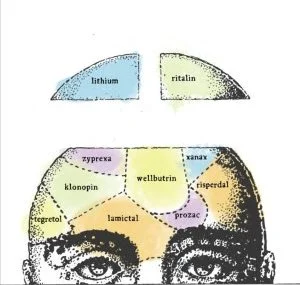
The current landscape of global mental health care is at a crossroads, caught between a long-standing pharmacological paradigm and an emerging movement calling for humanistic, drug-free alternatives. In a recent, wide-ranging discussion on the Psychophobia podcast, hosted by Dr. Michael Montgomery, investigative journalist and author Robert Whitaker shed light on the systemic failures of modern psychiatry, the dangers of polypharmacy, and the burgeoning success of alternative care models in Europe and the Middle East.
Whitaker, the founder of Mad in America and author of the seminal work Anatomy of an Epidemic, argues that the very foundation of modern psychiatric treatment—the "chemical imbalance" theory—has not only been scientifically debunked but has led to a culture of over-prescription that often causes more harm than healing.
Main Facts: The Human Cost of Chemical Intervention
The conversation between Whitaker and Dr. Montgomery centered on the lived experiences of individuals whose lives were derailed by psychiatric intervention. Chief among these narratives is the high-profile case of rock legend Stevie Nicks, whose battle with benzodiazepines serves as a cautionary tale for the broader medical community.
The Stevie Nicks Case Study
Stevie Nicks, the iconic frontwoman of Fleetwood Mac, famously lost eight years of her life to a Klonopin prescription. After successfully overcoming a cocaine addiction, a psychiatrist prescribed her benzodiazepines to help her remain "stable." The result was catastrophic. Nicks described losing her creativity, her physical health, and her "zest for life." Whitaker notes that this experience is far from unique; it represents a systemic issue where the treatment becomes a secondary, and often more debilitating, illness.
According to Nicks, the drug turned her into a "zombie," a sentiment echoed by thousands of patients globally who find that long-term use of benzodiazepines and antipsychotics erodes the fundamental qualities of their personality. It took three months in a specialized detox clinic for Nicks to reclaim her life—a recovery that Whitaker argues should be the goal of all psychiatric care, yet is often hindered by the medications themselves.
The Tragedy of Pediatric Polypharmacy
The podcast also highlighted the work of Tony Stanton, who operated a residential center for children deemed the "worst of the worst" by the foster care and psychiatric systems. These children often arrived on a "cocktail" of five to seven different psychiatric medications. Stanton’s radical approach was simple: he systematically titrated the children off the medications.
The results were transformative. Whitaker describes how these children, once lethargic or prone to violent outbursts while medicated, "came alive again." By removing the chemical barriers, the staff were able to address the underlying trauma and behavioral issues through human connection rather than pharmaceutical suppression. Whitaker emphasizes that the current trend of "polypharmacy"—prescribing multiple drugs simultaneously—has "zero, zip" evidence to support its safety or efficacy in the long term.
Chronology: From the "Biological Revolution" to the Current Crisis
To understand the current state of psychiatry, one must look at the shift in treatment philosophy that occurred in the late 20th century.
- The 1950s–1970s: The Era of Institutionalization and Early Drugs. Psychiatry relied heavily on asylums and the first generation of antipsychotics (like Thorazine). While these drugs suppressed symptoms, they were recognized as "chemical lobotomies."
- The 1980s: The Birth of the "Chemical Imbalance." With the launch of Prozac in 1987, the pharmaceutical industry and the American Psychiatric Association (APA) began a massive marketing campaign. They promoted the idea that mental distress was caused by a lack of serotonin or dopamine—a theory that simplified complex human emotions into a biological "brokenness."
- The 1990s–2000s: The Rise of Polypharmacy. As the initial promise of SSRIs and newer antipsychotics failed to result in declining disability rates, clinicians began adding more drugs to compensate for side effects or partial responses. This led to the "cocktail" approach seen today.
- 2010–Present: The Retraction and Re-evaluation. Recent large-scale reviews, such as the 2022 molecular psychiatry study led by Joanna Moncrieff, have confirmed that there is no evidence for the serotonin hypothesis. This has left the field in a state of "crisis of legitimacy," as the primary justification for mass prescribing has crumbled.
Supporting Data: The Evidence Against Long-Term Medicated Outcomes
Whitaker’s arguments are backed by a growing body of longitudinal data suggesting that while psychiatric drugs may offer short-term relief, they often worsen long-term outcomes.
The Disability Paradox
Since the "Biological Revolution" began in the late 1980s, the number of people on government disability due to mental illness has skyrocketed. In the United States, the number of disabled mentally ill adults more than tripled between 1987 and 2007. Whitaker argues that if these treatments were truly curative, we would see a decrease in disability, not an exponential increase.
Benzodiazepine Long-term Risks
Research into benzodiazepines (like Klonopin, Xanax, and Ativan) shows that long-term use leads to cognitive impairment, increased risk of dementia, and a severe withdrawal syndrome that can last years. The "Psychophobia" podcast notes that many patients are never warned about the difficulty of tapering off these substances, leading to a state of involuntary dependency.
Lack of Evidence for Polypharmacy
Whitaker points out that almost all FDA clinical trials are conducted on single drugs for short durations (6–8 weeks). There are virtually no long-term studies proving that taking three or four psychiatric drugs simultaneously is safe or effective. Despite this, "polypharmacy" has become the standard of care for many patients with complex diagnoses.
Official Responses and the Defensive Stance of Organized Psychiatry
The critiques leveled by Whitaker and the Mad in America community have met with significant pushback from the psychiatric establishment, though the tide is beginning to turn.
The American Psychiatric Association (APA)
The APA has traditionally defended the use of medications as essential tools for managing "brain disorders." However, in recent years, prominent figures within the APA have begun to distance themselves from the "chemical imbalance" narrative, reframing it as a "useful metaphor" rather than a biological fact. Critics like Whitaker argue that this is a move to avoid accountability for decades of misinformation.
The Pharmaceutical Industry
Drug manufacturers continue to emphasize the "biological" nature of mental illness, as it secures a lifetime consumer base. However, the industry has largely pulled back from researching new psychiatric drugs, as the "me-too" drugs of the last 20 years have failed to show significant improvement over older, cheaper generics.
The World Health Organization (WHO)
In a landmark move, the WHO recently released guidelines calling for a radical shift in mental health care. The WHO report explicitly states that "an over-reliance on psychotropic drugs" is a violation of human rights and calls for a move toward social-based and rights-based care—aligning closely with Whitaker’s perspective.
Implications: The Revolution of "How Can I Help You?"
The most profound part of the Whitaker-Montgomery dialogue involves the philosophy of care that could replace the current model. Whitaker suggests that the future of mental health care doesn’t require a complex new medical model, but rather a return to humanistic principles.
The "Notecard" Philosophy
Whitaker posits that an effective philosophy of care can fit on a single notecard: "How can I be of help to you?" This shifts the power dynamic from the doctor as an "expert" fixing a "broken machine" to a collaborator helping a person navigate a difficult period in their life. It prioritizes the patient’s goals—such as returning to work or reconnecting with family—over the suppression of symptoms.
International Success Stories
Whitaker points to Norway and Israel as beacons of hope:
- Norway: The Norwegian Ministry of Health mandated that all regional health authorities provide "medication-free wards." These wards allow patients to choose treatment without drugs, focusing instead on exercise, art, and "Open Dialogue" therapy.
- Israel: The "Soteria" house model has gained traction, providing a home-like environment for people experiencing acute psychosis. These houses prioritize "being with" the person in distress rather than "doing to" them with heavy sedation. Data from these models often show better long-term social integration and higher recovery rates compared to traditional hospital settings.
Conclusion: Recovery as a Radical Act
In the current psychiatric culture, the idea of full recovery without long-term medication is often dismissed as a "conspiracy theory" or a dangerous fringe idea. However, as Robert Whitaker and Dr. Michael Montgomery conclude, the real danger may lie in the status quo.
The "revolution" in mental health care may not come from a new laboratory-designed molecule, but from a societal decision to listen to the stories of those like Stevie Nicks and the children in Tony Stanton’s care. By prioritizing human connection, addressing social determinants of health, and respecting the autonomy of the individual, the field of psychiatry has the opportunity to move from a period of chemical suppression to an era of genuine healing.
As Whitaker asserts, the evidence is increasingly clear: when the medications stop and the support begins, people often "come alive again." The challenge now is building a healthcare system that views that "coming alive" as its primary mission.