











As we navigate our sixth decade and beyond, the biological landscape of our bodies begins to shift. Metabolic rates naturally decelerate, hormonal changes influence fat distribution, and the battle against the "belly pooch"—a common concern for many adults over 60—often feels like an uphill climb. However, modern exercise physiology suggests that the solution isn’t necessarily found in thousands of floor-bound crunches. Instead, the most effective path to a stronger, leaner midsection lies in functional, standing movement.
By shifting our focus from isolated abdominal training to integrated, whole-body standing exercises, we can improve body composition, enhance posture, and build the functional strength necessary for a vibrant lifestyle.
The Shift in Core Philosophy: Why Standing Matters
For decades, traditional fitness advice centered on "spot reduction"—the idea that performing endless sit-ups would miraculously target belly fat. Science has consistently debunked this myth. Achieving a leaner midsection is a holistic endeavor, dictated by overall body composition, nutrition, and systemic movement.
When we train in a standing position, we engage the body’s kinetic chain. Unlike floor exercises, which rely on the ground for stability, standing movements require the core to constantly adjust to gravity and shifts in weight. This forces the abdominal muscles, lower back, and obliques to work in concert with the larger muscle groups of the legs, hips, and shoulders. This "total-body signal" is far more effective at burning calories and preserving lean muscle mass than sedentary, isolated movements.
Chronology of Progress: Building Your Routine
To see tangible changes in body composition after 60, consistency is paramount. A structured approach ensures that you aren’t just "working out," but actively training your body to adapt.
Phase 1: The Foundation (Weeks 1–2)
Focus on form over intensity. Use light weights or even body weight to master the movement patterns of the exercises listed below. The goal is to build neuromuscular connections—teaching your brain how to recruit your core while your limbs are in motion.
Phase 2: Progressive Overload (Weeks 3–6)
Once the movements feel natural, introduce controlled resistance. Use dumbbells or a medicine ball to increase the metabolic demand. This is when you begin to challenge your muscles to build the lean tissue that naturally boosts your resting metabolic rate.
Phase 3: The Circuit Integration (Week 6 and Beyond)
Combine these moves into a high-efficiency circuit. By moving from one exercise to the next with minimal rest, you create a "metabolic spike" that keeps your heart rate elevated, promoting fat oxidation and improved cardiovascular health.
The Five Essential Standing Exercises
To address the midsection effectively, we must select movements that demand stability while generating force. The following five exercises are the gold standard for adults over 60.
1. Dumbbell Ski Swings
This movement is a powerhouse for the posterior chain. By mimicking the motion of a skier, you engage the glutes, hamstrings, and shoulders, while your core acts as a stabilizer to prevent excessive arching of the back.
- The Benefit: It builds explosive power and improves hip mobility, which is critical for maintaining a youthful gait.
- Execution: Keep your knees slightly bent and your spine neutral. Drive the weight using the hips, not the arms.
2. Low-Impact Skater Steps
Balance is a primary pillar of longevity. Skater steps work the outer hips and glutes, which are often neglected in standard forward-walking patterns.
- The Benefit: The lateral (side-to-side) movement engages the obliques—the muscles responsible for a "tightened" waist appearance.
- Execution: Land softly on each foot, ensuring your knee stays aligned with your toes to protect the joint.
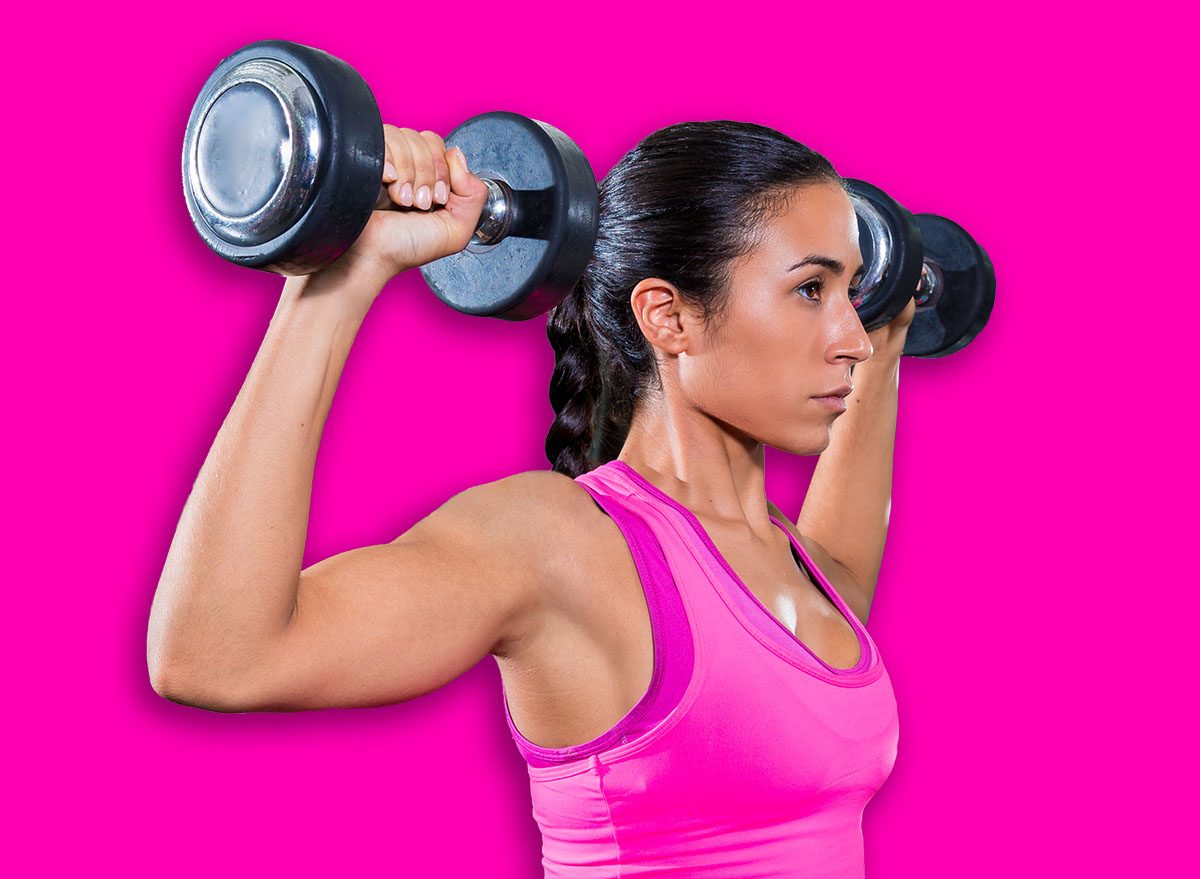
3. Dumbbell Push Press
This is a full-body integration move. By dipping your knees and using the legs to "push" the weight overhead, you engage the entire core to transfer energy from the floor to the ceiling.
- The Benefit: It improves upper-body strength and shoulder stability, which directly contributes to better upright posture—making you look and feel leaner instantly.
4. Reverse Lunge to Knee Drive
This move is a "triple threat" for the midsection. The lunge builds leg strength, while the knee drive requires extreme core recruitment to stabilize the torso on one leg.
- The Benefit: It forces the core to switch from a state of relaxation to a state of high tension in a split second.
5. Medicine Ball Slams
Slamming a medicine ball requires the entire body to coordinate. It is perhaps the most effective movement for teaching the core to generate force.
- The Benefit: It provides a safe, controlled way to increase heart rate and engage the lats and abs simultaneously.
Supporting Data: The Role of Lean Muscle
Research published in journals like Medicine & Science in Sports & Exercise highlights that for individuals over 60, the loss of muscle mass (sarcopenia) is a primary driver of the "belly pooch." As muscle mass declines, the body’s ability to process glucose and manage body fat diminishes.
Standing exercises act as a defense mechanism against sarcopenia. By keeping the body upright and under load, you are sending a physiological message to your body to maintain muscle tissue. The more muscle you maintain, the higher your basal metabolic rate, which makes it significantly easier to manage body fat levels over time.
Official Perspectives: Expert Guidelines
Fitness professionals and geriatric specialists generally agree on the following:
- Safety First: Always consult with a physician before starting a new exercise regimen, especially if you have concerns regarding bone density or joint health.
- Controlled Tempo: In the 60+ demographic, quality of movement outweighs the speed of movement. "Athletic but controlled" is the mantra.
- The 80/20 Rule: Exercise is only 20% of the equation. A "leaner waistline" is heavily dependent on nutrition—specifically protein intake, which is vital for muscle repair after these workouts.
Implications for Daily Life
The true beauty of this standing-core approach is that the benefits extend far beyond the mirror. By strengthening the core in a standing position, you are training your body to perform everyday tasks—carrying groceries, gardening, or traveling—with greater ease and less risk of injury.
When you train your core to be "organized" (a term often used to describe a braced, neutral spine), you alleviate pressure on the lower back. Many people who believe they have a "belly" problem are actually experiencing a "posture" problem. When the pelvis is correctly aligned and the core is engaged, the abdomen naturally appears flatter.
Creating a Sustainable Habit
To maximize results, aim for this circuit 2–4 times per week. On "off days," prioritize low-intensity movement like walking or swimming. Remember: the goal is not to punish your body, but to provide it with the stimulus it needs to remain strong, capable, and lean.
By embracing these standing movements, you are choosing to prioritize functionality. You are moving away from the outdated idea of "spot reduction" and moving toward a science-backed, sustainable method of health that respects the changing needs of the body after 60. Stay consistent, stay controlled, and let the results follow.