









As the 2026 World Cup captures the attention of millions across the United States, the focus remains on the peak physical condition of the world’s elite athletes. Yet, in the shadows of the stadiums—including those in the Dallas, Texas area, where Argentina’s 2-0 victory over Austria on June 22 set the tone for the tournament—a quiet, monumental legacy continues to influence the very nature of modern sports science.
That legacy belongs to Dr. Kenneth Cooper, a man whose fingerprints are on everything from the conditioning of 1970s football legends to the physiological preparation of NASA’s pioneer astronauts. Known universally as the “Father of Aerobics,” Dr. Cooper’s life work has not only shaped the way the world trains but has fundamentally altered the trajectory of human longevity.
A Legacy Forged in Sweat: The 1970 Brazilian Triumph
The modern observer might be surprised to learn that one of the most iconic World Cup victories in history—Brazil’s 1970 title run—was bolstered by a methodology born in an American laboratory.
Dr. Cooper’s introduction to the Brazilian national team began with a simple presentation that caught the attention of the team’s trainer. Impressed by the physician’s insights into cardiovascular efficiency, the trainer invited Cooper to Mexico City to evaluate his squad. Cooper applied his now-legendary “12-minute test,” a benchmark designed to measure cardiorespiratory fitness. The results were revealing: at the time, the elite Brazilian players were covering 1.86 miles in 12 minutes.
“I had them run 20 miles a week,” Cooper recalled. “They were running at a 7-minute pace, running in fragments of 4 to 5 miles to get that 20 miles a week. By the end of that time, a year later, we retested them at 2.3 miles in 12 minutes.”
The impact of this conditioning shift was immediate. Brazil dominated the tournament, winning six consecutive matches. While Dr. Cooper is quick to credit the singular brilliance of Pele and his teammates as the primary engine of their success, the team’s superior endurance in the closing stages of matches—where they consistently outlasted their opponents—was the tactical edge that secured the trophy. As Cooper notes, “They were in outstanding condition—they beat everybody in the second half.”
Chronology: From Air Force Flight Surgeon to Global Wellness Icon
Dr. Cooper’s journey from a Lieutenant Colonel in the U.S. Air Force to a world-renowned wellness expert is a testament to his lifelong commitment to human performance.
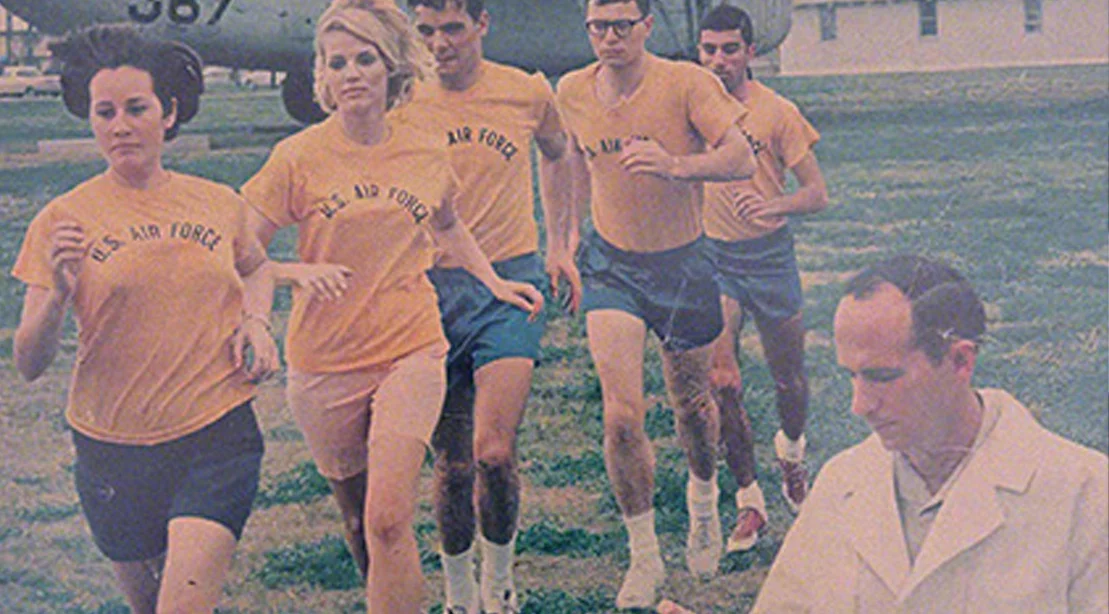
- The Early Years (1950s–1960s): After graduating from medical school in 1956, Cooper began a 13-year tenure with the U.S. Air Force. As a flight surgeon, he recognized a critical gap in medical science: the lack of a standardized method to quantify physical fitness.
- The NASA Connection: During his military service, Cooper collaborated with NASA, helping design the physical conditioning and in-flight anti-deconditioning programs necessary to sustain astronauts in the harsh environment of space.
- The Aerobics Revolution (1968): Cooper published Aerobics, a book that would change the lexicon of exercise forever. He coined the term, arguing that exercise should be measured by its impact on the heart and lungs.
- The Brazilian Legacy: His success with the 1970 Brazilian team vaulted him into the international spotlight. He would go on to visit Brazil 21 times, cementing a bond so strong that, to this day, the act of jogging in Brazil is colloquially known as "doing the Cooper."
- The Dallas Anchor: Following his retirement from the military, Cooper settled in Dallas, establishing the Cooper Aerobics Health and Wellness center. This facility became the global hub for research on the link between lifestyle choices and life expectancy.
Supporting Data: The Science of Living Longer
Dr. Cooper’s philosophy is not merely based on anecdote; it is supported by decades of longitudinal data. His practice followed a cohort of 20 patients for 45 years to determine the efficacy of his “Cooperized” lifestyle. The results were staggering.
By strictly adhering to his principles—which emphasize 150 minutes of aerobic exercise per week, a diet rich in fruits and vegetables, and a rigid cap on alcohol and tobacco—these patients significantly outperformed the average American in life expectancy. “The men were living 86.5 years, the women 90.4 years,” Cooper explains. “That’s an average age of 88.6 years, which is almost exactly ten years longer than the national average.”
These figures serve as the cornerstone of his latest literary contribution, Grow Healthier as You Grow Older, which distills over 50 years of clinical experience into a roadmap for aging gracefully.
The Waist-to-Height Ratio: A New Metric for Health
While much of the world remains obsessed with the scale, Dr. Cooper has long championed a different metric: the waist-to-height ratio. Often referred to in military circles as the “tape test,” Cooper maintains a standard more rigorous than current military guidelines.
“The circumference of your waist should be no more than one-half your height,” he advises. “If you’re 5 feet tall, that’s 60 inches in height; your waist should not exceed 30 inches.” While modern military standards currently allow for 55% of height as a waist measurement, Cooper remains steadfast in his recommendation of 50%. His reasoning is rooted in the link between visceral fat and systemic inflammation—factors that directly contribute to the chronic diseases he has spent a lifetime fighting.
Official Responses and Professional Impact
The medical and fitness communities have long recognized Dr. Cooper as the definitive authority on cardiovascular health. However, his influence extends far beyond the clinic. His family-led organization, Cooper Aerobics, has expanded into a global network of six businesses and a non-profit, reaching professionals as far away as China who seek to replicate his model of integrated wellness.
His children, Tyler and Berkley, have carried the torch. Tyler, serving as President and CEO, has modernized the mission, ensuring the principles of aerobic health remain relevant to the digital age. Berkley has similarly embraced the athletic spirit, completing the Boston Marathon just as her father did twice during his own running career.
“They followed my example,” Cooper says with pride, noting that the legacy is not merely in his research, but in the lifestyle choices his family continues to embody.
Implications: A Journey, Not a Destination
As Dr. Cooper nears a century of life, his personal story serves as the ultimate validation of his theories. Of his 100-member medical school class of 1956, only five remain—a sobering statistic that highlights the extraordinary nature of his longevity. He is still active, still practicing medicine, and still preaching the importance of consistency.
The implications of his life’s work are clear: health is not a static state to be achieved, but a continuous journey to be maintained. For the aging population, he offers a specific, actionable goal: “I want people 80 years of age to start walking a mile in 17 minutes. Studies show that if you can do that, 84% of men and 86% of women will make it to age 90.”
Dr. Cooper’s advice is as practical for the World Cup athlete as it is for the retiree: “Fitness is a journey, not a destination. You must keep it up the rest of your life. So, you only transition; you can’t run anymore, you can walk, you can swim, or cycle. Where there’s a will, there’s a way.”
In an era of quick-fix supplements and fleeting fitness trends, Dr. Kenneth Cooper remains a steady beacon of scientific rigor and discipline. As fans cheer for the athletes in Dallas and beyond, they are witnessing the result of a culture of performance that Dr. Cooper helped build over half a century ago—a culture that reminds us that, regardless of age, the path to a longer, healthier life is paved with consistent, aerobic effort.