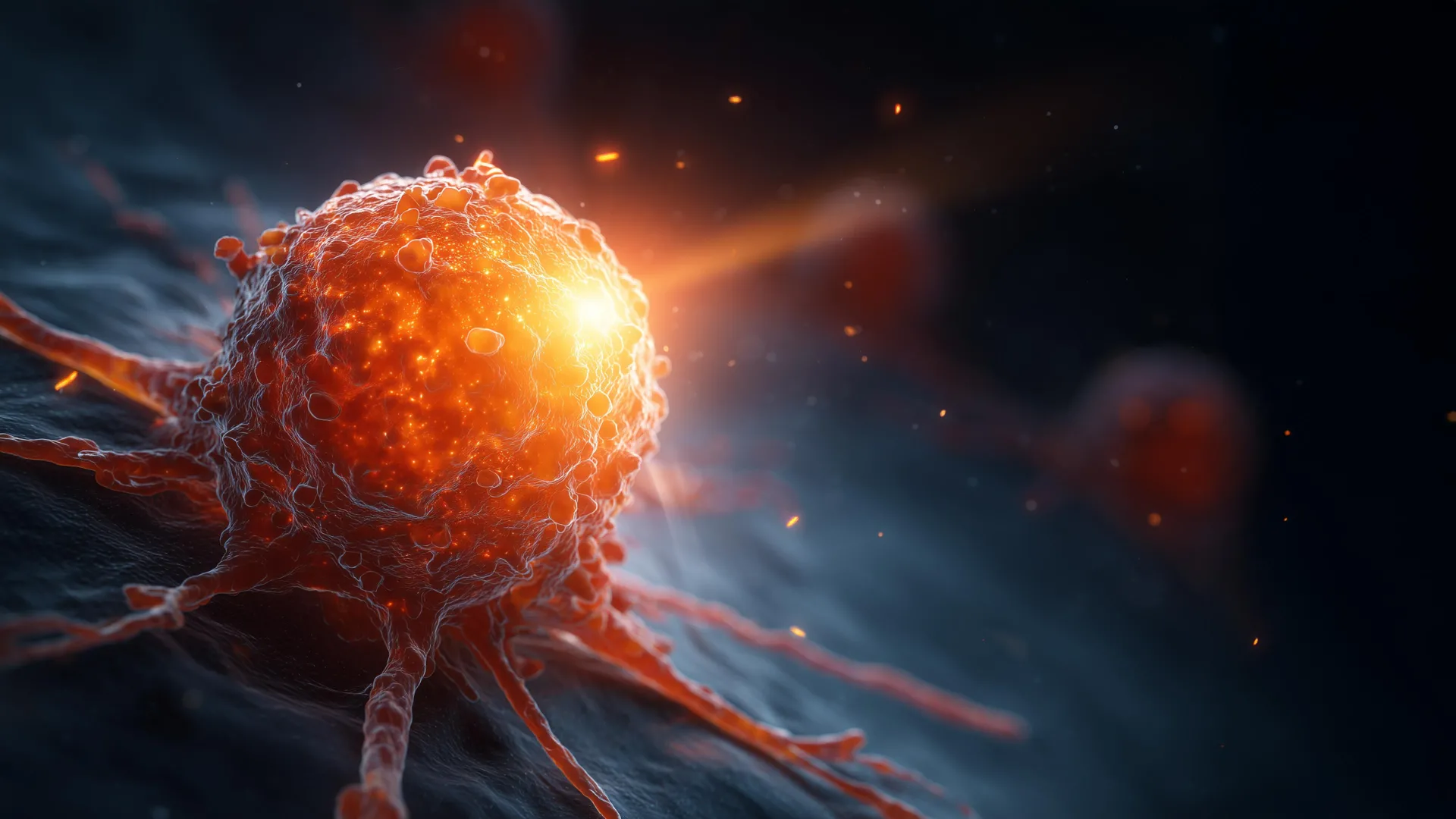
Cancer remains one of the most formidable challenges in modern medicine, largely due to its uncanny ability to adapt. While oncologists have made significant strides in killing rapidly dividing tumor cells, a subset of these cells possesses a survival mechanism that remains notoriously difficult to combat: dormancy. By entering a "sleep-like" state, these rogue cells effectively hide from traditional chemotherapy and radiation, only to reawaken later to trigger relapse.
Now, a breakthrough research team at ETH Zurich has unveiled a pioneering method to force these dormant cells back into an active state, making them susceptible to treatment. By harnessing the power of light and the body’s own protein-recycling machinery, scientists have created a "molecular switch" that could redefine how we approach localized cancer therapy.
The Problem of Dormancy: When Cancer Plays Dead
To understand the significance of this discovery, one must first understand why cancer treatment often fails. Most conventional therapies—such as chemotherapy—rely on the fact that cancer cells divide more rapidly than healthy cells. These treatments are designed to target the machinery of cell division. However, some cancer cells, particularly in lung cancer, can sense the presence of stress hormones in the body.
When these hormones bind to specialized proteins known as glucocorticoid receptors (GRs) within the tumor cells, they trigger a profound biological shift. The cells effectively "hit the brakes," entering a state of dormancy where division slows to a near-halt. In this inactive state, the cancer becomes virtually invisible to treatments that target fast-growing cells.
"The cancer essentially goes into hibernation," explains Robin Scheuplein, a doctoral student in the research group led by Professor Katharina Gapp at ETH Zurich. "Because these cells aren’t actively replicating, standard drugs pass right over them. This dormant population serves as a reservoir for future recurrence, making it a primary target for researchers looking to improve patient outcomes."
The Challenge of Precision: Avoiding Collateral Damage
While researchers have long understood that glucocorticoid receptors are responsible for this dormancy, simply inhibiting them has proven difficult. These receptors are not exclusive to cancer cells; they are vital components of the human body, playing essential roles in regulating inflammation, metabolism, and immune system function.
Systemically disabling these receptors would result in catastrophic health consequences, including immune suppression and severe hormonal imbalances. Consequently, any therapeutic intervention must be surgically precise—destroying the receptors within the tumor while leaving the rest of the body’s healthy tissue entirely untouched.
Chronology of the Breakthrough: From Concept to Molecular Switch
The journey toward this discovery began with an interdisciplinary collaboration at ETH Zurich, involving experts in epigenetics, neuroendocrinology, and organic synthesis.
- Phase I: The Recycling Mechanism: The team identified the cell’s natural protein degradation pathway, known as the ubiquitin-proteasome system. Cells naturally tag "trash" proteins with a molecular label that marks them for destruction. The ETH Zurich team theorized that if they could hijack this system, they could force the cell to dispose of its own glucocorticoid receptors.
- Phase II: Engineering the Switch: The researchers designed a modular molecular switch consisting of three distinct parts: a "hook" that latches onto the glucocorticoid receptor, an enzyme-recruiter that brings the disposal machinery to the receptor, and a flexible connector acting as the "bridge" between the two.
- Phase III: The Light-Sensitive Trigger: Working with Professor Erick Carreira’s group, the team developed a connector that is light-sensitive. Under ambient conditions, the connector remains extended, allowing the disposal tag to be applied to the receptor. However, when exposed to a specific wavelength of light, the connector undergoes a conformational change—it bends. This distortion misaligns the enzyme, effectively shutting off the disposal process.
Supporting Data: Laboratory Validation
In rigorous laboratory tests on lung cancer cell cultures, the results were highly promising. When the molecular switch was introduced, it rapidly induced the degradation of glucocorticoid receptors within the tumor cells. Genetic analysis confirmed that this degradation led to a reactivation of the cancer cells, pulling them out of their dormant state and back into the cell cycle.
"The effect is not only potent but reversible," says Scheuplein. "By toggling the light source, we can precisely control the activity of the system. This allows for a level of spatiotemporal control that has rarely been achieved in oncology."
Official Responses and Expert Perspective
The research, recently published, has generated excitement within the oncology community for its modular nature. Unlike static drugs, this system functions as a platform that can be adapted for various types of cancer.
"This system is based on existing medical technology and therefore offers a realistic prospect of localized therapies," notes Scheuplein. The team emphasizes that the technology is designed to work in tandem with existing medical devices. For instance, in the case of lung cancer, an endoscope equipped with a light source could be used to illuminate the tumor site, activating the switch precisely where it is needed while protecting the surrounding pulmonary tissue.
Professor Katharina Gapp, who spearheaded the study, highlights that the modular design is the true strength of the project. "We aren’t just creating a drug for one type of cancer," she says. "We are creating a tool that can be reconfigured to target different receptors in different clinical settings."
Future Implications: Toward the Clinic
While the results in cell culture are definitive, the path to human clinical trials involves several hurdles. The most immediate challenge is the penetration depth of light. Visible light typically only travels a few millimeters through biological tissue.
To address this, the research team is already looking toward the next generation of their system. They are currently exploring connectors that respond to near-infrared (NIR) light. Because NIR light can penetrate significantly deeper into human tissue, it would allow the treatment to be applied to tumors located deep within the body without the need for invasive light-delivery hardware.
Expanding the Target List
The potential applications of this technology extend far beyond lung cancer. The researchers have identified several other high-value targets for their switch:
- Breast Cancer: By targeting estrogen receptors, the team hopes to overcome hormone-therapy resistance.
- Prostate Cancer: The androgen receptor, a major driver of prostate cancer, could be similarly managed using the same recycling platform.
- Research Tool: Beyond therapy, the system serves as an invaluable tool for basic research, allowing scientists to "turn off" signaling pathways at will to observe the immediate biological consequences.
A New Era of "Light-Guided" Medicine
The research at ETH Zurich represents a paradigm shift in how we think about cancer therapy. By viewing the tumor not just as a mass of cells to be eradicated, but as a complex environment where signaling can be manipulated, the team has opened a new door to precision medicine.
The ability to "wake up" dormant cancer cells is a high-stakes gamble, but it is one that, if successful, could prevent the most devastating aspect of cancer: the return of the disease after it was thought to be defeated. As the team moves from laboratory culture to living models, the scientific community watches with cautious optimism. If the system translates successfully into clinical practice, it may well provide a beacon of light for patients facing the most persistent and elusive forms of cancer.
As of now, the project remains in the developmental stage, with further testing required to ensure safety and efficacy in complex biological systems. However, the foundational proof-of-concept is complete, marking a significant milestone in the ongoing effort to outsmart the adaptive nature of cancer.