





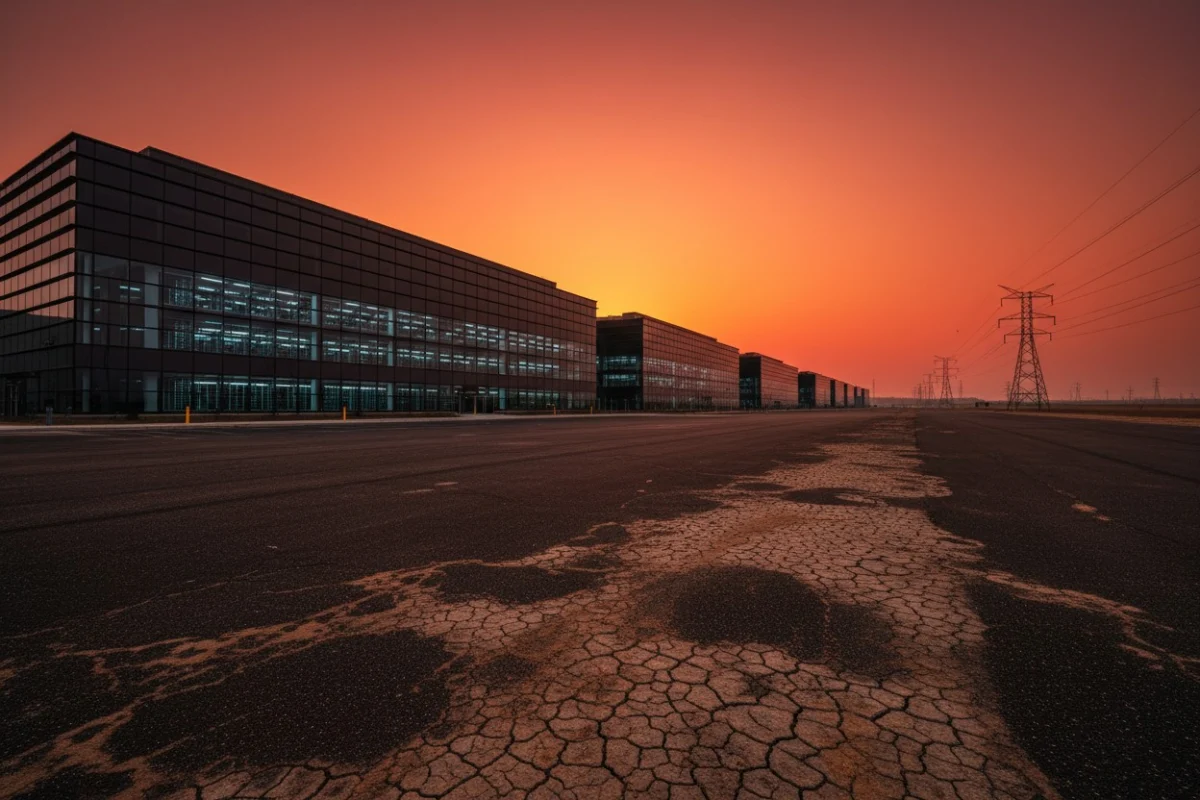
As a brutal heat wave grips the central and eastern United States, the nation’s largest power grid operator, PJM Interconnection, has been forced to issue a series of emergency alerts. The combination of record-breaking temperatures—with heat indices soaring toward 115°F—and a relentless, unprecedented surge in electricity demand from the tech sector has brought the regional power infrastructure to a precarious breaking point.
For the 13 states served by PJM, the coming days are more than just a struggle against the weather; they represent a fundamental stress test for an aging grid attempting to support the insatiable energy appetite of the digital age.
The Immediate Crisis: A Grid Under Pressure
PJM Interconnection, which coordinates the movement of wholesale electricity across a territory spanning from New Jersey to Illinois, has initiated a series of critical reliability measures. These include a "Hot Weather Alert" effective through July 3, alongside "Maximum Generation," "Load Management," and "Low Voltage" alerts. While these measures do not currently require immediate action from residential consumers, they serve as a stark indicator of the grid’s tightening margins.
The National Weather Service (NWS) has issued warnings for "dangerous, record-breaking heat" that is expected to persist through the Independence Day weekend. The Midcontinent Independent System Operator (MISO) has joined the alarm, issuing a formal conservation appeal as demand threatens to eclipse supply.
"The problem on the grid is a peak problem," says Michael Phelan, CEO of GridBeyond. "Most of the time you’re okay; you have plenty of power. But in those peak hours, you might not have enough." Phelan’s observation highlights the volatility currently facing grid operators: as the baseload demand rises due to industrial growth, the margin for error during extreme weather events shrinks, leaving little room for operational flexibility.
The Data Center Dilemma: An Insatiable Demand
While extreme heat is the immediate catalyst for the current emergency, the underlying long-term trend is the rapid, and arguably uncoordinated, expansion of data centers. Virginia, particularly Northern Virginia, has cemented its status as the global hub of the data center industry.
The International Energy Agency (IEA) recently reported that data centers accounted for half of all growth in U.S. electricity consumption in 2025. Projections from Goldman Sachs Research indicate that global power demand from these facilities is expected to reach 84 gigawatts (GW) by 2027—a 50% increase from 2023 levels.
In Henrico County, Virginia, the local impact is being felt in real time. Home to 37 operating data centers with at least 17 more in development, the county is bracing for a nearly 25% surge in electricity costs beginning July 1. This hike has forced local government officials to mandate energy conservation measures in schools and municipal buildings, including the dimming of lights and strict climate control protocols, to help offset an projected $5 million increase in annual energy spending.
Chronology of the Strain: From Stability to Scarcity
The transition from a stable grid to one characterized by frequent emergency alerts has occurred over several years, fueled by a specific set of economic and technological developments:
- 2020–2022: The post-pandemic acceleration of digital services and remote work leads to a massive uptick in data center investment, initially viewed as a boon for local tax bases.
- 2023: Regional grid operators begin expressing concerns about the "interconnection queue"—the backlog of projects waiting to connect to the grid. The realization dawns that demand growth is outpacing the pace of transmission line construction.
- Early 2024: The Federal Energy Regulatory Commission (FERC) orders grid operators to prioritize transmission for flexible large loads, signaling that the status quo of "first-come, first-served" is no longer sustainable.
- Summer 2024: The confluence of record-breaking, multi-day heat waves and continued data center activation creates the current "maximum generation" emergency, testing the limits of reliability.
Supporting Data: The Math of the Modern Grid
The figures surrounding the current energy situation are sobering. The Department of Energy (DOE) has previously warned that the risk of blackouts could increase 100-fold by 2030 if the country fails to invest in reliable, dispatchable power sources.
Furthermore, the economic trade-offs are becoming increasingly transparent. A study conducted by Duke University suggests that even a modest 1% to 2% reduction in data center peak demand could result in a 0.5% to 2.8% reduction in overall electricity rates for residential and commercial customers. This finding suggests that "demand response" strategies—where data centers reduce their load during peak grid stress—could be the single most effective tool for protecting both grid reliability and consumer pocketbooks.
However, current investment trends tell a different story. Trillions of dollars are being poured into global data center infrastructure over the next decade, often outpacing the local energy infrastructure’s ability to support that growth without significant, costly upgrades.
Official Responses and Regulatory Maneuvers
In response to the mounting pressure, PJM is currently accelerating a "backstop reliability auction." This mechanism is designed to ensure that enough power generation remains available even as older coal and gas plants are retired. The uncertainty surrounding how the costs of these grid upgrades should be allocated—whether by the tech companies themselves or the broader rate-paying public—remains a major point of contention in state legislatures.
New legislative efforts are also emerging. Some states are considering measures that would allow utilities to remotely control "smart" thermostats during extreme emergencies. While this could theoretically prevent grid failure, it has ignited a fierce debate over privacy, personal autonomy, and the ethics of government-sanctioned utility intervention.
Environmental and Social Implications
The environmental footprint of this expansion extends beyond carbon emissions. Recent reports have identified a concerning link between the proliferation of data centers and the presence of "forever chemicals" (PFAS), which are often used in fire suppression systems and are associated with the maintenance of the massive backup diesel generator arrays required to keep data centers online during power interruptions.
Community groups are increasingly organizing against the "data center sprawl," arguing that the industrialization of suburban and rural land creates long-term health and environmental risks. When these environmental concerns are coupled with the rising cost of living, a new social tension has formed: the promise of technological advancement versus the immediate welfare of the local community.
The Path Forward: Can the Grid Keep Up?
The situation has sparked a heated debate regarding the future of the American energy mix. Some policymakers and industry leaders argue that the country must move toward more dense, reliable power generation, such as nuclear energy, to meet the baseload requirements of an AI-driven economy.
"You cannot power a modern economy on hope, weather forecasts, and subsidies," one industry observer noted, reflecting a growing sentiment that the transition to intermittent renewables must be balanced by a robust, "always-on" energy backbone. Others advocate for "100% Renewable Energy Autonomy," suggesting that data centers should be required to implement distributed co-generation and microgrid technologies to minimize their reliance on the long-distance transmission lines that are currently failing to handle the load.
Regardless of the preferred energy strategy, one reality remains: the infrastructure projects required to secure the grid take years—if not decades—to permit and construct. As temperatures continue to rise and the demand for computing power shows no sign of slowing, the current "emergency alert" status may become the new normal.
The intersection of extreme heat, the digital revolution, and an aging grid has created a systemic challenge that will require more than just temporary conservation measures. It demands a fundamental rethinking of how we prioritize energy, who pays for the expansion of the grid, and what price society is willing to pay for the infrastructure that powers our modern digital existence. As the lights stay on for now, the pressure on the system serves as a warning that the current trajectory is, by all expert accounts, unsustainable.