










By Jackie Keating, LCSW
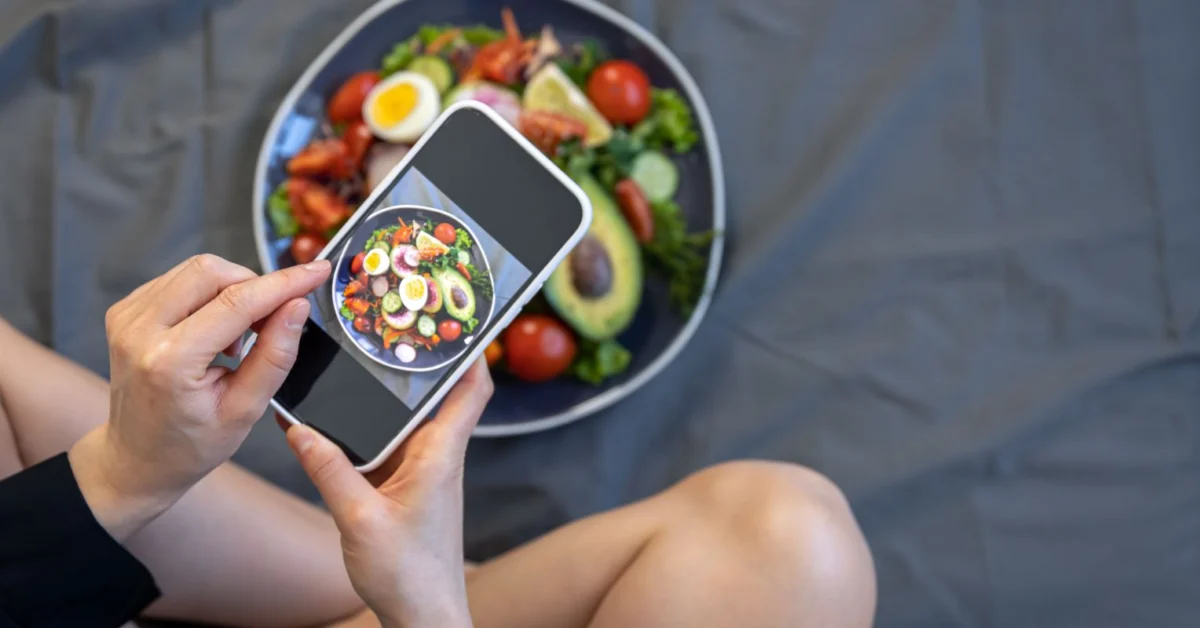
It is a typical Sunday night. You are lying in bed, the glow of your smartphone casting shadows against the wall. You reach for the screen, seeking a moment of digital escapism to quiet the mind before the work week begins. Within seconds, the algorithm delivers: an influencer sharing their “what I eat in a day” routine, featuring meals devoid of carbohydrates and stripped of calories.
Scroll further, and you encounter a content creator glamorizing a chaotic night out, followed by a “relatable” post from a mother claiming she requires a glass of wine to survive the stresses of parenting. Between these glimpses into strangers’ lives, targeted ads for rapid fitness programs appear, promising that you, too, can “fix your life” in three simple steps.
The following morning, the digital narrative bleeds into reality. A coworker discusses a new restrictive diet; a friend texts about “getting summer-ready”; a celebrity endorses a plant-based regimen. The messaging is omnipresent, relentless, and increasingly dangerous. While social media was designed to bridge gaps and foster community, it has evolved into a powerful engine for diet culture—a system that commodifies insecurity and profits from the erosion of self-esteem.
The Economics of Insecurity: How Diet Culture Operates
At its core, diet culture is a belief system that prioritizes thinness and specific body ideals over true health and mental well-being. It masks itself as a quest for “wellness” and “self-care,” but for many, it delivers a toxic cocktail of shame, guilt, and chronic anxiety.
The digital wellness market is no longer a niche industry; it is a behemoth. In 2024, the sector was valued at approximately $160 billion, with projections suggesting it will balloon to $360 billion by 2034. This staggering growth is driven by a sophisticated machinery of influencers, digital creators, and fitness brands that capitalize on human vulnerability.
These creators often operate by demonizing specific food groups or “fat-shaming” those who fail to adhere to their rigid, often medically unsound, protocols. The subtext is clear: if you replicate their habits, you will achieve their aesthetic—and, by extension, their supposed happiness. However, the reality behind these curated feeds is often far darker. Beneath the filtered photos lie stories of extreme restriction, compulsive exercise, and hidden struggles with depression and stress.
The Human Cost: A Crisis Among the Youth
The psychological toll of this constant exposure is quantifiable. Data from the REACH Institute (2025) indicates that nearly half (46%) of adolescents aged 13–17 report feeling significantly worse about their physical appearance after engaging with social media. Perhaps more alarmingly, the study found that individuals spending more than three hours a day on these platforms are twice as likely to develop eating disorders compared to their peers with lower screen time.
When influencers promote dangerous misinformation, they do not just provide bad advice; they trigger biological and psychological cascades that can lead to clinical eating disorders (EDs). For young, developing minds, the pressure to conform to an impossible beauty standard creates a fertile ground for disordered eating patterns that can last a lifetime.
The Intersection of Eating Disorders and Substance Use
While eating disorders and substance use disorders (SUDs) may appear distinct to the casual observer, they are deeply intertwined. Both function as maladaptive coping mechanisms—distorted attempts to manage overwhelming stress, trauma, or emotional pain.
According to the National Eating Disorders Association (NEDA, 2023), 50% of individuals struggling with an eating disorder also report the misuse of alcohol or drugs. Recent research highlights an interdependent relationship between the two; the presence of an ED often increases the vulnerability to an SUD, and vice versa.
Social media acts as an accelerant in this intersection. Platforms like TikTok and Instagram frequently glamorize extreme dieting while simultaneously normalizing the use of alcohol or other substances as a way to “take the edge off.” This dual normalization creates a dangerous slippery slope. A person may move from restrictive eating to using substances to suppress appetite or manage the anxiety caused by their diet, ultimately finding themselves trapped in a cycle of co-occurring disorders.
The Deadly Reality: Why Co-Occurrence is Critical
The medical community is increasingly sounding the alarm on the mortality risks associated with these conditions. Anorexia nervosa already holds the highest mortality rate of any mental health condition. When an eating disorder is paired with substance misuse, the physical and psychological toll is compounded exponentially.
Research by Mellentin et al. (2022) revealed that the co-occurrence of alcohol and drug misuse nearly quadruples the mortality risk compared to an eating disorder alone. This elevated risk is driven by a combination of severe nutritional deficiency, the chemical impact of substances on an already weakened body, and the heightened incidence of suicide attempts and co-occurring psychiatric conditions.
When an individual suffers from both an ED and an SUD, they are navigating a treacherous path. They are more likely to struggle with severe mood and anxiety disorders, creating a complex clinical profile that requires nuanced, integrated care.
A System in Need of Transformation
Despite the clear biological and psychological overlap between these disorders, modern healthcare systems remain frustratingly fragmented. Patients often find themselves caught in a “whack-a-mole” cycle of care: they may receive specialized treatment for an eating disorder at one facility, only to be told they must seek separate, often uncoordinated, treatment for substance misuse elsewhere.
This lack of integration leads to gaps in care where patients can easily slip through the cracks. Recovery from co-occurring disorders requires a holistic, integrative approach that acknowledges the cultural, psychological, and physiological forces at play.
Moving Toward a New Paradigm
To combat this crisis, we must shift how we view health. Clinical care must move toward an integrated model where ED and SUD specialists collaborate to treat the whole person rather than individual symptoms. However, clinical intervention is only half the battle.
On a broader scale, we must combat the cultural pressures that prioritize profit over public health. This involves:
- Media Literacy: Empowering users, particularly teens, to critically analyze the content they consume and understand the “filter effect” of social media.
- Platform Responsibility: Holding social media companies accountable for the algorithms that prioritize harmful content, such as pro-anorexia imagery or diet-pill advertisements.
- Community Support: Creating spaces where health is defined by functionality and well-being rather than aesthetics.
We are currently living in a world that profits from our collective insecurity. The path to recovery—both for the individual and for society—begins with recognizing that health is a state unique to every person. It is not something that can be bought in a “three-step program” or captured in a filtered photo. By reclaiming our definition of health from the influencers and the algorithms, we can begin to heal the damage caused by the modern digital landscape.
References
- Dane, A., & Bhatia, K. (2023). The social media diet: A scoping review. PLOS Global Public Health.
- Finklea, K. (2025). The wrong influence: The link between diet culture and eating disorder. HopeHealth.
- Gordon, K. H., et al. (2023). Co-occurring substance use and eating disorders. Psychiatric Times.
- Hambleton, A., et al. (2022). Psychiatric and medical comorbidities of eating disorders. Journal of Eating Disorders.
- Holland, G., & Tiggemann, M. (2023). Social media and body image: A systematic review. PLOS Global Public Health.
- Mellentin, A. I., et al. (2022). The impact of alcohol and other substance use disorders on mortality in patients with eating disorders. The American Journal of Psychiatry.
- National Eating Disorders Association. (2023). Statistics & research on eating disorders.
- Pierce, S., Joy, J. M., & Wiss, D. A. (2025). Abstinence-based treatment of comorbid eating disorders. Frontiers in Psychiatry.
- Substance Abuse and Mental Health Services Administration (SAMHSA). (2025). Breaking the silence: What everyone should know about eating disorders.
- The REACH Institute. (2025). How social media is impacting teens.
- Xi, Z.-X., & Galaj, E. (2025). Novel potential pharmacological approaches in treating eating disorders comorbid with substance use disorders. Biomedicine & Pharmacotherapy.