





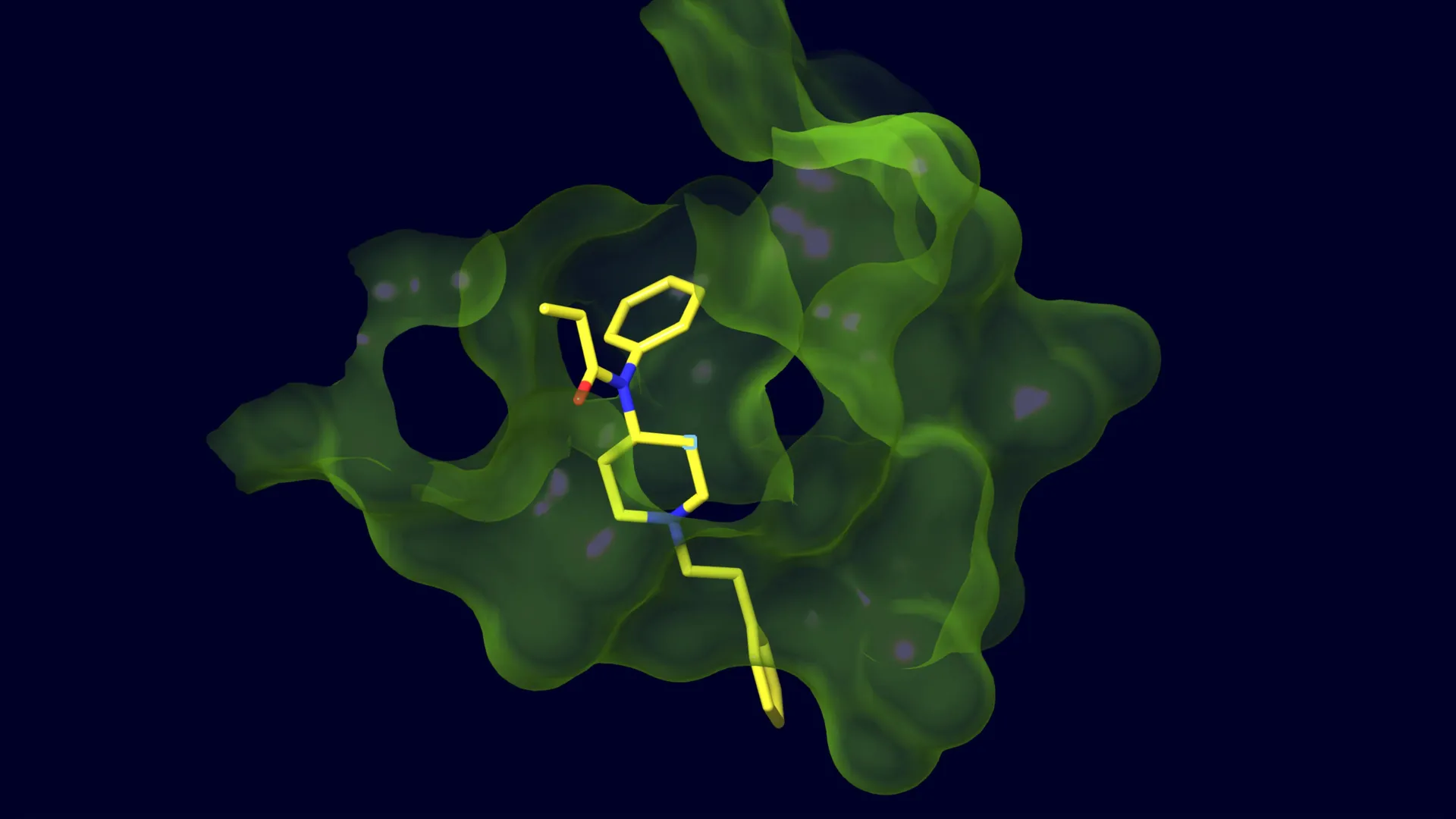
In the United States, the statistics surrounding the opioid epidemic have reached a level of gravity that defies conventional comparison. Each year, the death toll from synthetic opioids—primarily fentanyl and its illicit analogues—eclipses the combined mortality rates of motor vehicle accidents and gun violence. Fentanyl, a synthetic opioid up to 50 times more potent than heroin and 100 times more potent than morphine, works by binding to the mu-opioid receptors in the brain. In high doses, it acts with devastating speed, suppressing the autonomic signals that regulate breathing and inducing fatal respiratory depression.
While life-saving interventions like naloxone (Narcan) have become essential tools for first responders, they are inherently reactive, requiring the drug to be administered in the narrow, critical window after an overdose has already begun. Now, a team of researchers at Scripps Research is shifting the paradigm. Rather than treating the tragedy after it occurs, they are proposing a preventative shield: an experimental vaccine designed to intercept fentanyl in the bloodstream, preventing it from ever reaching the brain.
A Shift in Strategy: Moving From Reaction to Prevention
For years, the development of anti-addiction vaccines has been hampered by a fundamental flaw: specificity. Traditional vaccine design relies on "immunogens"—molecules that resemble the target drug—to train the immune system to produce antibodies. Once produced, these antibodies act as a molecular net, binding to the drug in the bloodstream and preventing it from crossing the blood-brain barrier.
However, this traditional approach has faced two major hurdles. First, the illicit drugs themselves are highly controlled substances, creating immense regulatory and logistical barriers to research. Second, and perhaps more importantly, the immune system is highly specific. A vaccine designed to recognize fentanyl often fails to recognize the rapidly evolving "designer" variants created by illicit chemists to skirt law enforcement and detection.
In a groundbreaking study published in the Journal of Medicinal Chemistry, researchers at Scripps Research unveiled an unconventional approach that sidesteps these issues entirely. By moving away from the "exact-match" model of vaccine design, the team has created a synthetic framework that triggers an immune response against the entire fentanyl class of drugs, rather than just the parent molecule.
Chronology of the Discovery: Defying Conventional Wisdom
The journey toward this discovery was paved with skepticism. For decades, the consensus in immunology was that to elicit a strong antibody response, the vaccine component needed to be a structural mirror image of the target.
"When we started testing this molecule as a vaccine component, we honestly didn’t know if it would work," admits Arran Stewart, a research associate in the Kim Janda laboratory at Scripps Research and the first author of the study. "The conventional wisdom says that to get the immune system to recognize fentanyl, you have to use something that looks like fentanyl. We were doing the opposite."
The research team, led by Kim Janda—the Ely R. Callaway, Jr. Professor of Chemistry at Scripps Research—had previously experimented with vaccines targeting heroin and individual fentanyl molecules. However, witnessing the "cat-and-mouse" game between regulators and black-market chemists, they realized that a singular vaccine would be obsolete almost as soon as it hit the market.
In their latest effort, the team designed a modified molecule that retained some chemical features of the fentanyl family but possessed a fundamentally different core architecture. Between 2022 and 2024, the team refined this molecule, eventually testing it in mouse models. Over an eight-week period, the mice received four doses of the vaccine. The results, according to the team, were not just positive—they were transformative.
Data-Driven Protection: The Molecular Shield
The efficacy of the vaccine was measured by its ability to neutralize a wide array of synthetic opioids. When the scientists introduced various fentanyl variants—including carfentanil (an ultra-potent analogue used as a large-animal sedative), China White, acetylfentanyl, and furanylfentanyl—the vaccine-induced antibodies proved remarkably adept at binding to them.
The quantitative data provided in the study highlights the potential impact:
- Brain Concentration Reduction: In vaccinated mice, the amount of fentanyl reaching the brain was reduced by approximately 70% compared to non-vaccinated subjects.
- Respiratory Stability: Even when administered lethal doses of fentanyl, vaccinated mice maintained nearly normal breathing patterns, demonstrating that the vaccine prevented the severe respiratory depression that typically claims human lives.
- Specificity vs. Selectivity: Crucially, the antibodies did not cross-react with essential medical opioids, such as morphine, oxycodone, remifentanil, or alfentanil. This is a critical finding, as it ensures that if a vaccinated individual requires pain management for surgery or trauma, legitimate medical treatment remains effective.
The "Cat-and-Mouse" Game: Why Class-Based Recognition Matters
The illicit drug market is not static. As global law enforcement agencies increase oversight on precursor chemicals, clandestine laboratories respond by slightly altering the molecular structure of fentanyl to create "analogues." These minor tweaks allow manufacturers to market substances that are functionally identical to fentanyl but technically different enough to evade legal classification or standard toxicology screens.
Dr. Kim Janda explains the strategic importance of their findings: "What this research shows us is that we don’t have to keep playing catch-up with every new synthetic designer drug that emerges. By training the immune system to recognize the entire fentanyl class—not just individual structures—we can stay ahead of illicit drug traffickers."
By targeting a "molecular signature" shared by the class, the vaccine functions like a broad-spectrum firewall. Regardless of how a chemist modifies the molecule to avoid detection, if it retains the essential features of the fentanyl family, the antibodies are primed to neutralize it. This shift in logic—moving from drug-specific to class-specific protection—could be the key to long-term stability in public health policy regarding addiction.
Implications for Public Health and Recovery
While the vaccine has shown immense promise in preclinical models, the transition to human trials remains the next major milestone. The road to clinical approval is long, requiring rigorous phase I, II, and III trials to ensure safety, durability, and efficacy in diverse human populations.
However, the vision for the vaccine’s application is clear. Experts suggest that such a tool could be a vital asset for individuals enrolled in substance abuse recovery programs. For those at high risk of relapse, the vaccine would serve as an "insurance policy," providing a buffer against a fatal overdose if an individual accidentally or impulsively encounters contaminated supply.
Furthermore, the technology holds promise for first responders and those in high-risk environments. By providing long-term protection, it could reduce the burden on emergency services and hospitals, which currently spend billions of dollars annually treating overdose-related complications.
"The public health potential here is significant," says Janda. "But so is the lesson that we can design vaccines that recognize an entire drug class, not just a singular drug."
A Future Beyond the Laboratory
The research, supported by the Shadek Family Foundation, is a beacon of hope in an otherwise grim landscape. While the vaccine is not a "cure" for addiction—it does not treat the underlying behavioral or psychological drivers of substance use—it is an unprecedented tool for harm reduction.
As the scientific community reviews these findings, the focus will now shift to the logistical hurdles of manufacturing and the ethical considerations of implementation. Who would receive the vaccine? How long does the immunity last? And how will society balance this medical intervention with existing therapeutic approaches?
These questions remain unanswered for now, but the core achievement is undeniable: the Scripps team has proven that it is possible to outsmart the clandestine laboratories that have fueled the deadliest drug epidemic in American history. By redefining how we approach immune recognition, science has provided a new, potent strategy in the battle to save lives. As the study authors conclude, the ability to protect against a class of drugs, rather than just one, may finally tip the scales in favor of the millions of individuals caught in the crossfire of the opioid crisis.