










Pancreatic ductal adenocarcinoma (PDAC) has long been considered one of the most formidable challenges in modern oncology. Known for its aggressive nature and notorious resistance to traditional chemotherapy, PDAC remains a leading cause of cancer-related mortality globally. However, a groundbreaking study recently published in the journal Oncotarget may have illuminated a new path forward.
Researchers at the Florida A&M University (FAMU) College of Pharmacy and Pharmaceutical Sciences, Institute of Public Health, have unveiled promising data regarding a novel class of experimental compounds known as polyisoprenylated cysteinyl amide inhibitors (PCAIs). Led by first author Kweku Ofosu-Asante and corresponding author Dr. Nazarius S. Lamango, the research team has demonstrated that these compounds can effectively neutralize pancreatic cancer cells by inducing a paradoxical hyperactivation of critical signaling pathways, ultimately leading to programmed cell death.
The Challenge of the KRAS Mutation
To understand the significance of the FAMU study, one must first understand the biological fortress that is PDAC. At the heart of most pancreatic cancers lies a mutation in the KRAS gene. This gene acts as a molecular switch, regulating cell division and growth. When mutated, KRAS remains in a permanent "on" position, driving the unchecked proliferation of tumor cells.
For decades, the KRAS protein was deemed "undruggable" due to its smooth surface, which offered no obvious pockets for pharmaceutical inhibitors to bind. While recent breakthroughs have led to the development of specific inhibitors targeting the KRAS G12C mutation, these treatments are limited in scope. Many patients harbor different KRAS mutations, leaving them with few, if any, targeted therapeutic options. The search for a "pan-KRAS" inhibitor—a therapy capable of working across the diverse spectrum of KRAS-driven malignancies—has become the "Holy Grail" of pancreatic cancer research.
Chronology of the Investigation
The investigation conducted by the FAMU team represents a methodical progression from molecular signaling theory to complex, three-dimensional tumor modeling.
Phase I: Initial Screening and Compound Identification
The study began with the evaluation of various PCAIs, compounds engineered specifically to interfere with the aberrant signaling of oncogenic G-proteins. By testing these compounds against pancreatic cancer cell lines harboring various KRAS mutations, the researchers sought to identify candidates with the highest potency. Two specific PCAIs emerged as superior in their inhibitory effects, leading the team to concentrate their efforts on the compound designated NSL-YHJ-2-27.
Phase II: Assessing Cellular Mobility and Viability
Once the lead compound was identified, the researchers analyzed its impact on the physical behavior of cancer cells. PDAC is lethal primarily because of its propensity to invade surrounding tissues and metastasize to distant organs. The team discovered that NSL-YHJ-2-27 was remarkably effective at paralyzing these cells. At a concentration as low as 1 µM, the compound blocked more than 90% of cancer cell migration. This was accompanied by a structural collapse of the actin cytoskeleton, causing the cancer cells to round up and lose their invasive capacity.
Phase III: The Mechanism of "Hyperactivation"
Perhaps the most counterintuitive finding of the study was the effect of PCAIs on the MAPK and PI3K/AKT pathways. Conventional cancer therapy often seeks to suppress these pathways to stop growth. However, the FAMU researchers found that PCAIs did the opposite: they induced a state of "hyperactivation."
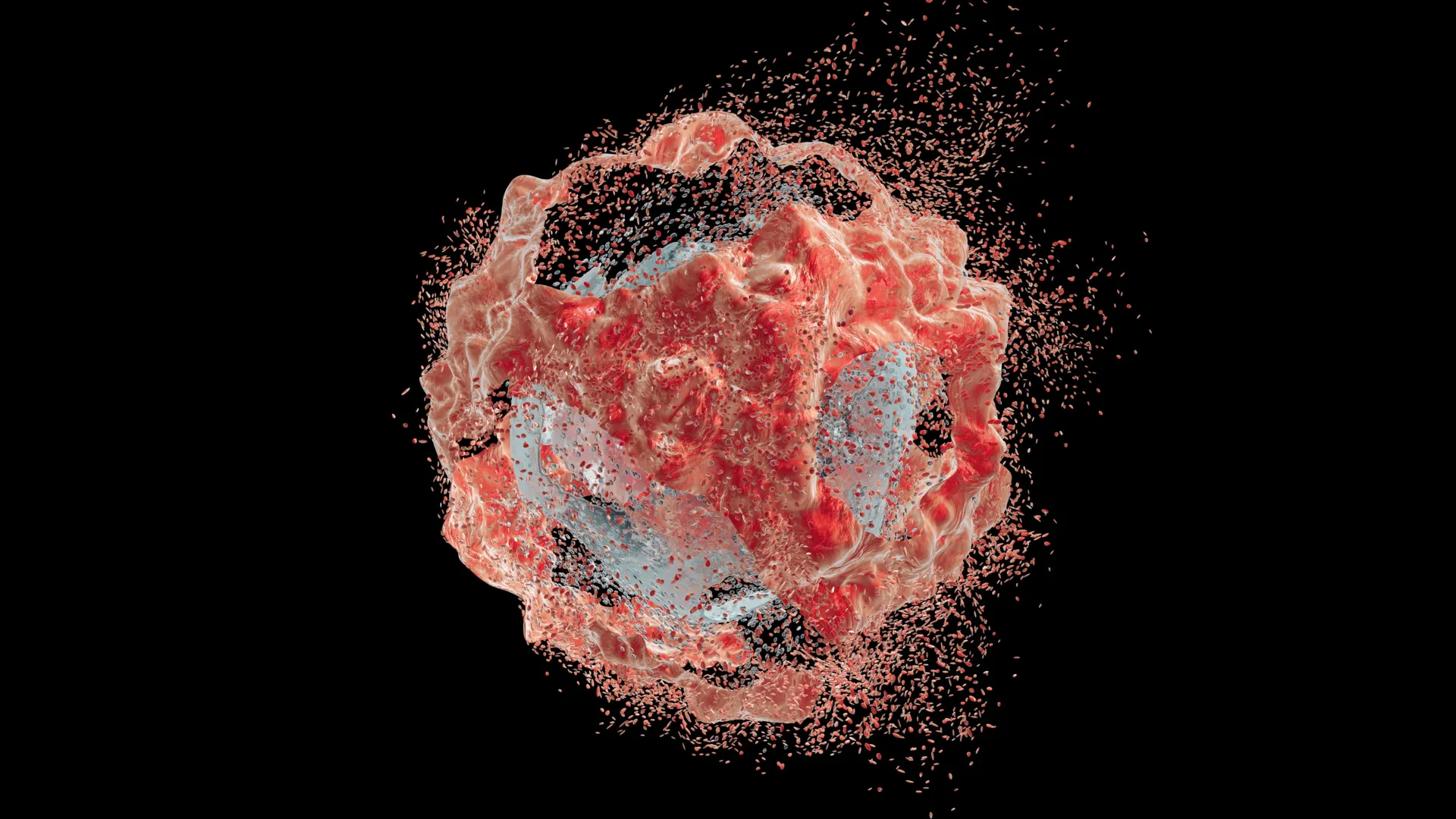
This overstimulation of the signaling pathways acted as a biological trap. By pushing these pathways into overdrive, the compounds destabilized the cells’ internal homeostasis. This resulted in an accumulation of reactive oxygen species (ROS), the activation of pro-apoptotic enzymes (caspases), and an increase in the pro-apoptotic protein BAX. Essentially, the researchers turned the cancer cells’ primary growth mechanisms against them, forcing the cells into a state of terminal, programmed suicide (apoptosis).
Phase IV: Validation in 3D Tumor Spheroid Models
Recognizing that standard two-dimensional petri dish cultures often fail to replicate the complexity of human tumors, the team transitioned to three-dimensional tumor spheroid models. These models mimic the dense, multi-layered environment of a real tumor. In this environment, NSL-YHJ-2-27 continued to show efficacy, effectively causing the spheroids to disintegrate and preventing them from invading the surrounding tissue-like matrices.
Supporting Data: Transcriptomic Shifts
To provide a molecular explanation for these observations, the team performed extensive transcriptomic analyses. These analyses revealed a profound shift in the gene expression profiles of the treated cells. Genes associated with tumor suppression were upregulated, while genes responsible for metastasis and aggressive progression were significantly downregulated. This genomic shift provided a clear, evidence-based roadmap for how the PCAIs were altering the cell’s fate at the level of protein synthesis and cellular function.
Official Perspectives and Expert Context
The researchers emphasized that their approach is fundamentally different from the current generation of KRAS inhibitors. In a statement regarding the study, the research team noted: "One class of such promising agents is the PCAIs that were designed to target oncogenic G-proteins in a manner that is different from the KRASG12C-targeting drugs."
By targeting the broader downstream effects of G-protein signaling rather than the specific, mutated KRAS protein itself, the PCAIs offer a potentially universal approach. This is crucial because it suggests that the therapy may be effective even in patients whose tumors have developed resistance to other drugs or who possess mutations that were previously considered untreatable.
Clinical and Research Implications
The implications of the Florida A&M University study are far-reaching. By demonstrating that hyperactivating—rather than just inhibiting—signaling pathways can lead to cancer cell death, the team has introduced a novel therapeutic strategy that could change how researchers view the treatment of refractory cancers.
Overcoming Drug Resistance
One of the most persistent hurdles in oncology is the ability of cancer cells to "bypass" targeted therapies. If a drug inhibits one pathway, the cancer cell often activates a parallel pathway to survive. Because PCAIs influence multiple facets of the cell’s survival machinery—including cytoskeleton stability, metabolic balance, and signal transduction—it is significantly harder for the cancer to develop resistance to these compounds.
Toward Personalized Medicine
While the study is still in the experimental phase, the ability of PCAIs to function effectively across different KRAS mutation profiles suggests a future where pancreatic cancer treatment could be more standardized yet highly targeted. Instead of requiring a "one-drug-per-mutation" approach, clinicians might one day rely on a class of inhibitors that addresses the fundamental survival mechanisms of all KRAS-driven tumors.
Future Directions
The next steps for the FAMU team involve rigorous preclinical testing, including further studies in animal models to determine the safety, bioavailability, and efficacy of NSL-YHJ-2-27 in a living organism. If these studies prove successful, the potential for clinical trials in human patients will be the next major milestone.
Conclusion
The findings from the Florida A&M University College of Pharmacy and Pharmaceutical Sciences represent a significant leap forward in the fight against pancreatic cancer. By rethinking the strategy for addressing KRAS-driven tumors, Dr. Lamango, Kweku Ofosu-Asante, and their colleagues have provided a compelling case for the potential of PCAIs. While there is still much work to be done before these compounds reach the bedside, the evidence of their ability to paralyze cancer cell movement, disrupt tumor architecture, and force malignant cells into apoptosis offers a new, vital beacon of hope for patients facing one of the most difficult diagnoses in medicine.
As the scientific community continues to peel back the layers of the KRAS-driven cancer mystery, the "hyperactivation" strategy identified in this study stands as a testament to the power of thinking outside the traditional bounds of oncological research.