











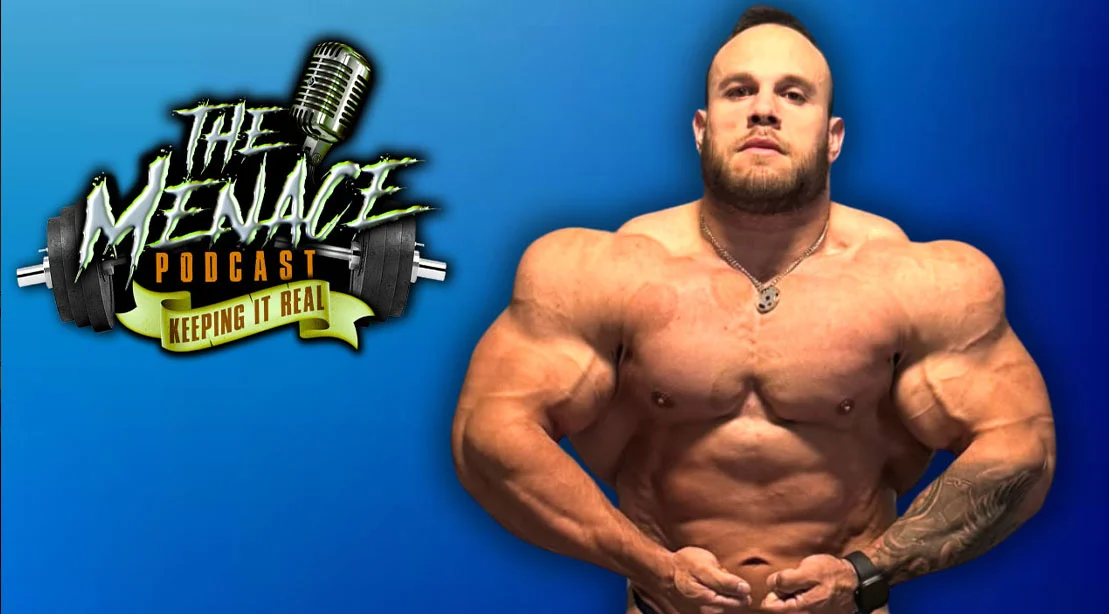
In the hyper-competitive world of modern bodybuilding, where mass, conditioning, and symmetry are often dissected under a digital microscope, one fundamental element frequently finds itself relegated to an afterthought: the art of the pose. On Episode 291 of The Menace Podcast, host Dennis “The Menace” James convened a powerhouse panel featuring industry icons Milos Sarcev and Chris Cormier, alongside the legendary “Marvelous” Melvin Anthony. The primary agenda? To dismantle the misconception that posing is merely a vehicle for showing off one’s physique and to re-establish it as the critical differentiator between a top-five finisher and a champion.
As the professional circuit hits its stride, the panel issued a stern warning to the next generation: the current reliance on social media tutorials and self-coached routines is a recipe for competitive failure.
The Evolution of the "Marvelous" Standard
To understand the gravity of the panel’s critique, one must look at the historical standard set by Melvin Anthony. In the late 1990s and early 2000s, while the bodybuilding landscape was dominated by mass monsters who often struggled to translate their size into fluid, aesthetic presentation, Anthony stood apart.
Anthony did not simply hit poses; he performed them. Drawing from his background in choreography and intense mentorship under the legendary John Brown, Anthony introduced a level of grace and control that bordered on the theatrical. His transitions were seamless, and his ability to manipulate his physique under the stage lights appeared entirely effortless.
However, as the panel discussed, this level of mastery was not accidental. It was the product of brutal, repetitive, and highly specialized training. While many contemporary athletes treat posing as a post-workout cooldown, Anthony treated it as an extension of the workout itself.
Chronology of the Craft: From John Brown to the Modern Stage
The methodology of elite posing has a lineage, one that the Menace Podcast panel feels is being lost in the digital age.
The John Brown School of Thought
Both Chris Cormier and Melvin Anthony credit the iconic John Brown as the architect of their stage presence. The training regimen under Brown was not for the faint of heart. Anthony recalled that after pushing his body to the brink in a standard bodybuilding session, he would be subjected to grueling, hyper-specific posing drills.
“He had that watch,” Anthony noted during the podcast. Brown would force his protégés to hold poses for 20 seconds at a time for every muscle group, even when the athlete was physically spent. This forced a mastery of muscle control that goes beyond simply looking big; it taught the athlete how to breathe, maintain composure, and project confidence through exhaustion.
Cormier added that the dynamic between coach and athlete was strictly hierarchical. “I find a lot of these guys today, they need to be telling me what they think I should be doing,” Cormier observed. “And I’m like, no, you just be a soldier.” For Cormier, the key to his success was blind trust in a coach who understood the nuances of light, shadow, and anatomy—nuances that cannot be taught through an Instagram carousel.
Professional Insights: The Pitfalls of Social Media Trends
A significant portion of the discussion centered on the "Instagramization" of bodybuilding technique. The panel expressed deep skepticism regarding the rise of digital posing coaches who rely on simplistic overlays—red and green arrows indicating "right" and "wrong" positions.
Dennis James was particularly vocal, arguing that such generalized advice is fundamentally dangerous to an athlete’s stage presentation. “Just because it looks good on him doesn’t mean that you should do that pose, because you don’t have the body,” James explained.
The panel reached a consensus: posing is a highly individualized craft. A pose that highlights the sweep of a quad on one athlete might completely obscure the detail on another. When an athlete blindly copies a routine they saw on social media, they are effectively ignoring the unique structural realities of their own physique.
The "One-Size-Fits-All" Fallacy
Milos Sarcev, who has transitioned from a legendary competitor to a highly respected coach, provided empirical weight to the argument. He pointed to the specific technical maneuvers that separated legends like Anthony, Cormier, and Arnold Schwarzenegger from the rest of the pack.
Sarcev highlighted the "twisting back" pose performed from the front—a maneuver that requires an extraordinary degree of flexibility, spinal control, and aesthetic awareness. “I tried to replicate it, and I looked like an idiot,” Sarcev admitted, emphasizing that these moves are not universal templates but are instead tailored to the specific biomechanics of elite athletes.
The implication is clear: when a coach or an athlete treats posing as a "one-size-fits-all" endeavor, they surrender the ability to manipulate the stage to their advantage. They are no longer dictating how the judges perceive them; they are merely hoping their physique is good enough to override a lack of presentation.
Official Perspectives: The Value of a Mentor
Dennis James, a man whose own career was defined by immense size and a formidable stage presence, offered a humbling reflection. Despite his success, he admitted that his lack of a formal posing coach was a missed opportunity.
“When somebody is a good poser, this is mostly because someone taught ’em how to do it,” James told Anthony. He noted that even among the highest echelons of the sport, the difference between those who had formal instruction and those who were "self-taught" is glaringly obvious to those with a trained eye.
The call to action from the podcast was unequivocal: get professional lessons.
Why the Industry Needs a Course Correction
The implications of this discussion extend far beyond the stage of a single contest. If the sport of bodybuilding continues to prioritize social media engagement over foundational artistry, the quality of competition will suffer.
- Diminished Competitive Edge: Athletes who fail to master the art of the pose are leaving points on the table. In a sport where titles are often won by the smallest of margins, a polished, masterful presentation can swing the judges’ decision.
- Loss of Institutional Knowledge: The methods employed by figures like John Brown represent a heritage of discipline. When modern athletes reject the "soldier" mentality in favor of "doing their own thing," they lose the benefit of decades of cumulative expertise.
- The Rise of Ineffective Aesthetics: As the panel noted, the current trend of mimicking popular influencers leads to a homogenization of bodybuilding, where athletes lose their unique character in favor of a "trendy" look that may not even suit their frame.
Conclusion: The Path Forward
The episode of The Menace Podcast serves as a wake-up call for the bodybuilding community. While the sport will always be rooted in the physical development of the human body, the presentation of that body is what transforms a workout into a performance.
As the panel concluded, the path to greatness is not found in a filtered image or a viral tutorial. It is found in the sweat-soaked gym, under the watchful eye of a master who knows that 20 seconds of holding a pose while exhausted is where champions are truly forged.
For those looking to ascend the ranks of the IFBB Pro League, the advice from James, Cormier, Sarcev, and Anthony is simple: stop looking for shortcuts on social media. Find a mentor, learn the mechanics of your specific frame, and treat your posing as the discipline it truly is.
To witness the full, unfiltered discussion and hear more anecdotes from the golden era of bodybuilding, viewers are encouraged to watch the full Episode 291 of The Menace Podcast on the official Muscle & Fitness YouTube channel.