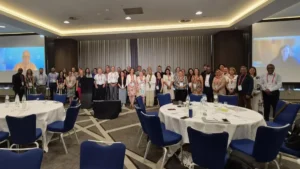









In an era defined by digital isolation and the rapid commodification of fitness programming, the need for human-centric professional development has never been more pronounced. IDEA Health & Fitness Association, a cornerstone organization for fitness professionals worldwide, has introduced a series of monthly, closed-door meet-ups designed to bridge the gap between abstract industry trends and the granular realities of the gym floor. These sessions, strictly unrecorded and facilitated as casual peer-to-peer dialogues, represent a strategic pivot toward community-led education.
Main Facts: A Forum for the Modern Practitioner
The IDEA meet-up initiative is designed as a recurring, high-engagement forum that eschews the typical webinar format in favor of an interactive, roundtable-style discussion. Unlike traditional continuing education credits (CECs) or formal certification workshops, these gatherings prioritize the "lived experience" of fitness professionals—personal trainers, group fitness instructors, studio owners, and wellness coaches.
The core premise is simple: industry leaders and front-line professionals congregate once a month to dissect the challenges currently plaguing the fitness landscape. Topics range from the practical—such as client retention strategies during economic downturns and the integration of wearable technology—to the philosophical, including the ethics of AI in personal training and the evolving definition of "holistic health."
Critically, the sessions operate under a "Chatham House Rule" style philosophy: they are not recorded. This intentional lack of archival footage is designed to foster a safe, vulnerable space where professionals can speak candidly about business failures, staff management struggles, and the mental health burdens associated with the fitness industry, without the fear of public scrutiny or social media backlash.
Chronology: The Shift Toward Peer-Led Learning
The transition toward these informal meet-ups follows a decade-long evolution in fitness education.
- 2014–2018: The era of the "Guru" model. Fitness education was largely dominated by top-down lectures, where experts presented research-heavy data to passive audiences.
- 2019–2021: The Digital Pivot. Following the pandemic, the industry was flooded with recorded webinars and asynchronous learning modules. While efficient, the industry reported a "connection deficit."
- 2022–2023: The IDEA Pilot Program. Recognizing the fatigue associated with "Zoom University," IDEA began experimenting with smaller, live, synchronous meet-up formats.
- 2024–Present: The formalized monthly meet-up series. These events have now become a staple of the membership experience, reflecting a move toward collaborative intelligence.
The decision to move away from recorded content was a deliberate response to feedback from members who indicated that the presence of a "record" button inhibited honest conversation. By ensuring these events exist only in the "here and now," IDEA has effectively gamified the attendance experience, incentivizing members to show up live to gain access to ephemeral knowledge.
Supporting Data: Why Community Matters in Fitness
Data from recent industry surveys suggest that community engagement is the primary driver of professional longevity in the fitness space. According to the IDEA Fitness Industry Compensation Trends reports, professionals who report having a "strong peer network" are 40% less likely to experience professional burnout within their first five years of practice.
Furthermore, the "social learning" model—where learners gain knowledge through observation and interaction within a social group—is increasingly viewed as superior to isolated study. In a study conducted by the National Academy of Sports Medicine (NASM) and parallel research by IDEA, it was found that trainers who engage in regular peer discussions are significantly more adept at navigating "soft skills" challenges, such as client conflict resolution and behavioral psychology applications, than those who rely solely on static textbooks.
The current meet-up series targets this "soft skill" gap. While technical knowledge regarding physiology and biomechanics is standardized, the nuance of building a sustainable business in a fluctuating economy is highly contextual. The monthly meet-ups provide the qualitative data—real-time feedback from the field—that quantitative research often fails to capture.
Official Responses and Participant Perspectives
While specific transcripts of these meet-ups remain confidential due to their unrecorded nature, summarized feedback from participants and IDEA leadership sheds light on their value.
"The goal of these sessions isn’t to deliver a PowerPoint presentation," notes one IDEA event coordinator. "The goal is to facilitate a space where a trainer in London can hear how a gym owner in Chicago solved a staffing crisis, and then realize they can apply that same logic to their own business. It’s about cross-pollination of ideas."
Members who have participated in the sessions echo this sentiment. Many cite the "lack of pretense" as the primary draw. "When you remove the camera and the pressure to perform for a recording, the conversation changes," says a veteran personal trainer and long-time IDEA member. "You stop hearing marketing pitches and start hearing about how people are actually surviving—and thriving—in a crowded market."
The consensus among the IDEA leadership is that these meet-ups act as a "pressure valve" for the industry. By providing a recurring venue for venting, brainstorming, and collective problem-solving, the organization is effectively fostering a more resilient professional base.
Implications: The Future of Professional Development
The success of the IDEA meet-up model carries significant implications for the future of professional development across all sectors, not just fitness. It signals a move away from the "content library" model toward the "community-as-classroom" model.
1. The Death of Static Content
As AI-generated content becomes more prevalent, the value of static, recorded educational videos is plummeting. If information is commoditized, the only remaining value lies in context and connection. By making their events unrecorded, IDEA is leaning into the only asset that cannot be replicated by an algorithm: the authentic, live human experience.
2. The Rise of the "Micro-Community"
The trend toward smaller, more intimate meet-ups suggests that fitness professionals are increasingly seeking high-trust environments. The industry is moving away from massive, anonymous conferences toward curated, smaller groups where accountability and long-term professional relationships can be forged.
3. Economic Resilience
In a volatile economic climate, the ability to pivot is essential. The collaborative knowledge shared in these meet-ups allows professionals to adapt to market shifts—such as the rise of home-gym technology or the shifting demand for longevity-focused training—much faster than they would if they were relying on traditional, slow-moving educational cycles.
4. Mental Health and Retention
The fitness industry has historically struggled with high turnover rates. By creating a support system that addresses the emotional and mental toll of the profession, these meet-ups act as an informal retention strategy. When professionals feel heard and understood, they are far more likely to remain in the industry, ultimately stabilizing the quality of health services provided to the public.
Conclusion: A Call to Participate
As registration windows close and new cycles begin, the IDEA monthly meet-ups serve as a reminder that the most sophisticated piece of equipment in the fitness industry is not the latest machine or the most advanced wearable—it is the human brain, augmented by the collective wisdom of its peers.
For those looking to move beyond the superficial metrics of the industry and engage with the structural realities of a career in fitness, these sessions offer a rare opportunity. They are a testament to the fact that, in an increasingly digital world, the most profound insights are still found in the unrecorded, messy, and deeply human exchanges that occur when professionals sit down to talk.
While the registration for the current cycle may be closed, the initiative remains a cornerstone of IDEA’s commitment to the industry. For the aspiring professional, the implication is clear: active participation in one’s community is no longer a luxury—it is a requirement for professional survival and growth. As the industry continues to iterate and evolve, those who show up, listen, and contribute will be the ones who define the next generation of health and fitness leadership.