











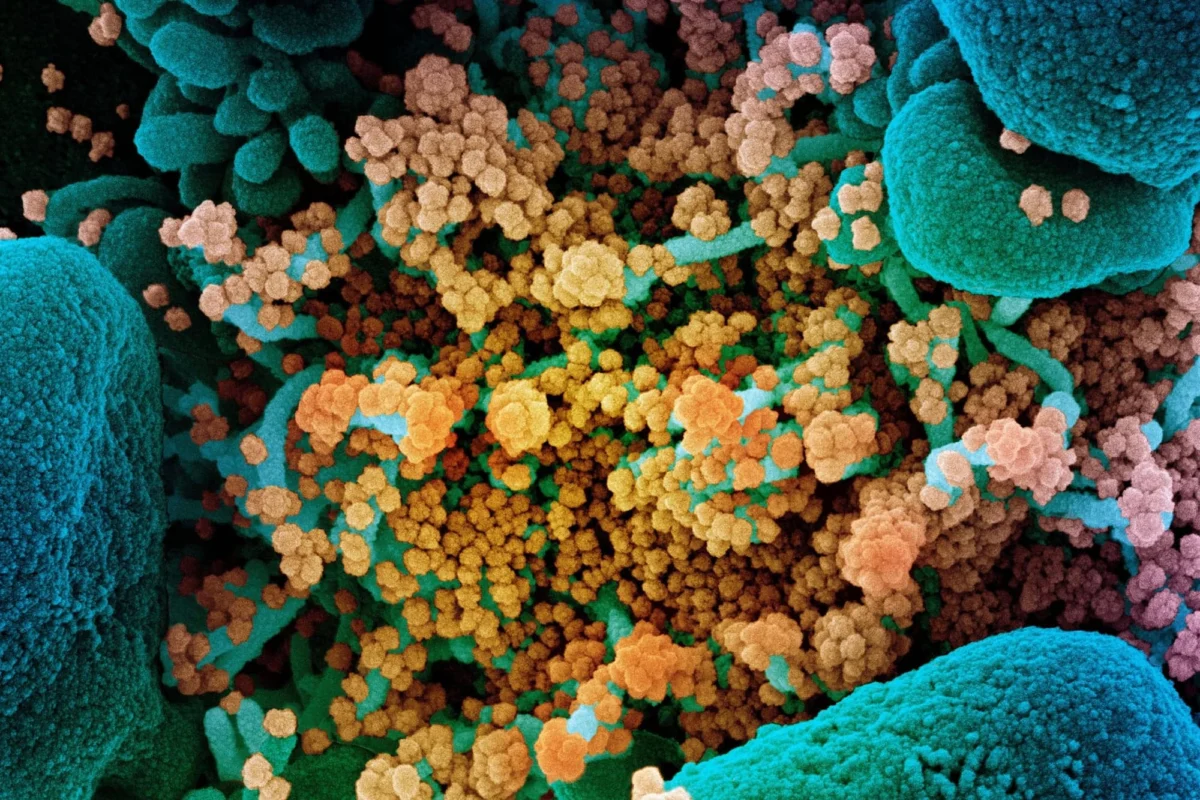
As the global medical community continues to navigate the ever-shifting landscape of SARS-CoV-2, a new challenger has emerged. Known scientifically as BA.3.2 and colloquially dubbed “Cicada,” this latest iteration of the virus is currently undergoing a rapid expansion across the United States. While early data suggests that the variant does not necessarily induce more severe clinical outcomes than its predecessors, its unique genetic profile has raised significant questions regarding vaccine efficacy and the ongoing challenge of immune evasion.
For patients managing chronic conditions—particularly those with underlying lung disease—the arrival of Cicada represents a critical juncture in the long-term management of the COVID-19 pandemic. To understand why this variant is capturing the attention of epidemiologists and clinicians alike, we must examine its origins, its biological mechanics, and what it means for our collective defense strategies.
The Main Facts: What is BA.3.2?
The BA.3.2 variant is a direct descendant of the Omicron lineage, the highly transmissible strain that first fundamentally altered the trajectory of the pandemic in late 2021. Since its initial identification in Africa in November 2024, the variant has displayed a notable capacity for international travel, spreading to at least 23 countries by early 2026.
The defining characteristic of Cicada is its extensive genetic divergence. Compared to the strains that have dominated the American landscape since early 2024—primarily those within the JN.1 lineage—BA.3.2 features between 70 and 75 distinct mutations within its spike protein.
The spike protein is the virus’s "key" to the human cell; it is also the specific target that our current mRNA and protein-based vaccines are designed to mimic. By presenting a version of this protein to the immune system, vaccines teach the body to produce antibodies that neutralize the virus before it can establish a foothold. However, with over 70 genetic changes, the "key" has been significantly altered. The immune system, having been primed for the older JN.1 strains, may struggle to recognize the "new look" of the Cicada variant, leading to what researchers call "immune escape."
Chronology of a Global Spread
The timeline of the Cicada variant serves as a case study in modern viral surveillance:
- November 2024: Researchers in Africa first sequence and identify the BA.3.2 strain.
- Early 2025: The variant begins a sustained period of global migration, moving quietly through international transit networks.
- June 2025: The first documented case of BA.3.2 is detected in the United States, identified in a traveler arriving from abroad.
- Late 2025 – Early 2026: Following its entry, the virus gains momentum. It is subsequently detected in clinical samples and municipal wastewater systems across 29 states, signaling that it is no longer contained to isolated travel-related cases but is now circulating within communities.
- February 2026: The variant reaches a point of wider prevalence, prompting medical professionals to issue new guidance regarding booster efficacy and risk mitigation for vulnerable populations.
Supporting Data: Wastewater and Genomic Surveillance
One of the most robust tools in the modern public health arsenal is wastewater monitoring. By analyzing the genetic material shed in communal sewage systems, public health officials can detect the presence of new variants long before they show up in hospital admissions or individual test results.
The detection of BA.3.2 in the wastewater of 29 states provides clear, objective evidence of the variant’s footprint. However, experts note a critical vulnerability in this system. Since the peak of the pandemic, the number of states and municipalities reporting consistent, high-quality wastewater data to the Centers for Disease Control and Prevention (CDC) has declined. This reduction in surveillance creates "blind spots" in our national strategy, making it more difficult to predict where the virus will spike next or how quickly it is replacing older, less-evolved strains.
The Analogy of Recognition: How Viruses Evolve
To understand why the BA.3.2 variant is so effective at bypassing immune defenses, it is helpful to use the analogy of a high school reunion.
If you see your classmates every month for twenty-five years, you will recognize them instantly, even as they age, because the changes occur in small, incremental steps. However, if you do not see them for twenty-five years—and they have changed their hair color, gained weight, and begun wearing new eyewear—you will recognize them eventually, but it will take significantly longer for your brain to process who they are.
The immune system works similarly. When it encounters a pathogen it has "seen" repeatedly (or one that hasn’t changed much), it mounts an immediate, high-affinity response. When it encounters a "stranger" like Cicada, the immune system must undergo a period of "re-learning." While the body will eventually mount a defense, the delay caused by this recognition lag is exactly what allows the virus to infect more cells, replicate more rapidly, and potentially cause a wider, faster-spreading outbreak.
Official Responses and Clinical Implications
As a pulmonary and critical care physician, the primary question I receive from patients with chronic lung disease is: "Should I be afraid?"
The current clinical consensus is that while we should be vigilant, there is no evidence to suggest that BA.3.2 is inherently more virulent or deadly than the strains we faced in the winter of 2025-26. It is not necessarily "more dangerous" in terms of the individual disease course; rather, it is "more elusive."
The implications are twofold:
- Vaccine Mismatch: Because our current vaccines were designed to combat the JN.1 lineage, their ability to prevent infection from Cicada is diminished. They remain excellent at preventing severe disease and death, but they may offer less protection against transmission.
- Long COVID Risks: While the incidence of long COVID has declined since the start of the pandemic, it remains a persistent threat, affecting approximately 3 in 100 cases. For those with existing respiratory vulnerabilities, any infection carries the risk of exacerbating chronic conditions, making prevention still a vital priority.
Protecting Yourself and Your Community
Despite the challenges posed by immune escape, the fundamental principles of public health remain the most effective weapons we have. For those at high risk—including individuals with asthma, COPD, and other chronic lung conditions—the following steps are recommended:
- Maintain Up-to-Date Vaccinations: Even with a reduced "match," vaccines significantly lower the risk of hospitalization. They prime the immune system, ensuring that when the body finally does recognize the variant, it can react more decisively.
- Prioritize Air Quality: Improved ventilation and the use of HEPA filtration in homes and offices remain the most underrated methods of reducing viral load in indoor environments.
- Strategic Masking: In areas where wastewater data indicates high transmission, returning to the use of high-quality, well-fitted masks (such as N95s or KN95s) in crowded indoor spaces is a proven method to reduce exposure.
- Testing and Early Treatment: If you suspect you have been exposed or are exhibiting symptoms, early testing is essential. For those at high risk, speaking with a physician about antiviral treatments immediately upon a positive test can drastically reduce the likelihood of severe complications.
The emergence of the Cicada variant is a reminder that the COVID-19 virus is a dynamic, evolving organism. While we have moved past the era of emergency lockdowns, the responsibility of individual and community health remains. By understanding the science behind these mutations and maintaining a commitment to evidence-based precautions, we can navigate the presence of BA.3.2 without resorting to fear, ensuring that the most vulnerable among us remain protected as we move forward together.