





For millions of people, the night is not a sanctuary of restoration, but a battleground of fragmented breathing and erratic heart rhythms. Obstructive Sleep Apnea (OSA)—a chronic condition where breathing repeatedly stops and starts during sleep—affects an estimated one billion people globally. Yet, the vast majority of these individuals remain undiagnosed, living with the persistent fog of daytime fatigue, irritability, and an increased risk of cardiovascular disease.
To bridge the gap between silent suffering and clinical intervention, the medical community relies on standardized screening tools. Chief among them is the STOP-BANG questionnaire: a brief, evidence-based instrument designed to identify those at risk for OSA before the condition progresses to a critical state.
The Core Facts: What is STOP-BANG?
At its most fundamental level, the STOP-BANG questionnaire is a predictive screening tool. It is not a diagnostic device; rather, it acts as a digital or paper-based "triage" system. Developed by Dr. Frances Chung and her colleagues at the University Health Network, the questionnaire distills complex physiological risk factors into a simple, eight-point binary scoring system.
The acronym serves as a mnemonic for the eight specific parameters that elevate an individual’s risk profile:
- S (Snoring): Do you snore loudly enough to be heard through closed doors or by a partner?
- T (Tired): Do you often feel tired, fatigued, or sleepy during the daytime?
- O (Observed): Has anyone observed you stop breathing or choking during your sleep?
- P (Pressure): Do you have or are you being treated for high blood pressure (hypertension)?
- B (BMI): Is your Body Mass Index greater than 35 kg/m²?
- A (Age): Are you older than 50 years?
- N (Neck Circumference): Is your neck circumference greater than 40 centimeters (16 inches)?
- G (Gender): Are you male?
Each "yes" answer earns one point. A score of 3 or higher is widely recognized by clinicians as the threshold for an "increased risk" of OSA.
The Chronology of Sleep Medicine Evolution
The history of diagnosing sleep disorders has shifted dramatically over the last four decades. In the early 1980s, the diagnosis of sleep apnea was a rare event, usually reserved for patients exhibiting extreme symptoms. Because sleep studies—polysomnography—were expensive, labor-intensive, and required an overnight stay in a specialized hospital wing, the "barrier to entry" for a diagnosis was remarkably high.
By the mid-2000s, researchers identified a massive disconnect: while OSA was becoming more prevalent due to rising obesity rates and an aging population, the tools to catch it were too cumbersome for primary care settings.
Dr. Frances Chung’s team introduced the STOP-BANG questionnaire to the medical literature in 2008. It was designed specifically for surgical patients, as those with undiagnosed sleep apnea were at a significantly higher risk of complications when placed under anesthesia. However, the simplicity of the tool quickly transcended the operating room. Within five years of its publication, STOP-BANG was adopted globally, integrated into primary care practices, dental offices, and even occupational health screenings for commercial drivers.
Supporting Data: Why Accuracy Matters
The clinical utility of STOP-BANG lies in its sensitivity. In medical diagnostics, a test’s sensitivity refers to its ability to correctly identify those with the disease. Peer-reviewed research, including meta-analyses published in journals like Anesthesiology, has consistently shown that STOP-BANG has a high sensitivity for detecting moderate to severe obstructive sleep apnea.
For instance, data suggests that for patients scoring between 5 and 8, the probability of having moderate-to-severe OSA is extremely high. This high predictive value allows doctors to prioritize patients for limited sleep laboratory resources.
However, critics and supporters alike emphasize that high sensitivity comes with the trade-off of "false positives." Because the tool is designed to be a wide net, a score of 3 might identify individuals who have mild snoring rather than full-blown apnea. This is why the distinction between screening and diagnosis is the bedrock of sleep medicine. A positive STOP-BANG score is the "smoke alarm"—it indicates that something might be wrong, but it does not tell you where the fire is or how big it might be.
Official Perspectives: The Role of the Physician
The American Academy of Sleep Medicine (AASM) and other professional bodies maintain that while questionnaires are excellent starting points, they cannot replace the gold standard: the sleep study.
"A screening tool is an invitation to a conversation," says Dr. Katherine Moawad, a specialist in sleep medicine. "When a patient brings me a high STOP-BANG score, we don’t jump straight to a CPAP machine. We review the patient’s clinical history. We look at their physical anatomy, their lifestyle, and their specific sleep complaints. The questionnaire gives us the data points, but the physician provides the context."
The professional response to the tool has been overwhelmingly positive, primarily because it empowers the patient. By taking the questionnaire, a patient transitions from a passive observer of their fatigue to an active participant in their own health outcomes.
The Implications: Beyond the Bedside
The implications of using tools like STOP-BANG extend far beyond the individual. On a macroeconomic scale, undiagnosed sleep apnea is a silent killer of productivity and a massive burden on the healthcare system.
1. Cardiovascular Health
OSA is intrinsically linked to hypertension, stroke, and atrial fibrillation. By identifying sleep apnea early through a simple questionnaire, physicians can potentially prevent a cardiovascular event before it occurs.
2. Workplace Safety
For industries involving long-haul trucking, aviation, or heavy machinery, fatigue is a leading cause of catastrophic accidents. Many transit agencies have begun using STOP-BANG as part of their health physicals to ensure that drivers are not suffering from sleep-deprivation-induced cognitive impairment.
3. The Digital Health Shift
The rise of telehealth has further cemented the role of STOP-BANG. Because the tool is text-based and easy to administer, it is now a standard feature on many digital health platforms. Patients can fill out the questionnaire via a mobile app, and if their score hits the threshold, they are automatically prompted to schedule a tele-consultation.
Navigating the Path to Treatment
If your score on the STOP-BANG questionnaire indicates a high risk for sleep apnea, the medical path forward is well-defined:
- Consultation: Schedule an appointment with your primary care physician. Bring your score with you.
- Clinical Evaluation: Your doctor will evaluate your "epworth sleepiness scale" (a measure of how likely you are to doze off in various situations) and perform a physical exam to check for airway obstructions, such as enlarged tonsils or a narrow palate.
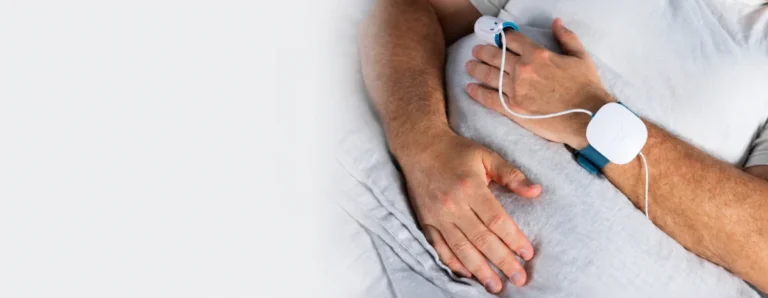
- Diagnostic Testing: Depending on your health, the doctor will order either an in-lab sleep study (polysomnography) or a Home Sleep Apnea Test (HSAT). The HSAT has become increasingly popular, as it allows patients to sleep in their own beds while wearing a portable monitor that tracks oxygen levels and heart rate.
- Treatment Plan: If a diagnosis of OSA is confirmed, treatments are highly effective. These range from Continuous Positive Airway Pressure (CPAP) therapy to oral appliances that reposition the jaw, and in some cases, lifestyle modifications or surgical interventions.
Conclusion: Taking Control of Your Sleep
Sleep is the cornerstone of health. It is during the quiet hours of the night that our bodies repair tissue, synthesize proteins, and consolidate memories. When we suffer from obstructive sleep apnea, we are denied this fundamental biological right.
The STOP-BANG questionnaire represents a triumph of modern preventative medicine. It is simple, accessible, and scientifically robust. By removing the mystery from sleep-related symptoms, it provides a clear, actionable path toward wellness.
If you find yourself nodding off at your desk, or if you have been told that your breathing is erratic at night, do not view these as mere inconveniences. They are signals from your body. Take the test, speak to your healthcare provider, and take the first step toward reclaiming the quality of your nights—and the vitality of your days.
Disclaimer: This article is provided for educational purposes only. The STOP-BANG questionnaire is owned by Dr. Frances Chung and UHN. It is not a substitute for professional medical advice, diagnosis, or treatment. Always seek the advice of your physician or other qualified health provider with any questions you may have regarding a medical condition.