








For decades, the American narrative surrounding cancer has been geographically tethered to specific, well-defined regions. Public health discourse frequently centered on the industrial corridors of the Deep South’s "Cancer Alley" or the Appalachian states, where high tobacco consumption rates provided a clear, if tragic, explanation for elevated oncology statistics. However, a seismic shift in national health data has recently thrust a different, unexpected state into the headlines: Iowa.
According to the most recent data, Iowa currently holds the second-highest cancer incidence rate in the United States. Perhaps more alarmingly, it is one of only three states where these rates continue to climb rather than plateau or decline. As families across the Hawkeye State grapple with a surge in diagnoses, researchers, policymakers, and residents are engaged in a desperate, high-stakes search for answers.
The Human Toll: Stories from the Heartland
The statistics, while stark, represent a collection of harrowing personal experiences. For Becca Mataloni, a 35-year-old Des Moines resident, the ordeal began in 2019 with an ominous, rhythmic crackling noise in her lungs.
"Kind of like dial-up internet," Mataloni recalls, describing the sound she heard every time she inhaled. By 2022, she was battling pneumonia, a condition that returned with renewed vigor in 2024. Subsequent medical imaging and consultations with pulmonologists culminated in a life-altering diagnosis: a cancerous tumor on her lung.
"It’s really devastating to get a cancer diagnosis in your 30s," Mataloni says. "Even though my pulmonologist told me that I was going to be OK, it sucks. One of the first questions I asked was, ‘Am I still going to be able to do the things I love?’"
In the rural stretches of Northern Iowa, the impact has been equally profound. Shelley Phelps lost her sister to breast cancer in 2015, only to have her husband, Michael, diagnosed with stage four colon cancer two years later. The couple faced the grueling reality of rural healthcare, often driving an hour each way for essential treatments. Michael passed away in 2020 at the age of 50.
"I have always said that, if it wasn’t for my faith, I would not have gotten through this," Phelps reflects. "You’re always waiting for that next shoe to fall. Who’s going to be diagnosed next?"
Chronology of a Rising Trend
The current crisis is not a sudden anomaly but the result of a decade-long upward trend. Historically, Iowa’s cancer rates mirrored national averages. However, data analysts pinpoint 2013 as the inflection point. Since then, the state has witnessed a steady climb in diagnoses, driven primarily by prostate, breast, and lung cancers, as well as an uptick in melanoma.
The state’s standing—now the second-highest in the nation for three consecutive years—is particularly concerning given the demographics. Iowa’s cancer incidence rate among younger populations is also near the top of the national rankings, challenging the traditional view of cancer as a disease solely of the elderly.
Decoding the Data: Complexity and Causality
Mary Charlton, who leads the Iowa Cancer Registry, has spent over 50 years tracking the state’s oncology data. Her team has traveled to all 99 of Iowa’s counties, hosting town halls to address the growing public anxiety.
"As much as we would love to reduce it down to one thing and figure this out and change Iowa’s rates, we would do that," Charlton explains. "But that’s not how cancer works."
Charlton notes that the search for a singular "smoking gun" is often frustrated by the biological reality of the disease. Two people can be exposed to identical environmental stressors, yet their immune systems may respond in fundamentally different ways. While acknowledging the frustration of a "slow slog" toward answers, Charlton emphasizes that the difficulty of the task does not excuse inaction.
Known Risk Factors
Public health experts point to several established culprits that contribute to the state’s high rates:
- Lifestyle Factors: Iowa ranks among the nation’s highest for binge-drinking, a known carcinogen.
- Tobacco Policy: The state has not raised its cigarette tax—a policy proven to correlate with reduced smoking rates—in nearly two decades.
- Geological Hazards: The entire state is designated as a high-risk zone for radon, a radioactive gas that naturally leaches from the soil into basements and homes, serving as a leading cause of non-smoking-related lung cancer.
The "Elephant in the Room": The Agricultural Nexus
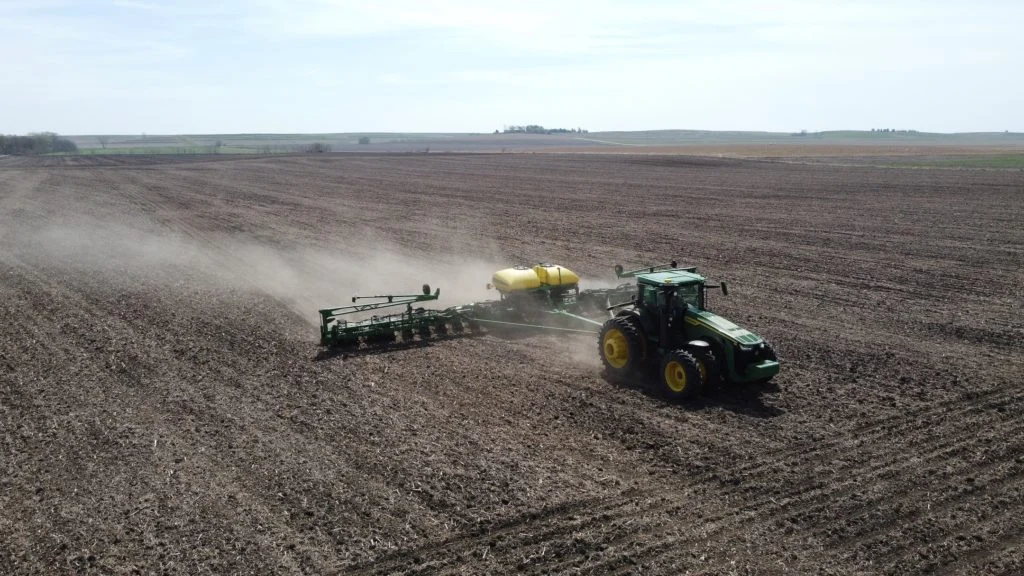
While behavioral and genetic factors are significant, a growing body of research is looking toward the state’s primary economic engine: industrial agriculture. Adam Shriver, director of wellness and nutrition policy at The Harkin Institute at Drake University, argues that the conversation has been too narrow.
"We felt like a lot of the discussions in the state had been focusing on behavioral factors and genetic factors," Shriver says. "But there was sort of this big elephant in the room in Iowa, which is the fact that we are one of the most intensively farmed states in the country."
Agriculture covers over 80 percent of Iowa’s landmass, with the state leading the nation in the production of corn, eggs, and pork. In March, a report released by Shriver’s team identified potential links between common cancers in Iowa and environmental risk factors, specifically highlighting pesticide exposure and nitrate run-off from fertilizers entering the water supply.
A Farmer’s Perspective
The debate is not merely academic for families like that of Dan Voss, a fifth-generation corn and soybean farmer near Cedar Rapids. His wife, Susan, battled liver cancer in 2012, and in 2024, Dan was diagnosed with non-Hodgkin’s lymphoma.
"In my case, could it be ag? Well, I think there’s a chance," Voss admits. "Can I say it is with 100 percent certainty? No. I think the state needs to have a good, honest discussion about where we’re at, what we can do."
Voss, who has long practiced conservation farming to reduce nitrate run-off, emphasizes that acknowledging these risks is not an attack on farmers. "Just because you talk about it, that’s not an indictment of agriculture," he notes.
Official Responses and Industry Pushback
The agricultural industry remains defensive regarding the safety of its chemical inputs. Steve Kuiper, vice president of the Iowa Corn Growers Association, insists that the products utilized are safe when applied according to label instructions.
"Too many people are poking farmers in the chest and saying, ‘You’re polluting, you’re polluting, you’re polluting,’" Kuiper says. "Farmers are more than willing to make changes and make adjustments to their operations, but they need some data to support that." Kuiper highlights that agricultural products undergo years of regulatory testing before reaching the market, and he cautions against scapegoating farmers without definitive proof.
However, advocates like Shriver contend that the lack of public health consideration in agricultural policy is a systemic failure. "I would definitely argue that, right now, public health is not part of the equation when we’re deciding on agricultural policy," Shriver says. "And it seems like it really should be."
Implications for the Future
As the crisis continues, the medical community is forced to adapt. Dr. Daniel Kollmorgen, medical director of oncology at Mahaska Health, notes that while rural patients are often preoccupied with their immediate treatment pathways, the regional disparity in care is undeniable.
"Oftentimes, in a rural location, there can be a delay from the onset of symptoms to the accessibility of diagnosis," Dr. Kollmorgen explains. He advocates for improved screening infrastructure, tighter regulations on chemical runoff, and better water quality monitoring to mitigate long-term risks.
Despite the high incidence rates, Iowa’s mortality rates remain currently aligned with the national average, a testament to the resilience of the state’s healthcare providers. Yet, as the upcoming election cycle approaches, cancer has moved to the forefront of the political agenda. Candidates for governor, Senate, and agriculture secretary are being pressed for concrete strategies to stem the tide.
In the absence of a top-down legislative solution, communities are turning to grassroots efforts. Shelley Phelps, through her work with a local foundation, has assisted over 700 residents in her county alone. As the number of requests for help continues to rise, the people of Iowa remain in a state of suspended anxiety, waiting for the science to catch up to the reality of their daily lives.
The "Cancer Alley" of the Deep South may have defined the 20th century’s environmental health conversation, but the unfolding tragedy in Iowa serves as a sobering reminder that the next public health crisis may be hiding in plain sight, embedded in the very soil that feeds the nation.