



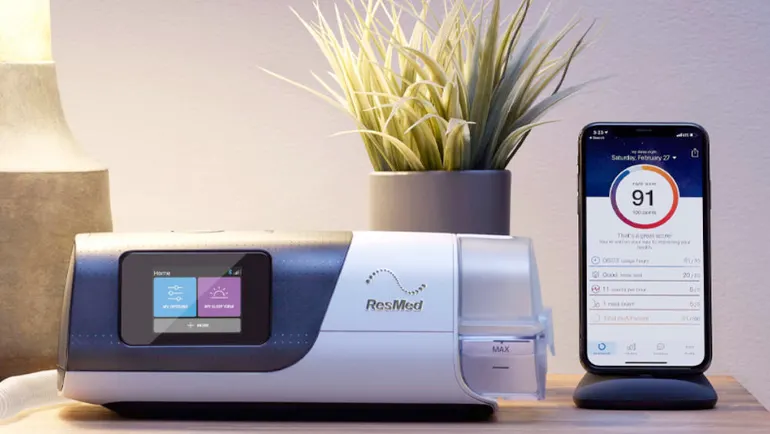
In a decisive move to streamline its portfolio and sharpen its focus on core respiratory and sleep health technology, medical device giant ResMed has announced the divestiture of its software-as-a-service (SaaS) business, MatrixCare. The transaction, which effectively unwinds an acquisition made six years ago, marks a significant shift in ResMed’s long-term strategy as it seeks to accelerate growth within its digital health ecosystem.
Main Facts: The Anatomy of the Divestiture
ResMed’s decision to offload MatrixCare, a leading software platform serving the out-of-hospital care market, represents a major recalibration of its business model. Acquired in 2018 for $750 million, the unit has provided software solutions to over 15,000 healthcare providers, including skilled nursing facilities, senior living communities, and long-term care organizations.
According to preliminary financial results for fiscal year 2026, the MatrixCare business generated approximately $220 million in revenue and $55 million in operating profit. While the business has remained profitable, ResMed leadership has identified that the unit’s growth trajectory has not kept pace with the broader company averages. By divesting the asset, ResMed aims to clean up its balance sheet and redirect capital toward areas that offer higher margins and faster growth.
The company has confirmed that the proceeds from the sale will be utilized for general corporate purposes, including the aggressive return of capital to shareholders through an accelerated share repurchase program. This move is designed to bolster earnings per share (EPS) and signal confidence in the company’s ongoing performance.
Chronology: From Acquisition to Divestment
To understand the current shift, one must look at the timeline of ResMed’s expansion into the SaaS space:
- November 2018: ResMed completes the acquisition of MatrixCare for $750 million. The move was heralded as a major step toward creating a comprehensive, cloud-based platform for out-of-hospital care.
- 2019–2025: ResMed integrates MatrixCare into its broader software portfolio, attempting to cross-sell its sleep and respiratory devices to the nursing and long-term care facilities serviced by MatrixCare.
- Fiscal Year 2026: Preliminary financial reporting indicates that MatrixCare’s revenue growth has begun to lag behind the company’s core digital health and device segments.
- Late 2026: ResMed leadership initiates a strategic review of its software unit. Concurrently, the company completes a $340 million acquisition of Noctrix Health, signaling a pivot toward specialized medical devices for conditions like restless legs syndrome.
- Early 2027 (Projected): Following the divestiture, ResMed anticipates that its remaining residential care software business will see growth accelerate into the high-single-digit percentage range.
Supporting Data: The Case for Efficiency
KeyBanc Capital Markets analysts have been among the most vocal observers of this transition. In a recent note to investors, the firm highlighted that the removal of MatrixCare is a "net positive" for the company’s overall valuation. Analysts noted that while MatrixCare was a solid business, its growth profile was dilutive to the software segment’s overall performance.
Financial Performance Overview (FY 2026 Preliminary)
- MatrixCare Annual Revenue: ~$220 Million
- MatrixCare Operating Profit: ~$55 Million
- Projected Post-Divestiture Growth (Residential Care Software): High single digits (FY 2027)
By removing the "drag" of the slower-growing MatrixCare unit, ResMed is effectively increasing the "quality" of its earnings. Investors have historically viewed software companies with high growth rates as more valuable than those in the stagnant nursing-home software market. By shedding this asset, ResMed is positioning its remaining software offerings—likely focused on more lucrative home-health and sleep-management platforms—to command a higher multiple.
Official Responses and Strategic Intent
ResMed’s management has been transparent about the intent behind this divestiture. The company is not retreating from software, but rather narrowing its focus. The goal is to move away from the highly fragmented and labor-intensive market of skilled nursing facility (SNF) software and toward more scalable, cloud-based solutions that integrate seamlessly with its flagship CPAP and ventilator hardware.
"Our commitment to the digital health space remains unwavering," a spokesperson noted following the announcement. "However, to deliver the best results for our shareholders and our patients, we must ensure that every unit in our portfolio aligns with our primary goal: improving outcomes in sleep and respiratory care."
The decision to pair the divestiture with an accelerated share repurchase program is a clear signal to Wall Street. By returning capital to shareholders, ResMed is demonstrating that it is no longer in a "land grab" phase of acquisition, but rather a "value creation" phase where efficiency and margin expansion take priority.
Implications: A New Era for ResMed
The implications of this move are twofold: they affect how the market views ResMed’s stock, and they fundamentally change the company’s competitive positioning in the medical technology landscape.
1. Shift Toward Specialized Device Innovation
The recent $340 million acquisition of Noctrix Health serves as the perfect counterweight to the MatrixCare sale. Noctrix, which produces a device for restless legs syndrome, fits directly into the company’s core competency: treating chronic sleep disorders. By offloading a generalist software platform and doubling down on a specialized device, ResMed is signaling that it wants to be a "pure-play" leader in sleep and respiratory health, rather than a conglomerate of healthcare software services.
2. Investor Sentiment and Market Valuation
Wall Street generally reacts positively to "strategic pruning." Companies that simplify their business models are often easier to analyze, leading to more accurate analyst coverage and potentially higher share prices. The accelerated share repurchase program is expected to provide a floor for the stock price in the near term, protecting shareholders during the transition period.
3. The Future of the SaaS Segment
While the divestiture of MatrixCare is significant, it does not mean the end of ResMed’s software ambitions. The company retains a robust portfolio of software solutions designed to monitor patient adherence to sleep therapy. The key difference is that these remaining assets are directly tied to the use of ResMed’s hardware. This creates a "sticky" ecosystem where the software drives the hardware sales and vice versa.
4. Competitive Landscape
The sale of MatrixCare leaves a void in the market that other health-tech providers will likely scramble to fill. However, for ResMed, the move is about exiting a space where the competitive landscape is defined by regulatory hurdles and staffing shortages in the nursing home sector. By exiting, ResMed avoids the potential long-term risks associated with the aging infrastructure of the skilled nursing industry, allowing the company to focus on the more modern, consumer-driven home healthcare market.
Conclusion
The decision to sell MatrixCare for $750 million is a defining moment in ResMed’s current chapter. It highlights a maturing company that understands the necessity of shedding legacy assets to maintain its competitive edge. By recycling the capital into share repurchases and reinvesting into high-growth segments like Noctrix Health, ResMed is not merely downsizing—it is optimizing.
As the company enters fiscal year 2027, the success of this strategy will be measured by its ability to hit those high-single-digit growth targets in its remaining software units and its capacity to successfully integrate its newer device-based acquisitions. For shareholders, the move provides immediate liquidity and a clearer vision of a company focused on its core: the science of better sleep and easier breathing.
The divestiture is more than a financial transaction; it is a strategic declaration that in the complex world of medical technology, focus is often the most valuable asset of all. As the dust settles on this $750 million deal, all eyes will be on how ResMed leverages its leaner, more specialized structure to dominate the sleep health market in the years to come.