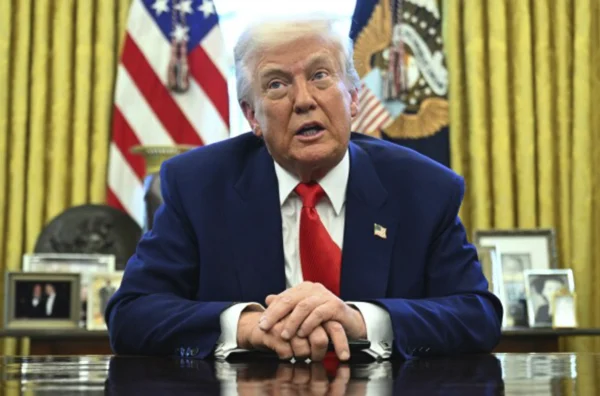
ANKARA, Turkey — In a sobering moment during the North Atlantic Treaty Organization (NATO) summit in Ankara this Wednesday, July 8, President Donald Trump delivered a stark assessment of the current geopolitical climate, publicly declaring that he is a primary target for assassination by the Islamic Republic of Iran.
Speaking to the press, the President offered a candid reflection on his personal safety, suggesting that his survival thus far has been a matter of fortune rather than a lack of intent from his adversaries. "I’m on every single one of their lists, and so far I guess I’ve been a little bit lucky," Trump remarked. "But that maybe doesn’t last very long, because that’s the way it goes."
The comments, which sent ripples through the international diplomatic community, underscore the rapidly deteriorating relationship between Washington and Tehran. The rhetoric arrives at a precarious juncture: the formal collapse of a fragile ceasefire and a surge in military posturing across the Strait of Hormuz.
The Chronology of Escalation: From Soleimani to Ankara
The roots of the current friction point back to the January 2020 drone strike that resulted in the death of Qasem Soleimani, the commander of the Iranian Revolutionary Guard Corps (IRGC). That strike, ordered by President Trump during his first term, remains the singular point of fixation for the Iranian regime.
A Timeline of Rising Tensions
- January 2020: The U.S. strike in Baghdad kills Qasem Soleimani, triggering vows of "harsh revenge" from Tehran.
- 2023–2024: Multiple reports from the U.S. intelligence community indicate consistent attempts by Iranian-backed operatives to target former U.S. officials involved in the Soleimani strike.
- July 6, 2026: The funeral of the late Ayatollah Ali Khamenei in Tehran serves as a flashpoint for anti-American sentiment, with protestors placing a de facto death bounty on the President.
- July 8, 2026: President Trump addresses the NATO summit, confirming that intelligence assessments categorize him as the "No. 1 target" for Iranian state-sponsored violence.
At the funeral ceremonies in Tehran, the atmosphere was defined by overt hostility. Witness accounts and video footage confirmed demonstrators displaying posters featuring red crosshairs over the President’s face, accompanied by the chilling proclamation: "Sooner or later, your heads will roll." The display included the burning of U.S. and British flags and the ceremonial hanging of an effigy resembling the President.
Supporting Data: The Anatomy of a Threat
The threat landscape described by the President is not a recent development, but rather the culmination of years of intelligence gathering. The U.S. government has documented numerous efforts by Tehran to reach across borders to settle scores.
Intelligence and Legal Interventions
Federal prosecutors and intelligence agencies have spent the last several years untangling a web of Iranian-linked plots. Notable cases include:
- The Bolton Plot: An IRGC operative was charged with soliciting a contract murder against former National Security Advisor John Bolton, with a bounty of $300,000 offered for the assassination on American soil.
- Infiltration Attempts: The Federal Bureau of Investigation (FBI) has successfully interdicted multiple plots, including one involving a Pakistani national with alleged ties to Iranian intelligence who sought to enter the United States specifically to target the President.
- The "Kill Team" Strategy: Intelligence reports suggest that Tehran has deployed multiple, independent "kill teams" tasked with surveillance and eventual engagement of high-level U.S. targets.
Furthermore, the protection of former officials remains a logistical and financial burden for the U.S. government. Figures such as former Secretary of State Mike Pompeo and Iran envoy Brian Hook remain under 24/7 federal security details, reflecting the persistent nature of the threat.
Official Responses and Administrative Scrutiny
The President’s remarks have prompted an urgent review of domestic security protocols. During a press conference alongside Secretary of State Marco Rubio, the President reiterated that he is "their No. 1 target." This public acknowledgment follows a week of intense scrutiny regarding the Department of Homeland Security (DHS).
Security Failures and Oversight
The Inspector General of the DHS recently released a damning report regarding the security apparatus during the assassination attempt on the President in Butler, Pennsylvania, two years ago. The report identified a catastrophic breakdown in communication:
- Missed Signals: Secret Service personnel allegedly ignored or failed to act upon 102 distinct radio calls regarding the presence of gunman Thomas Crooks on a nearby rooftop.
- Suppressed Intelligence: Reports suggest that specific White House intelligence bulletins detailing the methods Iran planned to use to infiltrate the U.S. homeland were suppressed by certain administrative channels, raising questions about internal accountability.
Secretary of State Marco Rubio, speaking in support of the President’s stance, emphasized that the current military operations in the Strait of Hormuz—initiated after Iranian strikes on commercial vessels—are a necessary response to a regime that views diplomatic norms as weakness.
Implications: The New Geopolitical Reality
The declaration that the ceasefire is "over" marks a turning point in the Trump administration’s foreign policy. The implications of this shift are multifaceted, affecting military readiness, diplomatic alliances, and domestic safety.
Military and Strategic Fallout
The Strait of Hormuz, a critical artery for global oil transit, has become the primary theater of this confrontation. Following the President’s order for "fresh strikes" against Iranian maritime targets, the risk of a broader, conventional conflict has increased significantly. NATO allies, present at the Ankara summit, are now tasked with balancing their own regional interests against the necessity of supporting a unified front against Iranian aggression.
The Domestic Security Paradox
The vulnerability of high-level officials is a microcosm of a larger domestic security issue. The shooting at the White House Correspondents’ Association Dinner in April 2026 served as a brutal reminder that the nation’s interior is not immune to the volatility of global conflicts. When combined with the failures of the Secret Service during the Butler incident, the American public is increasingly concerned about the state of executive protection.
Conclusion: A Fatalistic Outlook
As the NATO summit concludes, the mood remains one of grim determination. President Trump’s fatalistic admission—that being a target is simply "the way it goes"—is more than a personal sentiment; it is a recognition of a permanent shift in the global security paradigm.
The U.S. intelligence community continues to track the activities of Iranian proxies, but the challenge of neutralizing a state-sponsored campaign of targeted assassinations is historically unprecedented. As the administration continues its military campaign against Iranian targets, the President’s security detail remains in a state of maximum alert.
For now, the standoff remains fluid. With diplomatic channels severed and the threat of violence looming both abroad and at home, the administration faces the dual challenge of projecting strength to a foreign adversary while attempting to restore faith in the internal security apparatus that is tasked with protecting the nation’s leadership. The coming months will likely define not only the fate of the current U.S.-Iran confrontation but also the standards for executive security in an era of asymmetric warfare.