










For many, the transition into the seventh decade of life brings a quiet, nagging realization: the "spring" in one’s step is no longer automatic. Rolling out of bed, once a fluid motion, may now be accompanied by a subtle stiffness or a feeling of instability. While traditional fitness advice often points toward high-intensity gym routines or long, grueling planks, experts are increasingly emphasizing a more nuanced approach for those over 60: deep-core restoration.
A truly effective deep-core exercise is defined not by intensity, but by intentionality. It is often a "quiet" movement where the focus shifts from superficial muscles—like the "six-pack" rectus abdominis—to the stabilizers that protect the spine, pelvis, and ribs. These muscles act as the body’s internal scaffolding, providing the structural integrity required to carry groceries, reach for high shelves, or maintain balance during a brisk morning walk.
The Anatomy of Stability: Why the Deep Core Matters
When coaching adults over 60, the primary objective is not aesthetic; it is functional autonomy. The deep-core complex consists of the transverse abdominis (the body’s natural corset), the diaphragm (your primary breathing muscle), the pelvic floor, and the multifidus muscles that support the spine.
Crucially, these muscles must operate as a synchronized team. When this synergy falters, the body compensates by shifting tension to the lower back or hips, leading to the discomfort many mistake for "natural aging." By practicing controlled breathing and bracing—the ability to keep the trunk organized while the limbs move—individuals can effectively "re-wire" their core to support them through daily tasks.
The Bedside Advantage: A Strategic Starting Point
While floor-based exercise is the gold standard for many athletes, a firm mattress offers a unique, accessible environment for seniors to begin their training. A firm bed provides enough support to facilitate proper alignment while reducing the barrier to entry for those who find getting up and down from the floor physically taxing.
By removing the need for shoulder-heavy planks—which often place undue stress on wrists and rotator cuffs—we can isolate the abdominal muscles. This shift allows for a focus on neuromuscular control rather than endurance-based exhaustion.
Chronology of Progress: A Four-Move Foundation
To build a resilient core, consistency outweighs intensity. The following four exercises, when performed with precision, serve as a foundational protocol for deep-core integration.
1. Supine Heel Taps
Supine heel taps are the ultimate test of pelvic stability. The objective is to keep the ribcage and pelvis locked in place while the legs move independently.
- The Mechanism: As you lower your heel toward the mattress, the deep core must resist the natural urge of the lower back to arch. This creates an isometric challenge for the obliques and transverse abdominis.
- Execution: Lie flat on your back, knees bent, feet on the bed. Engage your core as if bracing for a light tap. Slowly lower one heel until it lightly touches the mattress, then return to the start.
- Pro Tip: Keep the range of motion short. If you feel your lower back pulling away from the bed, your range is too wide.
2. Bent-Knee Fallout
This movement is deceptively simple, focusing on lateral stability. It trains the core to maintain a neutral pelvis while a leg moves away from the midline.
- The Mechanism: By allowing one knee to "fall out" to the side, you introduce a rotational force. Your deep-core stabilizers must fire to prevent your entire body from rolling with the leg.
- Execution: Lie on your back, knees bent. Keeping the pelvis anchored, slowly lower one knee toward the mattress while keeping the other leg stationary. Return to center before switching sides.
- Pro Tip: Visualize your pelvis as a heavy, immovable block. Only the hip joint should be moving.
3. Dead Bug March
The Dead Bug is a cornerstone of spinal health, mimicking the reciprocal motion of walking and climbing stairs.
- The Mechanism: This exercise challenges the core to maintain a "stacked" position—ribs over hips—while the legs are lifted. It is the perfect bridge between lying down and standing upright.
- Execution: Start on your back with knees in the air at 90 degrees. Slowly "march" one foot toward the bed, tapping the toe, then return to the start. Ensure your lower back remains in contact with the mattress throughout.
- Pro Tip: Keep the movement slow. Speed is the enemy of stability; focus on the connection between your breath and your movement.
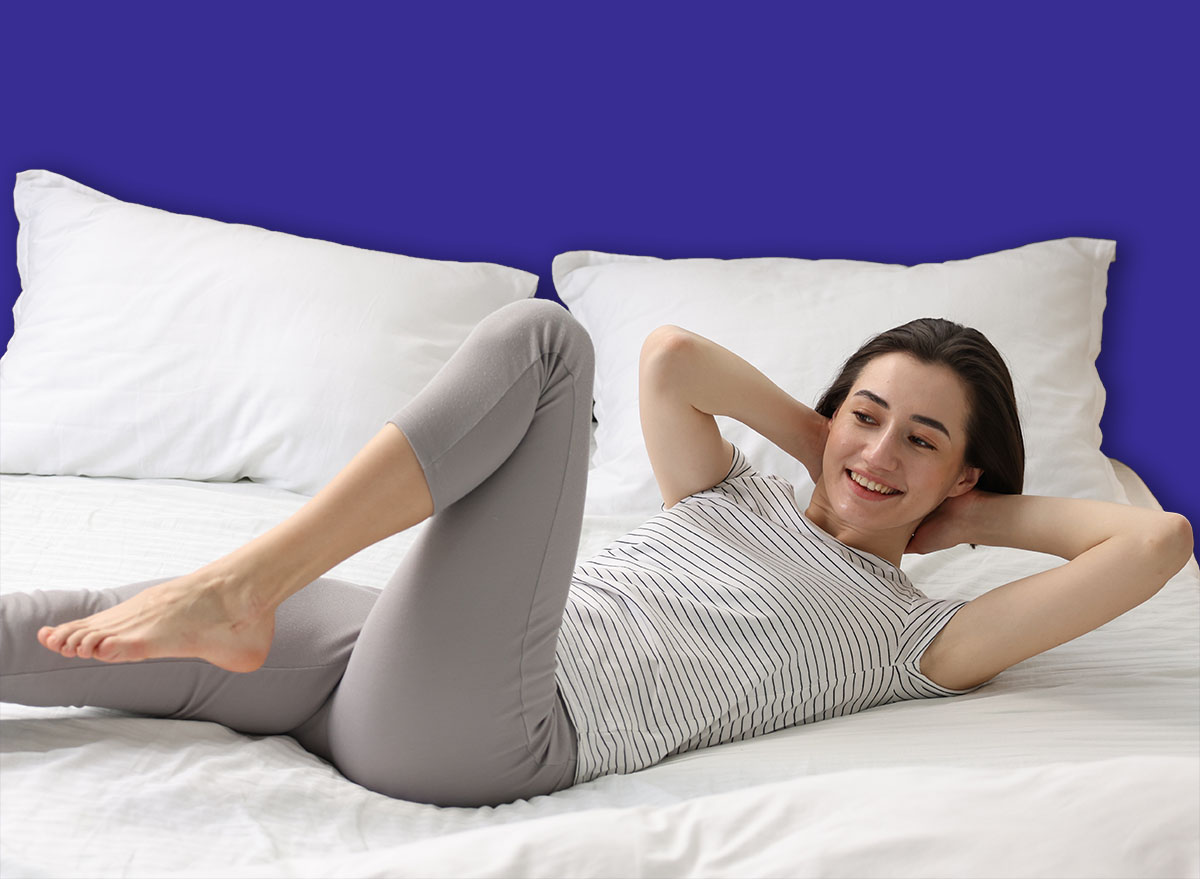
4. Bent-Knee Reverse Crunch
Unlike traditional crunches that focus on neck-straining flexion, the reverse crunch shifts the workload to the lower abdominals.
- The Mechanism: This requires the pelvis to tilt slightly, engaging the lower fibers of the rectus abdominis and the obliques.
- Execution: Lie on your back, hands at your sides. Use your core to pull your knees toward your chest, lifting your hips just an inch or two off the bed. Lower back down with extreme control.
- Pro Tip: Focus on the "initiation." The lift should come from the belly, not by swinging the legs or momentum.
Supporting Data: The Science of Stabilization
Research published in journals such as the National Center for Biotechnology Information (NCBI) consistently demonstrates that deep-core stabilization training significantly reduces the incidence of non-specific lower back pain in older adults. Unlike heavy weightlifting, which increases spinal compression, deep-core work enhances "trunk stiffness"—a positive medical term for the ability of the core to resist unwanted movement under load.
A 2024 study noted that adults over 60 who engaged in 15 minutes of core-stabilization exercises four times per week showed a 22% improvement in balance-related metrics. These improvements are directly linked to the "anticipatory postural adjustments" the core makes before a person takes a step or reaches for an object. When the core is strong, the body prepares for movement before the movement even happens, drastically reducing the risk of falls.
Official Perspectives: The Role of Coaching
Jarrod Nobbe, a certified sports performance coach and expert in longevity training, emphasizes that the goal is not to become a bodybuilder, but to become a more "organized" mover.
"When I work with seniors," Nobbe notes, "I’m looking for breathing quality. If a client holds their breath during a movement, they aren’t using their deep core; they are using their neck and jaw. True strength in the seventh decade and beyond is about the ability to breathe while moving. If you can keep your trunk organized while your legs are moving, you are building the exact armor you need to stay independent."
Implications for Daily Life
The transition from a "weak core" to a "stable core" manifests in surprising ways. It is not just about finishing a workout; it is about the "micro-moments" of the day.
- Morning Mobility: Rolling out of bed becomes a graceful transition rather than a struggle.
- Household Efficiency: Reaching for a dish or carrying a laundry basket feels lighter because the force is distributed through the abdominal wall rather than the delicate vertebrae of the lumbar spine.
- Fall Prevention: The enhanced pelvic stability provided by the Bent-Knee Fallout and Dead Bug translate directly into better balance during gait, significantly mitigating the risk of trips and stumbles.
A Sustainable Future
For those aged 60 and over, the message is clear: You do not need a fancy gym membership or complicated equipment to restore your foundation. You have everything you need in your own bedroom.
By committing to a short, 15-minute routine 3 to 4 days a week, you are investing in the most important asset you own: your ability to move through the world with confidence and ease. The key is to embrace the "quiet" nature of these movements. Treat them not as a battle to be won, but as a practice to be refined. As you cultivate this deep-core strength, you will find that the physical challenges of aging become significantly more manageable, allowing you to focus on living, not just surviving.