By Sree Roy
For decades, the "gold standard" for diagnosing sleep disorders has been the in-lab polysomnography (PSG). Patients are instructed to report to a clinical facility, sleep in a strange bed, and remain tethered to a suite of monitors, all while being observed by technicians. However, a groundbreaking exploratory analysis presented at SLEEP 2026 suggests that this controlled environment may be inadvertently distorting the very data clinicians seek to capture.
New research using a patch-based, type II home sleep study system—the Onera Sleep Test System—indicates that patients experience significantly different sleep architecture at home compared to the laboratory. The study, which compared identical patients in both settings, found that individuals sleep longer, more efficiently, and with more natural sleep cycles when in their own bedrooms. Crucially, these findings suggest that the "lab effect"—the anxiety and discomfort associated with a clinical setting—may be masking the true nature of a patient’s sleep health.
The Main Facts: A Tale of Two Environments
The study, conducted across seven sleep clinics in Germany, sought to evaluate whether modern, patient-applied wearable technology could provide a more "clinically faithful" representation of sleep than traditional, hospital-based monitoring.
The researchers analyzed a cohort of 52 adults who underwent both a full-night in-lab PSG and a full-night home sleep study using the Onera patch. To ensure a valid comparison, the study utilized strict inclusion criteria: each participant was required to spend at least six hours in bed and provide at least four hours of scorable data in both environments.
The findings were stark. The home environment, characterized by the comfort of the patient’s own bed and familiar surroundings, led to dramatic improvements in sleep continuity metrics:
- Wake After Sleep Onset (WASO): This measure of sleep fragmentation dropped by more than half, falling from 54.3 minutes in the lab to 23.1 minutes at home.
- Sleep Efficiency: Patients achieved an 89.1% efficiency rate at home, compared to 81.1% in the laboratory.
- Total Sleep Time: Patients averaged 408.1 minutes of sleep at home, versus 378.6 minutes in the lab.
- REM Sleep: The duration of Rapid Eye Movement (REM) sleep—the stage critical for cognitive and emotional regulation—increased from 76.4 minutes in the lab to 91.1 minutes at home.
Chronology of the Discovery
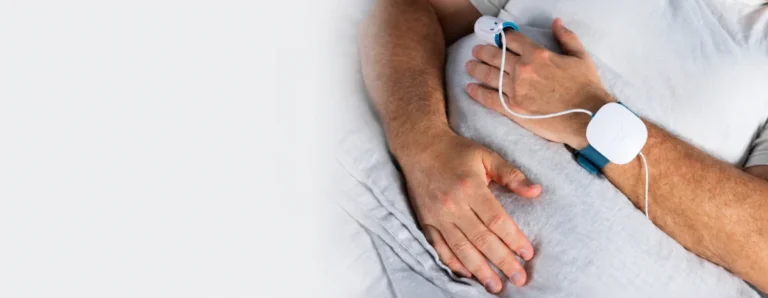
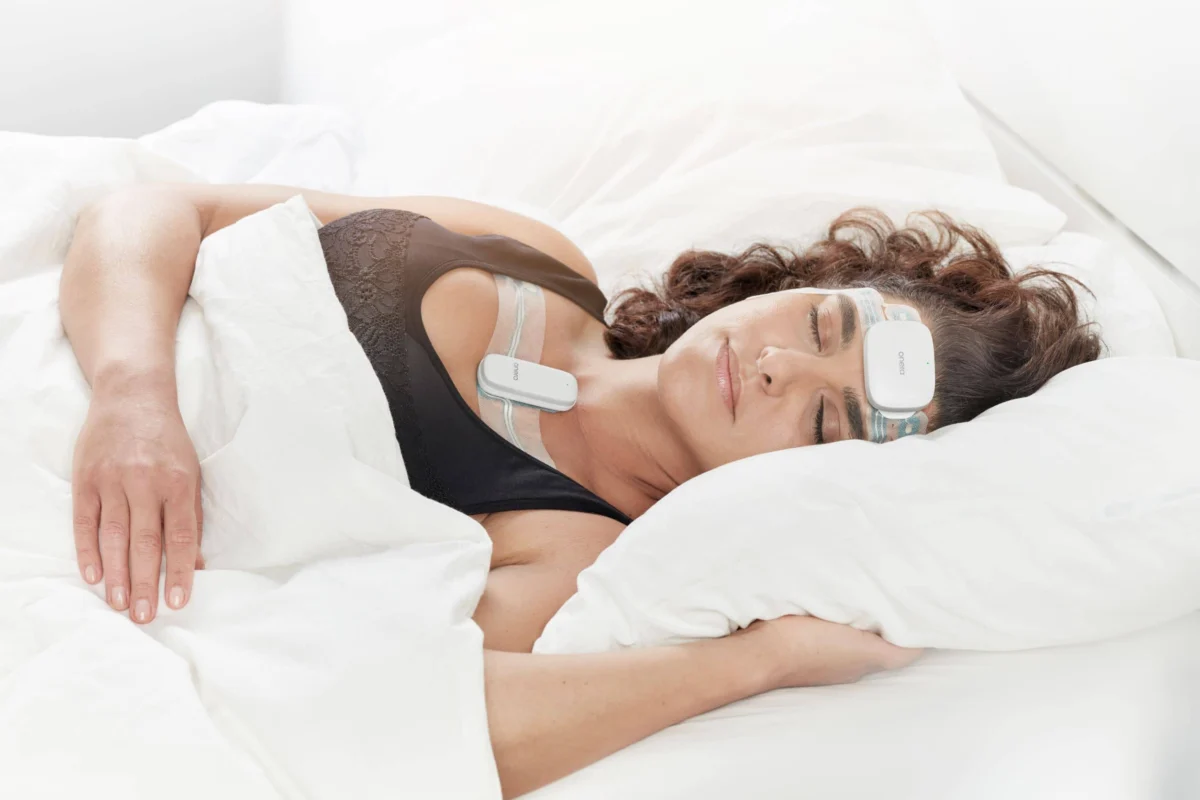
The journey toward these findings began with the rapid evolution of "patch-based" diagnostics. For years, the industry relied on cumbersome, wired systems that required professional application. The Onera Sleep Test System, which utilizes four discrete sensors placed on the chest, abdomen, leg, and forehead, represents the next generation of Type II home sleep testing.
During the validation process, researchers realized they had a unique opportunity to compare the data streams of these wearable sensors against the stationary gold standard of the lab.
- Phase I (Recruitment): Seven German sleep centers identified patients undergoing diagnostic testing.
- Phase II (Data Collection): Participants were equipped with the patch system and monitored in the clinic. They were then tasked with performing a self-applied study in their own homes.
- Phase III (Analysis): Following the submission of the initial abstract to the SLEEP 2026 conference, researchers continued to refine the dataset. The final metrics, which were updated post-submission, revealed the significant discrepancies in sleep continuity between the two environments.
- Phase IV (Peer Presentation): The findings were presented to the scientific community at SLEEP 2026, triggering a broader conversation about the necessity of laboratory environments for non-complex cases.
Supporting Data: Why the Lab May Be Less Representative
The "lab effect" is a well-known phenomenon in sleep medicine, but it has rarely been quantified with such precision. Steven Coughlin, PhD, clinical lead at Onera Health, notes that the study design likely understated the true difference between home and lab sleep.
Because the study required at least four hours of scorable sleep to be included in the analysis, the sample skewed toward "better sleepers." Patients with severe insomnia or those who suffer from acute "first-night effect" anxiety in clinical settings were more likely to be excluded because they could not meet the four-hour minimum in the lab.
"Patients who struggle most in the lab, for example, those with insomnia, were more likely to have fallen out of that scored subset," Coughlin explains. "So if anything, that selection bias would have led to us understating the true differences between the two environments."
Despite these differences in sleep architecture, the study found one area of remarkable stability: respiratory metrics. The mean apnea-hypopnea index (AHI)—the primary metric used to diagnose sleep apnea—remained consistent between the two environments, hovering between 28 and 29 events per hour. This suggests that while the quality and continuity of sleep change based on the environment, the pathology of sleep-disordered breathing remains detectable regardless of where the patient sleeps.
Official Responses and Clinical Perspectives
The medical community has long balanced the need for diagnostic accuracy with the logistical burden of hospital-based testing. The response from clinical leaders to these findings has been one of cautious optimism regarding the evolution of patient care.
"A change of that magnitude in how consolidated sleep was simply from moving the recording from the lab into the patient’s own sleep environment in the home is striking," says Steven Coughlin. "It underscores how unrepresentative a laboratory night might actually be of someone’s real sleep."
Bill Garner, vice president of global marketing at Onera Health, views this as a pivotal moment for health system efficiency. "This data strengthens the case for home PSG being more than just a convenience," Garner states. "If a laboratory night is not representative of your habitual sleep, then recording a patient’s sleep in their own bedroom is not just easier and more comfortable—it’s going to be more clinically faithful."
However, Garner is quick to qualify that these tools are not intended to render the sleep lab obsolete. Rather, they are intended to function as an additional instrument in the diagnostic toolbox. "Home PSG is about making sleep labs more efficient and keeping in-lab beds for those that truly need them," he adds.
Clinical Implications: The Evolving Diagnostic Pathway
The implications of this study are profound for both the patient experience and the economic structure of sleep medicine.
1. Improved Patient Compliance and Comfort
Patient feedback from the study was overwhelmingly in favor of the home setting, with 73% of subjects reporting that their sleep quality was significantly worse in the lab. By reducing the barriers to testing—such as the need for overnight hospital stays—clinicians may see higher compliance rates, leading to faster diagnoses and treatment.
2. Scalability for Rising Patient Volumes
As awareness of sleep apnea and other disorders grows, the demand for testing is outpacing the availability of in-lab beds. By shifting routine diagnostics to the home using validated patch-based systems, health systems can reallocate limited lab resources to patients with complex comorbidities or those who require constant titration and monitoring.
3. More Accurate Baseline Data
If sleep architecture is artificially disrupted in the lab, clinicians may be misinterpreting the severity of a patient’s condition. By observing sleep in a natural environment, doctors can gain a more accurate baseline of the patient’s habitual sleep, which is essential for determining the long-term effectiveness of treatments like CPAP (Continuous Positive Airway Pressure) therapy.
4. A New Standard for "Gold Standard"
While in-lab PSG has held the title of the diagnostic gold standard for decades, this study poses a challenging question: Is the gold standard defined by the technology used, or by the environment in which the patient sleeps? As technology continues to close the gap between home and clinical recording quality, the definition of "gold standard" may shift toward home-based testing for the majority of patients.
Conclusion
The exploratory analysis presented at SLEEP 2026 serves as a catalyst for a necessary shift in sleep medicine. By demonstrating that patients sleep longer, more efficiently, and with fewer disruptions in their own homes, the study highlights the inherent limitations of the laboratory environment.
As the medical field continues to embrace digital health and decentralized care, the use of sophisticated, user-friendly patches will likely become the cornerstone of sleep diagnostics. For the sleep-deprived patient, this could mean a future where getting a diagnosis is as simple as wearing a patch to bed—and where the data gathered is a true, undistorted reflection of the night’s rest.
The goal remains unchanged: to provide the best possible care for those struggling with sleep disorders. But as these findings suggest, the path to achieving that goal may no longer require a trip to the lab.