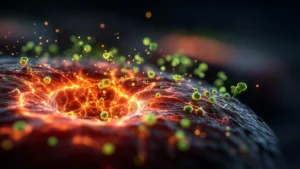












For decades, the field of regenerative medicine has operated under a relatively straightforward assumption: as we age, our stem cells simply "wear out," losing the vigor and efficiency that characterize them in youth. This decline in cellular performance is widely accepted as the primary driver behind the frailty, slow healing, and muscle atrophy that define the aging process.
However, a groundbreaking study published in the journal Science by researchers at UCLA is challenging this narrative, suggesting that the sluggishness of aging tissues is not merely a sign of decay, but a sophisticated, calculated trade-off. The findings imply that muscle stem cells in older organisms are not necessarily "broken"; rather, they have been reconfigured to prioritize long-term survival at the expense of rapid repair.
The Discovery: Identifying the "Brake" on Aging
The research, led by Dr. Thomas Rando, director of the Eli and Edythe Broad Center of Regenerative Medicine and Stem Cell Research at UCLA, began with a fundamental question: Why do older organisms struggle to regenerate damaged muscle?
By comparing muscle stem cells from young mice with those from elderly mice—the latter roughly equivalent to 75-year-old humans—postdoctoral scholars Jengmin Kang and Daniel Benjamin identified a significant molecular shift. Older cells showed a dramatic accumulation of a protein known as NDRG1, with concentrations reaching 3.5 times higher than in their younger counterparts.
The researchers discovered that NDRG1 acts as a physiological "brake" within the cell. It functions by suppressing the mTOR signaling pathway—a critical biological pathway that typically drives cell activation, growth, and proliferation. In youth, this pathway is highly active, allowing stem cells to spring into action immediately upon injury to mend muscle fibers. In the elderly, the rise of NDRG1 effectively stifles this pathway, causing the cells to remain dormant or move with lethargic inefficiency.
A New Framework: The Cellular Survivorship Bias
The study’s most provocative finding is the concept of "cellular survivorship bias." Dr. Rando and his team propose that the population of stem cells found in aged muscle is not representative of the original pool of cells present at birth.
Instead, over the course of a lifetime, stem cells with low levels of NDRG1—those that are high-performing "sprinters"—are more likely to exhaust themselves or die off due to the stresses of repeated tissue damage and metabolic demands. What remains in an older animal is a cohort of "marathon runners": cells that have high levels of NDRG1, which keeps them in a state of stasis and protects them from the harsh environment of aging tissue.
"It’s counterintuitive, but the stem cells that make it through aging may actually be the least functional ones," Dr. Rando explains. "They survive not because they’re the best at their job, but because they’re the best at surviving. That gives us a completely different lens for understanding why tissues decline with age."
The Marathoner vs. The Sprinter: An Evolutionary Trade-off
To visualize the mechanism, Dr. Rando employs a biological analogy. Young stem cells are the sprinters of the body; they possess explosive power, capable of rapid, high-intensity repair that restores muscle function almost immediately. However, this high-performance lifestyle is metabolically expensive and prone to burnout.
In contrast, the stem cells found in aged muscle are the marathoners. They are not built for the quick dash. They are equipped to endure, to conserve energy, and to resist the oxidative stress and cellular inflammation that characterize aged environments. The presence of high NDRG1 levels is the specific adaptation that grants them this endurance.
This is a classic evolutionary trade-off, reminiscent of how organisms in nature prioritize survival over reproduction during times of scarcity. During a famine, an animal will suppress reproductive hormones to keep itself alive. Similarly, as an organism ages, its stem cells appear to be "hunkering down," sacrificing their ability to regenerate tissue (their "reproductive" function) to prevent the total depletion of the stem cell pool.
Chronology of the Investigation
The UCLA team’s path to these conclusions involved a rigorous, multi-staged experimental process:
- Comparative Analysis: The researchers first mapped the proteomic profiles of young versus old mouse muscle stem cells, identifying the significant upregulation of NDRG1 in the latter.
- Functional Testing: Using laboratory cultures, they observed how these cells responded to stimuli. High-NDRG1 cells showed consistent resistance to rapid activation.
- The "Brake" Removal: The team conducted experiments on naturally aged mice, using genetic techniques to block NDRG1 activity. The results were immediate: the older muscle stem cells reverted to "youthful" behavior, showing increased activity and significantly improved repair capabilities following injury.
- The Hidden Cost: However, the experiment also revealed the consequence of this intervention. When NDRG1 was blocked, the stem cell population began to dwindle. Without the protective shield of NDRG1, these older cells could not sustain themselves through the rigors of repeated injury, leading to a long-term decline in regenerative capacity.
Implications for Geriatric Medicine
The realization that aging cells are making a strategic choice—prioritizing survival over performance—has massive implications for the future of regenerative medicine. It suggests that simply "boosting" the performance of aged stem cells, while appealing, could inadvertently lead to their rapid depletion.
The Problem with "Free Lunches"
Dr. Rando warns against the potential for unintended consequences in anti-aging therapies. "There’s no free lunch," he notes. "We can improve the function of aged cells for a period of time, for certain tissues, but every time we do this, there’s going to be a potential cost and a potential downside."
If clinicians were to successfully develop a drug that inhibits NDRG1 to speed up healing in an elderly patient, they might see excellent short-term recovery from a single injury. However, that patient might be left with a permanently diminished reserve of stem cells, making them far more vulnerable to future injuries or chronic degenerative conditions.
A New Era of Targeted Therapies
Rather than broad interventions, the findings suggest that the future of aging therapies lies in precision medicine. Researchers may need to develop "dynamic" treatments—interventions that can be toggled on to stimulate repair during acute injury and then turned off to allow the cells to return to their protective, "marathon-running" state.
Understanding the molecular mechanisms of NDRG1 opens a "doorway," as Dr. Rando puts it, to managing the delicate balance between the immediate need for repair and the long-term need for cellular maintenance.
Conclusion: Reframing Aging
The UCLA study effectively moves the conversation of aging away from a simple model of "failure." Instead of viewing the aging body as a machine that is simply breaking down, science is beginning to see it as a complex biological system that is actively managing its own survival in the face of inevitable decline.
The "cellular survivorship bias" identified in this study highlights that many of the traits we classify as pathological—such as slow healing—may actually be vital adaptations. As scientists continue to map these molecular trade-offs, the hope is not to "reverse" aging in a way that ignores these biological imperatives, but to navigate them with a nuanced understanding of how to sustain both the health and the longevity of our cells.
This research was supported by funding from the National Institutes of Health, the NOMIS Foundation, the Milky Way Research Foundation, the Hevolution Foundation, and the National Research Foundation of Korea.