As Americans across the East Coast and beyond prepare to celebrate Independence Day, the festivities are being overshadowed by an unprecedented and dangerous heat wave. With nearly 160 million people currently under heat advisories stretching from the humid banks of the Mississippi to the rugged coast of Maine, the Fourth of July is shaping up to be one of the hottest on record. This extreme weather event has already begun to fracture the nation’s infrastructure, straining energy grids, disrupting travel, and forcing local governments to scramble to protect their citizens from a silent, invisible, and lethal threat.
The State of the Crisis: A Nationwide Heat Wave
The current meteorological event is not merely a seasonal fluctuation; it is a sprawling, dangerous phenomenon affecting roughly half the U.S. population. Triple-digit temperatures are becoming the new baseline for many regions that are historically accustomed to more moderate summer weather.
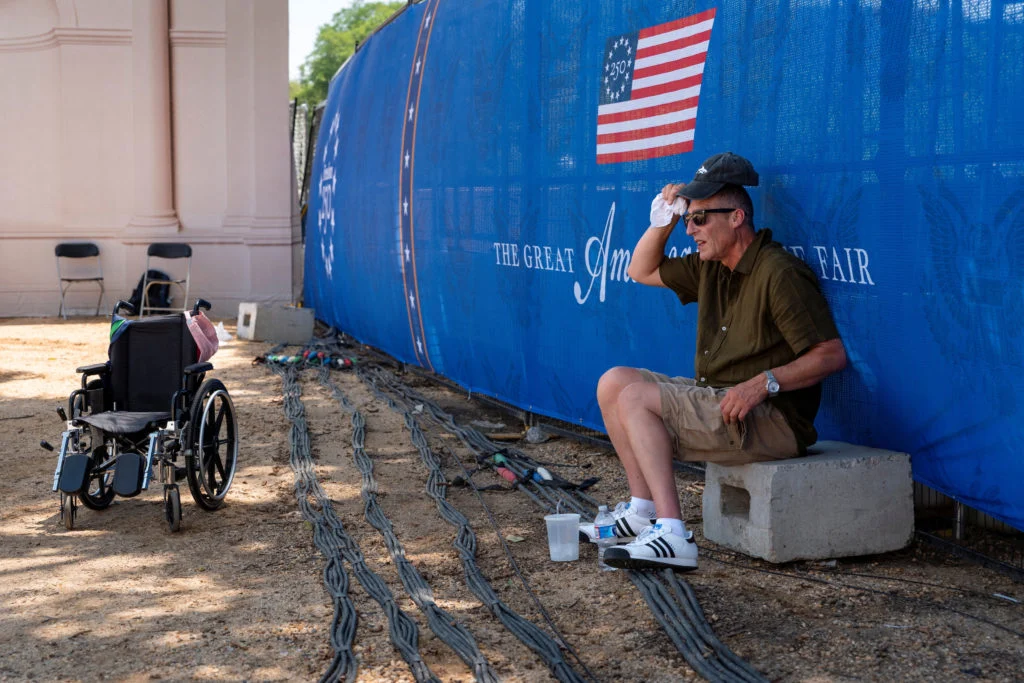
The impact is immediate and visceral. In Pennsylvania, the 250th-anniversary celebrations, meant to be a joyous commemoration of American history, turned into a medical emergency yesterday as over 100 people required treatment for heat-related illnesses. In the nation’s capital, officials were forced to delay events on the National Mall, recognizing that the combination of asphalt, high humidity, and lack of shade created a lethal environment for the thousands of tourists who had gathered to celebrate.
In New York City, the heat index—the temperature as it feels to the human body when humidity is combined with the air temperature—is expected to climb as high as 110 degrees. The city’s leadership has moved into high alert, urging residents to treat the environment as they would any other natural disaster.
Chronology of the Escalation
The escalation of this heat wave mirrors the trajectory of climate patterns observed over the last several years. The progression of the crisis has been rapid:
- Early Week: The National Weather Service began issuing widespread alerts, noting a "heat dome" structure trapping hot air over the Eastern and Central United States.
- Mid-Week: Temperatures began hitting triple digits in inland areas. Infrastructure stress began to mount, with reports of rail delays and energy grid instability as demand for air conditioning surged.
- Yesterday: The situation reached a breaking point in several municipalities. The mass medical incidents in Pennsylvania served as a warning bell for organizers across the country.
- Today (July 4th): As the nation attempts to hold parades and outdoor barbecues, local officials are pivoting from "celebration mode" to "survival mode," mandating the presence of cooling centers and water stations.
The Science of the Heat: Why This Is Different
To understand the severity of this heat, one must look at the physiological toll it takes on the human body. Jeff Goodell, author of The Heat Will Kill You First: Life and Death on a Scorched Planet, notes that the body’s cooling mechanism—sweating—is only effective if the body remains hydrated and the ambient temperature remains below a certain threshold.
"Our bodies are very sensitive to changes in heat," Goodell explained in a recent interview. "Being out in extreme heat puts a massive strain on the heart. It essentially forces the cardiovascular system to work overtime to push blood to the skin to cool off, which can lead to rapid exhaustion or heart failure in vulnerable populations."
The scientific consensus is that these events are no longer "freak" occurrences. A recent study from a leading scientific group in the United Kingdom concluded that the temperatures currently being experienced in the United States would be "virtually impossible" without the significant accumulation of CO2 in the atmosphere caused by the burning of fossil fuels. We are, as Goodell suggests, living in the future that climate scientists warned us about five decades ago.
Identifying the Vulnerable
While everyone is at risk during a heat wave of this magnitude, the health impacts are not distributed equally. Public health authorities are focusing their outreach on four primary groups:
- The Elderly: Those with existing heart conditions or weakened circulatory systems are the most likely to succumb to heat stroke.
- Young Children: Infants and toddlers under the age of two have not yet fully developed the biological capability to sweat efficiently, making them uniquely prone to rapid overheating.
- Those on Specific Medications: Individuals taking antidepressants, antihistamines, or certain blood pressure medications may find that their bodies struggle to regulate internal temperature, increasing their risk profile.
- Pregnant Women: Recent clinical research has highlighted a worrying correlation between extreme heat exposure and an increased risk of miscarriage, adding a layer of urgency for expectant mothers to avoid outdoor exposure.
Official Responses and Public Safety
Local and state governments have been forced to re-evaluate their event management protocols. New York City Mayor Zohran Mamdani has been among those leading the charge in public communication, emphasizing that standard summer precautions are no longer sufficient.
"What we ask New Yorkers to do is to be mindful of the danger that accompanies those temperatures," Mayor Mamdani stated. "That means staying hydrated, wearing sunscreen, and taking frequent breaks. Most importantly, if you can, stay indoors and in air conditioning."
However, experts like Goodell argue that officials must go beyond general advice. "Officials need to be covering the basics: access to water, access to shade, and, even better, access to air-conditioned tents," he noted. "Furthermore, it is critical to have medical personnel on-site who are specifically trained to recognize the early symptoms of heat stroke, which can be subtle but fatal if not treated immediately."
Practical Advice for the Public
For those still intending to participate in holiday activities, the following precautions are recommended by medical professionals:
- Hydration is Key: Do not wait until you are thirsty. Water intake is essential to maintain the body’s ability to sweat. If you stop sweating while in high heat, it is a sign that you are dangerously dehydrated and need immediate medical intervention.
- The "Runaway Train" Concept: Heat builds up in the body cumulatively. If you wait until you feel faint to find shade, you have likely already reached a point of physical crisis. Seek cooling long before you feel overwhelmed.
- Clothing Choices: Light-colored, loose-fitting clothing reflects sunlight and allows for better airflow over the skin.
- Sunscreen Misconceptions: While sunscreen is essential for preventing UV damage and skin cancer, it does not provide protection against heat-related illness. Relying on sunscreen alone to stay "safe" outdoors is a dangerous error.
Global Implications: A World Under Siege
The American heat wave is part of a larger, global pattern of extreme weather. Health authorities in Europe have recently reported thousands of "excess deaths" directly linked to record-breaking heat waves. This term, "excess deaths," refers to the mortality rate exceeding what would normally be expected for that time of year, effectively capturing the silent victims of climate change who perish due to heat-induced organ failure or cardiac events.
This global phenomenon underscores that climate change is not a future problem—it is a present-day crisis. The increasing frequency and intensity of these heat waves are direct consequences of the rising concentration of greenhouse gases.
Looking Ahead: The New Normal
As the United States reflects on its 250-year history, the climate crisis poses a fundamental challenge to the American way of life. The events of this Fourth of July—the cancelled parades, the heat-stricken crowds, and the strained power grids—are a harbinger of a new reality.
The transition to a warmer planet is, according to the scientific community, well underway. The question now for policymakers and citizens alike is how to adapt our infrastructure and our habits to survive in an environment that is becoming increasingly hostile to human biology. The celebration of our past must now be accompanied by a sober, urgent commitment to securing a livable future. As Jeff Goodell concluded, the science has been clear for 50 years; the only question remaining is how quickly we can adjust our societal trajectory to meet the challenge of a scorched planet.