











Jacksonville, FL / Phoenix, AZ – [Current Date] – In a landmark advancement poised to redefine the landscape of inpatient physical rehabilitation, Brooks Rehabilitation, a nationally top-ranked provider, has announced its pioneering adoption of Lite Run™’s FDA-registered anti-gravity mobility technology. This strategic integration positions Brooks Rehabilitation as the first nationwide inpatient rehabilitation hospital to offer this innovative platform, enabling significantly earlier and safer patient mobilization while simultaneously alleviating the immense physical demands placed upon clinical staff.
The move underscores Brooks Rehabilitation’s unwavering commitment to leveraging cutting-edge technology to optimize patient outcomes, accelerate recovery timelines, and enhance the overall therapeutic experience. By incorporating Lite Run’s patented Exosuit and low-pressure air technology, Brooks is setting a new standard for patient care across its facilities in Jacksonville, Florida, and its eagerly anticipated new hospital on the Mayo Clinic campus in Phoenix, Arizona.
Main Facts: A National First in Patient Mobilization
Brooks Rehabilitation’s embrace of Lite Run represents a significant leap forward in addressing critical challenges within the rehabilitation sector. The core innovation lies in the technology’s ability to offload up to 150 pounds of a patient’s body weight, creating a controlled, anti-gravity environment that minimizes the risk of falls and empowers individuals to engage in upright, functional therapy much earlier in their recovery journey than previously possible. This capability is particularly transformative for patients recovering from severe neurological or orthopedic injuries, where early weight-bearing and gait training are paramount but often constrained by physical limitations and safety concerns.
The immediate impact of this adoption is multifaceted. For patients, it means a more comfortable, dignified, and effective path to regaining mobility and independence. The ability to walk, balance train, and perform weight-shifting exercises without the full force of gravity or the constant fear of falling can dramatically boost morale, reduce complications associated with immobility, and improve overall endurance. For clinicians, the Lite Run system serves as an invaluable tool, drastically reducing the physical strain inherent in assisting patients with complex mobility impairments. This allows therapists to focus more intently on therapeutic interventions and cognitive engagement, rather than solely on manual support and fall prevention.
Brooks Rehabilitation has initially deployed three Lite Run devices. Two are currently operational at its Jacksonville, Florida hospitals, serving a diverse patient population. The third unit is slated for deployment at Brooks’ newest state-of-the-art facility in Phoenix, Arizona, located on the prestigious Mayo Clinic campus, further cementing Brooks’ national leadership in rehabilitation innovation. This strategic distribution reflects a deliberate effort to integrate this advanced technology into high-volume clinical settings, ensuring a broad spectrum of patients can benefit from its capabilities.
A Journey to Innovation: The Chronology of Adoption
The decision to integrate Lite Run technology into Brooks Rehabilitation’s extensive therapeutic offerings was not made lightly. It was the culmination of a rigorous, months-long evaluation process spearheaded by the institution’s renowned Center for Innovation, a testament to Brooks’ methodical approach to technological adoption and its dedication to evidence-based practice.
Identifying the Need: The Evolution of Rehabilitation Challenges
Modern rehabilitation faces an intricate web of challenges. Healthcare systems globally are grappling with an aging population, an increase in complex medical conditions, and persistent staffing shortages. These factors combine to create immense pressure on rehabilitation providers to deliver superior outcomes with fewer resources, all while ensuring patient safety and clinician well-being. Traditional methods of mobilizing severely impaired patients often require multiple therapists, significant physical exertion, and carry inherent risks of falls for both patients and staff. This reality highlighted a critical gap: the need for a safe, efficient, and patient-centric solution for early, upright mobilization.
Brooks Rehabilitation, long recognized as a beacon of innovation in physical rehabilitation, actively seeks out and evaluates emerging technologies that promise to address these evolving needs. Its Center for Innovation acts as a crucible where new devices, methodologies, and platforms are rigorously tested against real-world clinical scenarios and scrutinized for their potential to genuinely improve patient care and operational efficiency. This proactive stance ensures that Brooks remains at the forefront of therapeutic advancements, consistently offering its patients access to the best available treatments.
The Rigorous Evaluation Process
The journey to adopting Lite Run began with the Center for Innovation identifying anti-gravity mobility as a potentially transformative area. Mark Bowden, PhD, PT, VP for Clinical Integration and Research at Brooks Rehabilitation, elaborated on this meticulous process: “Through our Center for Innovation, Brooks evaluates and tests new and emerging technologies to determine their potential benefits for improving patient outcomes. After a months-long evaluation, Brooks was able to make an educated decision and determine that Lite Run filled a gap in helping specific patients safely and comfortably mobilize earlier with less staff assistance.”
This extensive evaluation period involved a comprehensive assessment of Lite Run’s technology, not just from a technical standpoint, but crucially, from a clinical perspective. Key criteria included:
- Patient Safety: Ensuring robust fall prevention mechanisms.
- Clinical Efficacy: Demonstrating tangible improvements in patient mobility, balance, and endurance.
- Patient Comfort and Acceptance: Assessing how patients felt using the device and their willingness to engage with it.
- Staff Efficiency and Safety: Quantifying the reduction in physical burden on therapists and the ability to mobilize patients with fewer personnel.
- Versatility: Evaluating the device’s applicability across a wide range of diagnoses and therapy types (e.g., walking, balance, strengthening, endurance).
- Integration into Clinical Flow: How easily the device could be incorporated into existing therapy routines and moved within the clinical environment.
The successful completion of this rigorous evaluation confirmed that Lite Run not only met but exceeded expectations, demonstrating its capacity to significantly enhance both the quality and safety of early mobilization for a diverse patient population.
Strategic Implementation Across Key Facilities
The initial acquisition of three Lite Run devices reflects a strategic and thoughtful implementation plan. The decision to place one unit each at Brooks’ two existing Jacksonville, Florida hospitals allows for immediate integration into established high-volume rehabilitation programs. These facilities cater to a broad spectrum of complex neurological and orthopedic conditions, providing an ideal environment to maximize the impact of the technology.
Furthermore, the allocation of a third device to the upcoming Phoenix, Arizona hospital on the Mayo Clinic campus highlights Brooks’ long-term vision for national expansion and its commitment to offering state-of-the-art care in new markets. The Mayo Clinic’s reputation for excellence in patient care and medical innovation creates a synergistic environment for Brooks Rehabilitation, where cutting-edge technologies like Lite Run can thrive and further elevate the standard of rehabilitative medicine. This multi-site deployment strategy ensures that the benefits of anti-gravity mobility are accessible to a wider patient base, solidifying Brooks’ position as a leader in advanced rehabilitation care nationwide.
Unpacking the Technology: Supporting Data and Clinical Impact
The effectiveness of Lite Run’s anti-gravity mobility system is rooted in its sophisticated yet intuitive design, combining advanced engineering with a deep understanding of biomechanics and therapeutic principles.
The Science Behind Anti-Gravity Mobility: How Lite Run Works
At the heart of the Lite Run system is a patented wearable Exosuit, a meticulously designed garment that interfaces with a low-pressure air technology platform. Unlike traditional body-weight support systems that often use harnesses or slings, the Exosuit provides a more natural, circumferential support around the patient’s lower trunk and hips. This design is crucial for promoting natural movement patterns and ensuring patient comfort.
The low-pressure air technology, precisely calibrated by therapists, allows for the precise offloading of up to 150 pounds of body weight. This controlled reduction in gravitational load significantly decreases the stress on joints and muscles, making movement less painful and less strenuous for patients with compromised strength or balance. The system essentially creates a "lighter" version of the patient, allowing them to practice standing, walking, and balance activities with a sensation akin to moving in water or a reduced-gravity environment, but without the constraints or complexities of those environments.
A critical safety feature of the Lite Run system is its inherent fall prevention capability. By providing constant, stable support, the technology virtually eliminates the risk of a patient falling during therapy. This not only protects the patient from injury but also instills confidence, encouraging them to push their boundaries and engage more actively in challenging exercises. Moreover, unlike treadmills with body-weight support, Lite Run is designed for overground mobility. It moves with the therapist and patient throughout the clinical setting, facilitating real-world functional tasks and dynamic movements across various surfaces, thereby promoting more natural gait retraining and balance recovery. This ability to perform "overground" therapy is a significant advantage, as it more closely mimics the activities of daily living that patients strive to regain.
Broadening the Scope of Patient Recovery
The clinical applications of Lite Run technology are vast, particularly for patients recovering from complex and debilitating conditions. Brooks Rehabilitation specifically targets this technology for individuals recovering from:
- Stroke: Enabling earlier gait retraining, balance exercises, and weight-shifting to re-educate the brain and body.
- Spinal Cord Injury (SCI): Facilitating upright posture, weight-bearing, and early stepping practice, which are critical for bone density, circulation, and potential neurological recovery.
- Traumatic Brain Injury (TBI): Assisting with balance, coordination, and endurance training in a safe environment, crucial for neurorehabilitation.
- Neurological Conditions: Such as Parkinson’s disease or multiple sclerosis, where progressive weakness and balance deficits are common, allowing patients to maintain and improve mobility longer.
- Orthopedic Injuries: Post-surgical or post-fracture patients requiring partial weight-bearing to protect healing tissues while promoting early functional recovery.
- Other Complex Mobility Impairments: For any patient whose weight-bearing status or balance issues prevent traditional upright therapy.
The overarching benefit is the ability to initiate early mobilization and upright functional therapy. This is a cornerstone of modern rehabilitation philosophy, as providers increasingly focus on reducing the myriad complications associated with prolonged immobility. These complications include muscle atrophy, bone demineralization, pressure sores, deep vein thrombosis (DVT), pneumonia, and a general decline in overall physical and mental well-being. By getting patients up and moving sooner, Lite Run directly combats these issues, leading to improved endurance, enhanced cardiovascular health, and a significantly faster restoration of independence. The psychological boost for patients seeing themselves walk or stand again, sometimes for the first time in years, cannot be overstated, fostering greater motivation and participation in therapy.
Empowering Clinicians: Enhancing Efficiency and Safety
Beyond the direct patient benefits, Lite Run offers profound advantages for the clinical staff. Rehabilitation therapy is inherently physically demanding, often requiring therapists to manually support patients who may be significantly heavier or unstable. This constant physical exertion contributes to high rates of musculoskeletal injuries among therapists and can lead to burnout.
Lite Run fundamentally transforms this dynamic by substantially reducing the physical burden on clinicians. With the device providing robust support and fall prevention, therapists can focus their energy on guiding movement, providing verbal cues, and implementing advanced therapeutic techniques, rather than struggling with manual assistance. Gregg Smith, CEO of Lite Run, articulated this benefit: “Our technology was specifically designed to help therapists divide and conquer in safely supporting specific patients earlier in their recovery. Lite Run reduces the physical burden on clinicians to help more patients each day in ways not possible before.”
This translates into increased clinician efficiency, allowing therapists to safely manage more patients or dedicate more focused attention to individual sessions. The system’s mobility within the clinical setting also means that therapy is not confined to a single spot, enabling dynamic, overground activities that better prepare patients for real-world scenarios. This enhanced efficiency, coupled with improved safety for both patient and therapist, fosters greater staff confidence and job satisfaction, ultimately contributing to a more sustainable and effective rehabilitation workforce.
Voices from the Frontline: Official Responses and Expert Perspectives
The enthusiasm for Lite Run’s integration is palpable across all levels of Brooks Rehabilitation and Lite Run Inc., reflecting a shared vision for advancing rehabilitative care.
Brooks Rehabilitation’s Vision for Patient-Centered Care
Mark Bowden’s statement regarding Brooks’ Center for Innovation encapsulates the institution’s proactive and evidence-based approach to patient care. By rigorously evaluating new technologies, Brooks ensures that only those with demonstrable benefits are integrated into its programs, reinforcing its reputation as a leader in outcome-driven rehabilitation. The adoption of Lite Run is a prime example of this philosophy in action, addressing a clear clinical need with a validated technological solution.
Kathryn Swanson, PT, DPT, NCS, Inpatient Clinical Technology and Programmatics Coordinator at Brooks Rehabilitation, provided invaluable insights from the therapist’s perspective. Her comments highlight the tangible benefits for both patients and clinicians: “After a lengthy evaluation period, Brooks Rehabilitation continues to add advanced technologies for patient recovery with the Lite Run platform, which opens many possibilities for our patients and our clinicians as we expand nationwide. Our therapy teams gain an additional tool to safely mobilize patients earlier. Patients appreciated the comfort and ability to use the technology in multiple, overground therapies without being confined to a treadmill.”
Swanson’s emphasis on "multiple, overground therapies" is particularly significant. It underscores the device’s versatility and its ability to facilitate a more holistic and functional approach to rehabilitation. Patients are not just walking; they are practicing turns, navigating obstacles, reaching for objects, and engaging in other activities that mimic daily life – all within a safe and supported environment. This patient-centric design, prioritizing comfort and freedom of movement, is crucial for sustained engagement and better long-term outcomes.
Lite Run’s Commitment to Transforming Rehabilitation
Gregg Smith, CEO of Lite Run, articulated the broader industry pressures that his company’s technology is designed to address. His recognition that "rehabilitation providers face increasing pressure to improve outcomes, mobilize patients earlier and support those more medically complex conditions with fewer clinical staff" resonates deeply within the healthcare community. Lite Run was developed precisely to mitigate these challenges, offering a scalable solution that enhances both patient care and operational efficiency.
Smith’s vision extends beyond individual patient recovery, envisioning a future where technologies like Lite Run become a "standard of care." This perspective aligns perfectly with Brooks’ mission to lead innovation, suggesting a synergistic partnership aimed at fundamentally transforming how rehabilitation services are delivered across the nation. The emphasis on "reducing the physical burden on clinicians" is not just about comfort; it’s about preserving the workforce, preventing injuries, and ensuring that experienced therapists can continue to provide high-quality care for longer careers.
The Patient Experience: Comfort, Dignity, and Progress
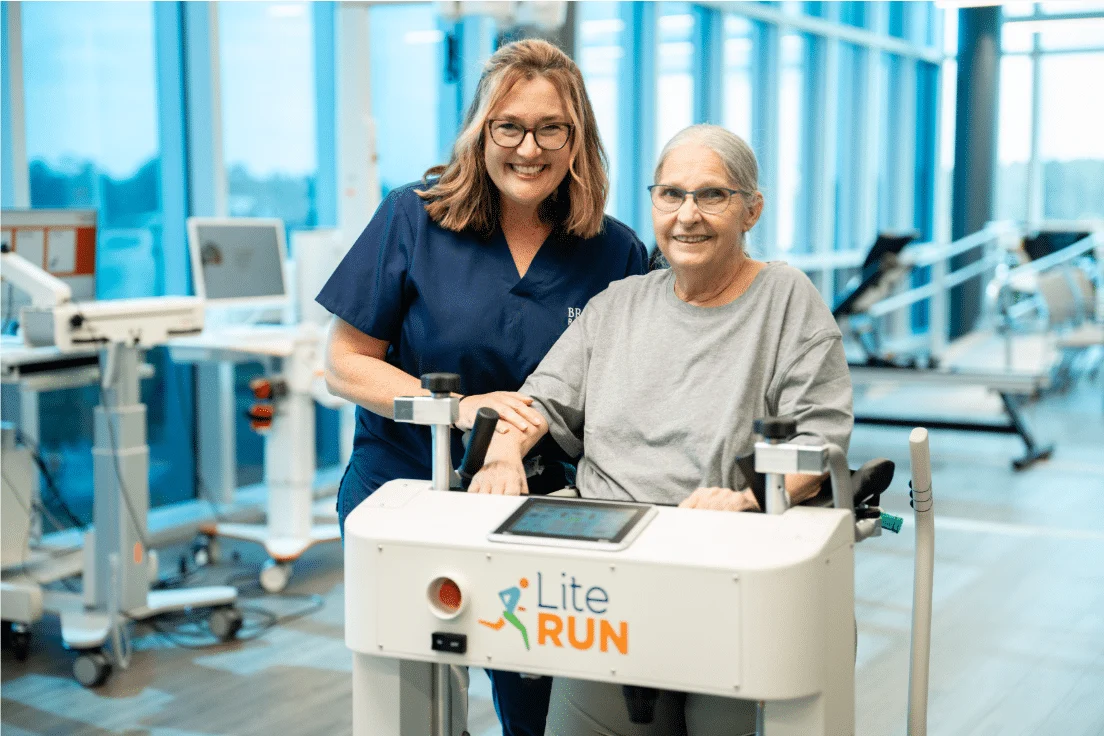
Perhaps the most compelling testament to the technology’s impact comes from the patient experience itself. The featured image accompanying the original announcement depicts a Brooks Rehabilitation therapist guiding a patient in using Lite Run to walk for the first time in three years. This image captures the profound emotional and physical significance of early mobility. For patients who have been bedridden or severely limited, regaining the ability to stand and walk, even with assistance, can be a monumental psychological victory.
The Lite Run system contributes to a more dignified patient experience by allowing individuals to participate actively in their recovery, rather than being passively moved or lifted. The comfort of the Exosuit and the confidence instilled by the fall-prevention mechanism empower patients to push their limits safely, fostering a sense of agency and hope. This active engagement is not just physically beneficial; it’s a powerful driver of motivation, self-efficacy, and overall well-being, all critical components of a successful rehabilitation journey.
Broader Implications: Reshaping the Future of Inpatient Rehabilitation
The adoption of Lite Run by Brooks Rehabilitation is more than just a technological upgrade; it represents a significant shift in the paradigm of inpatient rehabilitation, with far-reaching implications for healthcare systems, clinical practices, and patient populations.
Addressing Healthcare System Pressures
One of the most pressing concerns in modern healthcare is the escalating cost of care, driven in part by extended hospital lengths of stay (LOS) and the associated complications of immobility. By enabling earlier and safer patient mobilization, Lite Run has the potential to significantly reduce LOS in inpatient rehabilitation facilities. When patients regain functional independence faster, they can transition to less intensive levels of care or return home sooner, leading to substantial cost savings for both patients and the healthcare system. Reduced LOS also frees up beds, improving hospital throughput and access to care for other patients in need.
Furthermore, the technology directly addresses the challenges posed by an aging population, which often presents with multiple comorbidities and complex recovery needs. As the demographic landscape shifts, the demand for effective and efficient rehabilitation services will only grow. Technologies that allow clinicians to safely manage these increasingly complex patient populations with fewer physical demands on staff become not just desirable, but essential. Lite Run serves as a scalable solution to these demographic and resource pressures, offering a pathway to sustain high-quality care amidst evolving healthcare realities.
Setting a New Standard of Care
Brooks Rehabilitation, as a "top-ranked physical rehabilitation provider" and now the first nationwide inpatient hospital to adopt Lite Run, is setting a new benchmark for rehabilitative care. This pioneering move will undoubtedly influence other institutions, encouraging them to evaluate and potentially integrate similar advanced mobility technologies. As more evidence emerges regarding the clinical and operational benefits, anti-gravity mobility could rapidly transition from an innovative niche to a widely accepted, perhaps even expected, component of comprehensive rehabilitation programs.
This shift signifies an evolution in rehabilitation technology, moving beyond purely diagnostic tools or passive modalities towards active, assistive devices that empower both patients and therapists. It underscores the growing recognition that technology, when thoughtfully applied, can augment human capabilities, enhance safety, and ultimately lead to superior patient outcomes. Brooks’ leadership in this area positions it as a model for how advanced technology can be strategically deployed to elevate the entire field of rehabilitative medicine.
The Human Element: Beyond the Machine
It is crucial to emphasize that while Lite Run is a powerful technological tool, it does not diminish the indispensable role of the human therapist. Instead, it amplifies their capabilities. By handling the strenuous physical aspects of patient support and fall prevention, Lite Run frees up therapists to focus on higher-level cognitive and motor training, precise cueing, problem-solving, and the crucial human connection that is at the heart of effective rehabilitation.
Therapists can now dedicate more energy to designing personalized treatment plans, observing subtle movement patterns, and providing expert guidance without the distraction of constant manual lifting or bracing. This synergistic relationship between advanced technology and skilled clinical expertise promises a more holistic, efficient, and ultimately more human-centered approach to recovery. The ongoing pursuit of restoring quality of life, independence, and dignity remains the ultimate goal, and with innovations like Lite Run, that goal is becoming increasingly attainable for a wider range of patients.
The future of inpatient rehabilitation at Brooks Rehabilitation, and potentially across the nation, looks brighter and more dynamic than ever, powered by a commitment to innovation and the transformative potential of anti-gravity mobility.