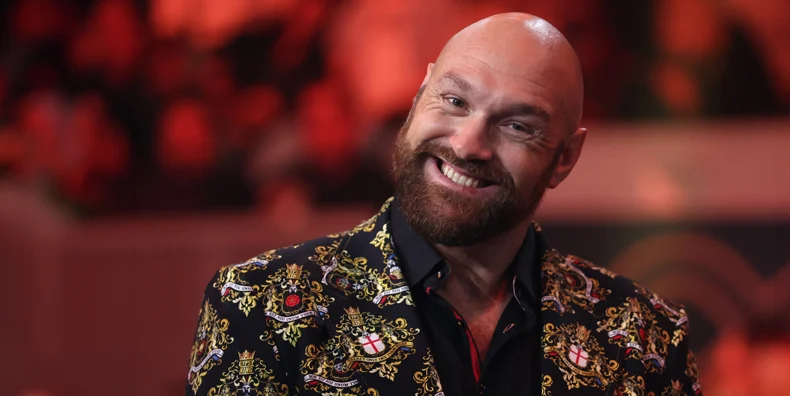
Main Facts: The Duality of a Heavyweight Champion
Tyson Fury, known globally as "The Gypsy King," occupies a unique position in the pantheon of modern sports. He is a former unified world heavyweight champion whose resume includes victories over some of the most formidable names in boxing history, including Wladimir Klitschko, Deontay Wilder, and Francis Ngannou. However, Fury’s most significant legacy may not be found in his win-loss record, but in his radical transparency regarding his mental health.
Diagnosed with bipolar disorder in 2017, Fury has become a beacon for the destigmatization of mental illness in the hyper-masculine world of professional combat sports. His journey is characterized by extreme fluctuations—not just in his weight or his career status, but in his neurobiology. Fury has openly chronicled his battles with clinical depression, anxiety, obsessive-compulsive disorder (OCD), and attention deficit hyperactivity disorder (ADHD), alongside a history of substance abuse involving alcohol and cocaine.
As of early 2026, Fury continues to navigate the complex intersection of retirement and professional competition. Following a second loss to Oleksandr Usyk and a brief retirement in January 2025, Fury returned to the ring in April 2026, securing a decisive points victory over Arslanbek Makhmudov. He is currently preparing for a high-stakes bout against Mariusz Wach in Thailand, scheduled for July 24, 2026. For Fury, these fights are more than financial or athletic endeavors; they are essential components of a rigorous management plan designed to keep his bipolar symptoms at bay.
Chronology: From the Pinnacle of Success to the Depth of Despair
The trajectory of Tyson Fury’s mental health journey is inextricably linked to his professional milestones. To understand his current management strategies, one must examine the timeline of his psychological "crash."
2015: The Catalyst of the High
In November 2015, Fury achieved what many believed was impossible: he defeated Wladimir Klitschko, ending the Ukrainian’s decade-long reign as the heavyweight king. Fury became the unified champion, holding four world title belts. However, achieving his lifetime goal created a vacuum of purpose. Fury describes the aftermath not as a celebration, but as the beginning of a "massive low."
2016–2017: The "Dark Years"
Following the Klitschko victory, Fury’s life spiraled into chaos. He faced a severe depressive episode that lasted nearly two years. During this period, he ballooned to 400 pounds, frequently disappeared from his family for days, and turned to drugs and alcohol to numb his internal "emptiness." This era was marked by two failed drug tests for cocaine and the looming threat of a 12-year ban from boxing, alongside millions of dollars in legal fees.
October 31, 2017: The Epiphany
The turning point occurred on Halloween night in 2017. Facing a total loss of identity and contemplating suicide, Fury describes reaching a state of spiritual and emotional surrender. He prayed for help, experiencing a "lifting of weight" that propelled him back into training the very next morning. This marked the start of his physical and mental rehabilitation.
2023–2026: The Netflix Era and Continued Volatility
The release of the Netflix docuseries At Home With the Furys in August 2023 provided a window into the daily reality of his condition. The series showcased the "yo-yo" nature of his retirement decisions, highlighting how the absence of a professional goal often triggers a relapse into depressive or impulsive behaviors. His 2025 retirement and 2026 comeback reflect this ongoing struggle to find a balance between the intensity of the ring and the quiet of domestic life.
Supporting Data: The 11 Pillars of Management
Managing bipolar disorder requires a multi-faceted approach. While Fury’s methods are idiosyncratic, they align with clinical observations that routine and lifestyle interventions are critical for mood stabilization.
1. The Necessity of Rigid Routine
For Fury, a lack of structure is a precursor to a mental health crisis. His wife, Paris Fury, has noted that his mood "dips dramatically" the moment a schedule is removed. This reflects a broader clinical truth about bipolar disorder: "social rhythm therapy," which emphasizes regular daily activities, can help stabilize the body’s internal clock and mood.
2. Exercise as Neurochemical Regulation
Fury views physical activity as a non-negotiable medication. He famously stated that if he does not train for two days, he feels "totally depressed." Beyond the physical benefits, high-intensity exercise releases endorphins and regulates dopamine, which can be particularly stabilizing for someone experiencing the erratic neurochemistry of bipolar disorder.
3. Goal-Oriented Living
Fury utilizes both short-term and long-term goals to prevent his mind from going "AWOL." These range from massive world title fights to simple tasks like taking his children camping. This "horizon-scanning" provides a sense of future-oriented purpose that combats the "nothingness" of depression.
4. Dietary Discipline and Sobriety
A significant component of Fury’s stability is his abstinence from caffeine, alcohol, and drugs. Since his 2017 "epiphany," he has recognized that substances provide only a "short-term break" from problems while exacerbating the long-term chemical imbalances of his condition.
5. Grounding through Nature and Heritage
Fury often retreats to the Lancashire countryside to spend time with his father, John Fury. These visits—centered around fires, dogs, and open fields—connect him to his Traveller roots. This grounding in nature and family history serves as an emotional anchor when the pressures of fame become overwhelming.
6. The "Woop Woop" Technique
Fury employs a cognitive-behavioral "pattern interrupt" he calls the "Woop Woop" effect. By shouting the phrase three times loudly when he feels a mood dip, he uses a physical and auditory jolt to break a negative thought loop, often inducing a smile through the sheer absurdity of the act.
7. Human Interaction and Support Systems
While Fury does not currently utilize traditional talk therapy, he emphasizes the importance of not being alone. He uses his boxing camp as a forum for long, educational conversations about the world, believing that regular interaction prevents the "dwelling" that leads to depressive rumination.
8. Faith and Meditation
Fury attributes much of his survival to his belief system. His 2017 recovery began with prayer, and he continues to use a form of spiritual meditation to find "the light" when he feels he is slipping back into "the darkness."
9. Perseverance and the "Rocky" Philosophy
Borrowing from the fictional Rocky Balboa, Fury maintains a philosophy of "moving forward" regardless of the internal weather. He acknowledges that life will not always be "sunshine and rainbows," but maintains faith that "rose-colored days" will eventually return.
10. Radical Self-Acceptance
Fury experiences upwards of 30 mood changes a day. Rather than fighting the existence of the disorder, he has "owned" it as part of his identity. This acceptance reduces the secondary anxiety that often comes from trying to "act normal" while struggling internally.
11. Pursuit of Passion
Ultimately, boxing remains Fury’s primary "calling card." He admits that without the purpose provided by the sport, he feels "lost." However, he has expanded this passion to include mental health advocacy, giving him a sense of purpose that transcends the ring.
Official Responses: Family and Peer Perspectives
The impact of Fury’s condition is perhaps best articulated by those in his inner circle. Their responses highlight the communal nature of managing bipolar disorder.
Paris Fury, Wife: Paris has been vocal about the challenges of being a caregiver. She describes the "dark modes" where she must simply "walk away" and allow him to process the episode, noting that it is impossible to simply "snap out of it." Her commitment to "help and support him" remains the bedrock of his stability.
John Fury, Father: John has openly discussed the hereditary nature of these struggles, admitting to his own "dark places" and mood-related challenges. His perspective reinforces the idea that mental health is often a familial journey, requiring collective understanding.
Mauro Ranallo, Sports Announcer: In a poignant interview for SHOWTIME Sports, Ranallo—who also lives with bipolar disorder—engaged with Fury in a peer-to-peer dialogue. This interaction served to humanize the disorder, showing that high-functioning success and chronic mental illness can coexist.
Implications: A New Paradigm for Professional Athletes
Tyson Fury’s openness has significant implications for the future of professional sports and mental health advocacy.
First, he has effectively dismantled the "invincibility" myth of the heavyweight champion. By showing that "the strongest man in the world" can be brought to his knees by a mental health condition, he has made it safer for other athletes to seek help. His journey suggests that vulnerability is not the opposite of strength, but a prerequisite for resilience.
Second, Fury’s reliance on boxing as a "cure" presents a complex dilemma. While the sport provides him with necessary structure and purpose, the physical toll and the eventual necessity of retirement pose ongoing risks to his stability. His story highlights the need for professional athletes to have robust "transition plans" for life after the spotlight fades.
Finally, Fury’s 11 strategies offer a blueprint for others living with bipolar disorder. While he is not a medical professional, his emphasis on routine, exercise, and sobriety mirrors clinical best practices. As he prepares for his July 2026 fight in Thailand, the world will be watching not just to see if he wins, but to see how he continues to manage the most difficult opponent he has ever faced: his own mind.