











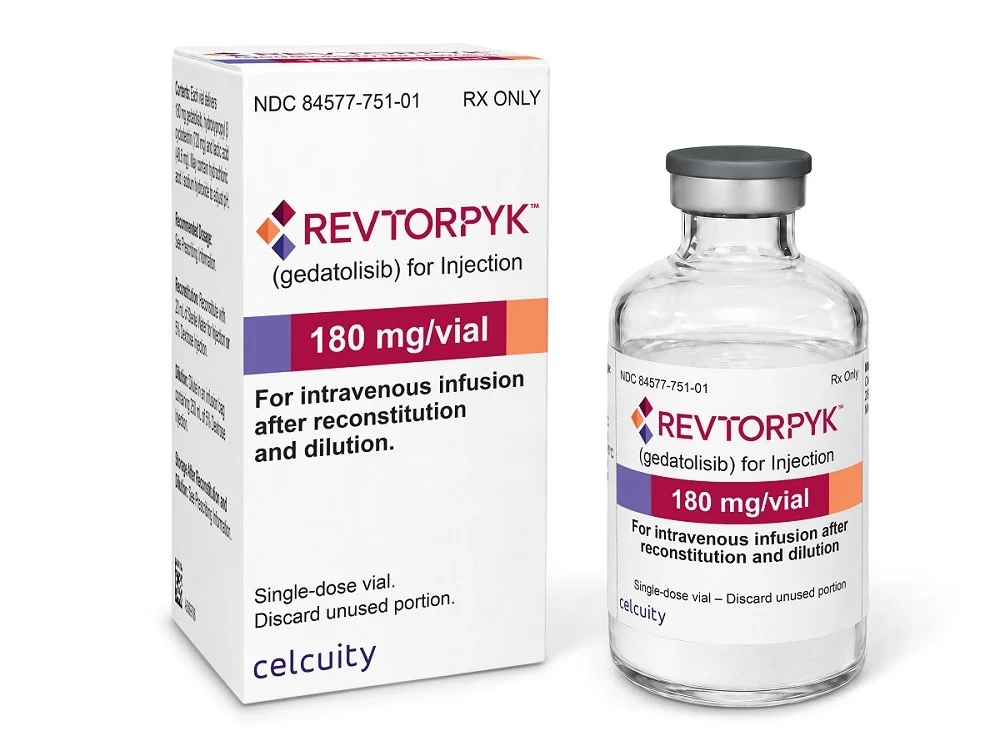
In a landmark development for oncology, the U.S. Food and Drug Administration (FDA) has granted approval for Revtorpyk (gedatolisib), a novel therapeutic agent developed by Minneapolis-based Celcuity. This regulatory milestone marks the arrival of the first-in-class pan-PI3K/mTOR inhibitor, providing a sophisticated new weapon in the fight against HR-positive, HER2-negative locally advanced or metastatic breast cancer. As Celcuity’s inaugural commercial product, Revtorpyk represents a significant shift in how clinicians may approach the complex signaling pathways that fuel tumor progression.
Main Facts: A Dual-Targeting Breakthrough
The FDA’s approval authorizes the use of Revtorpyk in adult patients diagnosed with HR-positive, HER2-negative breast cancer that has progressed to a locally advanced or metastatic state. Specifically, the drug is indicated as a second-line therapy for patients who do not harbor a PIK3CA mutation.
Administered via a 30-minute intravenous infusion on days 1, 8, and 15 of a 28-day cycle, Revtorpyk is designed to address the dysregulation of the PI3K, AKT, and mTOR (PAM) signaling pathway. While existing therapies have historically targeted either PI3K or mTOR in isolation, Revtorpyk employs a dual-inhibition strategy. By simultaneously blocking both PI3K and mTOR, the drug induces a more profound downstream inhibition of AKT, effectively starving the tumor of the signals required for its uncontrolled proliferation.
The clinical deployment of Revtorpyk is approved for use in combination with fulvestrant (Faslodex), a standard-of-care endocrine therapy. Additionally, the FDA has sanctioned its use in a triple-combination regimen alongside the CDK4/6 inhibitor palbociclib (Ibrance). This multifaceted approach aims to overcome the adaptive resistance mechanisms that frequently plague single-agent breast cancer treatments.
Chronology: The Road to Regulatory Approval
The journey of Revtorpyk from laboratory bench to clinical reality has been a rigorous, multi-year process.
- Early Development: Celcuity focused its research on the PAM pathway, identifying the need for a molecule capable of neutralizing the feedback loops that often render monotherapies ineffective.
- Clinical Trials: The drug underwent extensive evaluation in open-label Phase 3 clinical trials, where it was tested both as a dual therapy with fulvestrant and a triple therapy with fulvestrant and palbociclib.
- ASCO Presentation (June 2026): Celcuity unveiled data concerning a specific cohort of patients possessing PIK3CA mutations, demonstrating the potential for the drug to extend its reach beyond its initial narrow indication.
- FDA Decision (July 2026): Following a comprehensive review of the efficacy and safety data, the FDA issued its approval, clearing the way for a commercial launch.
- Upcoming Launch: While initially anticipated to hit the market immediately, Celcuity management confirmed a strategic rollout for late in the third quarter of 2026, citing the necessity of ensuring a robust and stable drug supply chain.
Supporting Data: Clinical Efficacy and Safety Profiles
The approval of Revtorpyk is anchored in data showing statistically significant improvements in progression-free survival (PFS). In the Phase 3 trials, patients receiving the Revtorpyk-based regimens demonstrated a marked delay in disease progression compared to historical benchmarks for second-line standard care. While overall survival data remains immature, the PFS results provided sufficient evidence of clinical benefit to warrant the FDA’s green light.
However, the efficacy of the drug must be weighed against its safety profile. Common adverse reactions observed during the trial included hyperglycemia, skin reactions, and stomatitis—a painful inflammation of the oral mucus membranes.
The triple-combination therapy (Revtorpyk, fulvestrant, and palbociclib) reported a 12% discontinuation rate, a figure that caught the attention of market analysts. Andrew Berens of Leerink Partners noted that this rate was slightly higher than initial expectations, largely attributed to the severity of mucositis. This data point underscores the necessity for proactive patient management strategies as the drug moves into community oncology settings.
Official Responses and Strategic Implications
The Management Perspective
Celcuity executives have emphasized that the delay in the commercial launch—moving it to the end of the third quarter—is purely a logistical decision. By prioritizing supply chain stability, the company aims to ensure that once the drug reaches clinics, there are no interruptions in patient care. The company has also engaged with major health insurance payers well in advance of the launch, a proactive measure intended to reduce "prior authorization" friction and ensure patient access.
The Analyst View
Wall Street’s reaction has been measured but optimistic. Analysts highlight that the total addressable market for Revtorpyk is significant. With HR-positive, HER2-negative breast cancer accounting for roughly 70% of all breast cancer cases, and approximately 60% of that population lacking PIK3CA mutations, the drug addresses a massive patient segment. Celcuity estimates a potential U.S. market opportunity exceeding $10 billion across first- and second-line settings.
However, analysts like Berens stress that the "commercial success" of the drug will depend heavily on the education of community oncologists. Managing the side effects—particularly the mucositis associated with the triple-combination regimen—is considered the critical hurdle. "Once the drug launches, we think the ability of community docs to effectively manage the mucositis and keep patients on drug will be critical to commercial success," Berens noted in his investor brief.
Looking Beyond Breast Cancer: Future Implications
The approval of Revtorpyk is likely just the beginning of Celcuity’s clinical ambitions. The mechanism of the PAM pathway is not exclusive to breast cancer; it is a known driver in a variety of solid tumors.
Expanding the Label
Celcuity has already signaled its intent to expand the Revtorpyk label. Plans for a supplemental New Drug Application (sNDA) are underway to include patients with PIK3CA mutations, based on the promising data presented at the American Society of Clinical Oncology (ASCO) meeting earlier this summer. Following this U.S. expansion, the company intends to pursue global regulatory approvals, targeting major markets in Europe and Asia.
Diversifying the Pipeline
The broader potential of the drug is currently being tested in early-stage trials for other malignancies. A Phase 1b/2 study is currently evaluating the efficacy of Revtorpyk in treating prostate cancer, and preliminary research has explored its utility in ovarian cancer. If these trials yield positive results, Revtorpyk could evolve from a breast cancer-specific treatment into a foundational therapy for a wider spectrum of oncology indications.
Conclusion: A Shift in the Oncology Landscape
The entry of Revtorpyk into the oncology marketplace signals a maturation in how pharmaceutical companies approach signal transduction inhibitors. By moving beyond single-target drugs, Celcuity has successfully navigated the complexities of tumor resistance mechanisms.
As the healthcare community prepares for the late-Q3 launch, the focus will shift from the laboratory to the bedside. The long-term success of this therapy will be determined by its real-world performance: whether community clinicians can successfully mitigate the side-effect profile, whether payers provide favorable coverage, and whether the drug can indeed expand into the broader oncology indications that Celcuity envisions. For the thousands of patients facing advanced breast cancer, however, the availability of a new, potent option provides a much-needed increase in clinical agency against a formidable disease.