











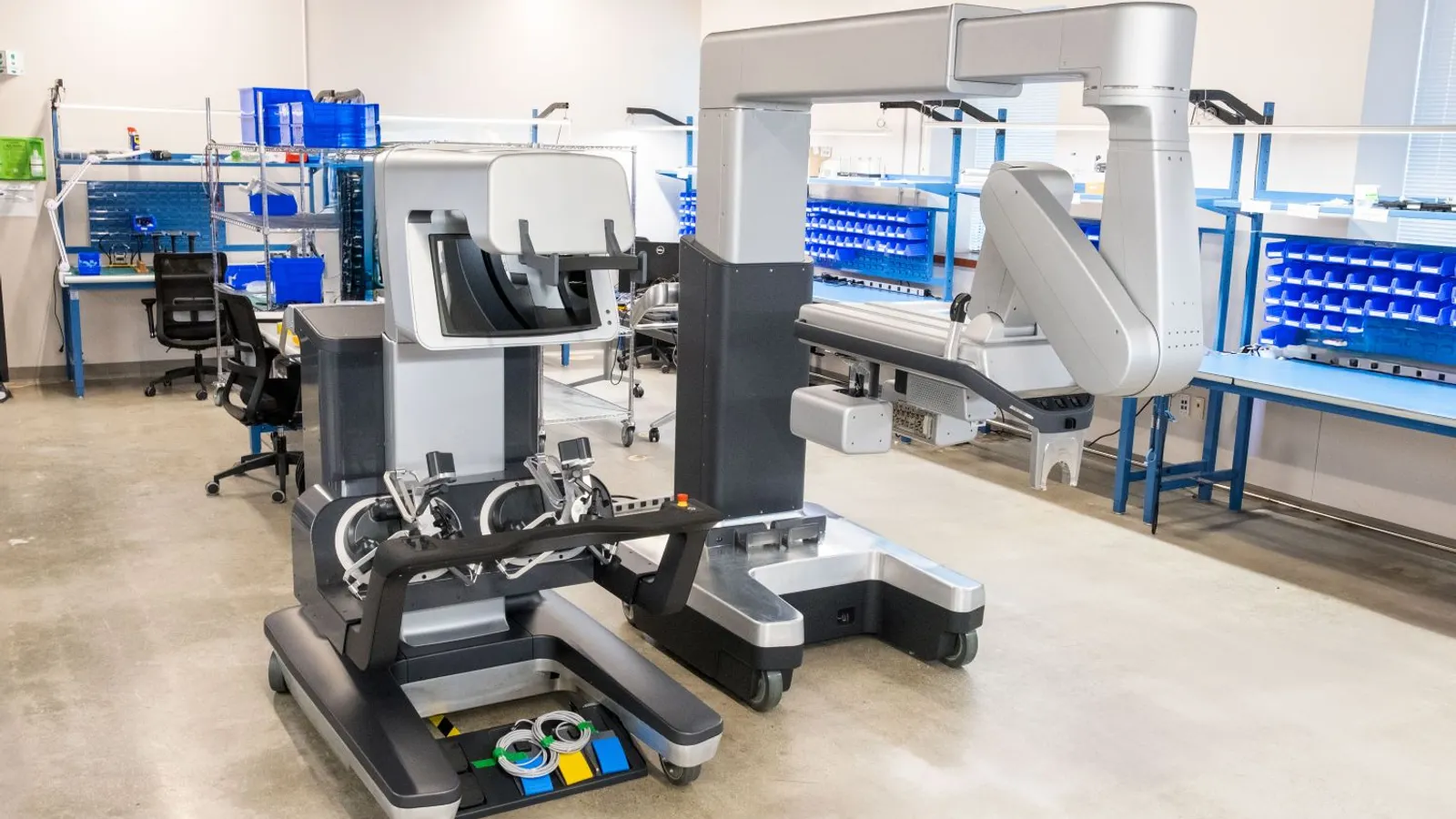
Executive Summary: The Impending Dissolution
Vicarious Surgical, a medical technology company that once promised to revolutionize the field of minimally invasive surgery through its proprietary single-port robotic system, has reached a definitive crossroads. In a formal notice to shareholders dated June 22, the company’s board of directors announced a recommendation to dissolve the business and initiate a formal liquidation of its assets.
The decision comes as a culmination of years of financial strain, characterized by recurring operating losses and a failure to secure the capital necessary to reach key commercialization milestones. Shareholders are slated to vote on this plan of liquidation on July 21, marking a potential end to the venture-backed firm’s journey. This development underscores the brutal economic realities facing high-burn, pre-revenue medical device startups in an increasingly crowded and capital-intensive robotic surgery market.
Chronology of a Downward Trend
The path to the July 21 vote was paved by a series of operational setbacks and mounting financial hurdles.
2023: Strategic Shifts and Delays
Under the leadership of CEO Stephen From, who assumed the role last year, the company attempted a "pivot to efficiency." Management implemented aggressive cost-cutting measures, including workforce reductions and a narrowing of research and development priorities. Despite these efforts, the company faced a significant blow when it was forced to postpone a long-anticipated clinical trial for its abdominal surgical robot. The delay signaled to investors that the path to regulatory approval—and subsequent revenue—was significantly longer than previously modeled.
2024: The Financial Squeeze
The current year brought intensified pressure on the company’s valuation. In early 2024, the firm received notice that its shares would be delisted from the New York Stock Exchange (NYSE), a major blow to its public profile and ability to raise institutional capital. While the company briefly sought a path to a Nasdaq listing and maintained a goal of achieving a "design freeze" on its robotic platform by the end of this year, these ambitions were ultimately undermined by an inability to secure the necessary bridge financing.
June 2024: The Final Notice
The June 22 filing served as the final acknowledgement of the company’s insolvency. With only $3.7 million in cash and cash equivalents remaining as of March 31, the board concluded that it no longer had a "going concern" path. The notice explicitly stated that the company had failed to attract a buyer or secure additional debt/equity financing, leaving the liquidation of assets as the final remaining option for recouping value for stakeholders.

Financial Analysis and Supporting Data
The demise of Vicarious Surgical is a case study in the "cash-burn" risks associated with medical robotics. According to its most recent financial disclosures, the company has operated at a loss since its inception, a common reality for R&D-heavy medical tech firms. However, the lack of a clear timeline for FDA clearance meant that the company’s "runway"—the time it could operate before running out of money—became dangerously short.
The Liquidity Gap
- Cash Reserves: As of the end of the first quarter, the company reported $3.7 million in cash. Given the high costs associated with maintaining robotic engineering labs and regulatory compliance teams, this sum was effectively insufficient to carry the company through another full quarter of operations.
- Funding Failure: Despite exploring "strategic alternatives," including potential mergers and partnerships, the company reported that it could not secure the capital injection required to sustain operations.
- Operational Costs: The company noted in its filings that it would continue to consume "significant cash resources" for the foreseeable future, a prospect that effectively shuttered the door on further venture capital investment in the current high-interest-rate environment.
The Competitive Landscape: A Crowded Arena
Vicarious Surgical’s struggle to bring its single-port robotic system to market occurred against the backdrop of an exceptionally competitive soft tissue surgery sector. The company aimed to disrupt a market dominated by Intuitive Surgical’s da Vinci system, but found itself competing for resources and attention against a wave of well-funded rivals.
The "Robotic Wars"
The U.S. market for surgical robotics has seen an influx of major players and agile startups:
- The Incumbent: Intuitive Surgical remains the standard-bearer, with a massive installed base and deep clinical integration.
- The Challengers: Companies such as Medtronic (with its Hugo system), CMR Surgical (Versius), Distalmotion, and Moon Surgical have all launched or scaled platforms to challenge the status quo.
- The Saturation Factor: As more systems hit the market, the clinical, hospital, and regulatory barriers to entry have grown higher. Investors are increasingly favoring companies with proven clinical outcomes and existing commercial revenue, making it difficult for "pre-revenue" developers like Vicarious to secure the necessary capital to compete.
Corporate Governance and Leadership Transitions
The volatility of the company is also reflected in its executive departures. The announcement that CFO Sarah Romano intends to step down on July 22 to join SS Innovations International—a competitor in the robotics space—serves as a poignant symbol of the company’s internal instability.
When leadership starts migrating to competitors, it often signals a loss of institutional confidence in the firm’s strategic direction. The board’s recommendation to liquidate is the final step in a series of management decisions aimed at managing the orderly wind-down of the company’s affairs, rather than a continued pursuit of its core technology.
Implications for the MedTech Industry
The potential dissolution of Vicarious Surgical carries broader implications for the medical technology investment ecosystem:

1. The End of the "Easy Money" Era
The collapse of companies like Vicarious signals a shift in the venture capital and public market appetite for medical robotics. In the past, the potential to disrupt a multi-billion-dollar surgical market was enough to sustain long-term speculative investment. Today, the focus has shifted toward "capital efficiency." Firms that cannot demonstrate a path to profitability within a 24-to-36-month window are finding it increasingly difficult to survive.
2. Intellectual Property and Asset Sale
While the company is dissolving, its assets—which include patents, software algorithms, and hardware designs—may be of value to other industry players. Industry analysts expect that if the liquidation proceeds, the intellectual property could be auctioned off to larger medical device conglomerates looking to enhance their existing robotic portfolios without having to develop the technology from scratch.
3. Regulatory Hurdles
The delays experienced by Vicarious in their clinical trial process highlight the increasingly stringent regulatory landscape for robotic systems. The FDA is placing a higher premium on long-term clinical safety and efficacy data, which, while beneficial for patient outcomes, significantly increases the cost of development for new entrants.
Conclusion: The July 21 Vote
The special meeting of stockholders on July 21 represents the final chapter for Vicarious Surgical. Shareholders are now faced with the task of voting on a plan that effectively acknowledges the end of their investment’s original growth thesis.
While the vision of a high-dexterity, single-port robot for abdominal surgery remains a compelling prospect for the future of medicine, Vicarious Surgical serves as a stark reminder of the hurdles involved in turning that vision into a commercial reality. As the company moves toward liquidation, the industry will be watching to see if any of its technological remnants find a second life under new ownership, or if this serves as a cautionary tale for the next generation of medical innovators.
For now, the silence from the company’s leadership regarding the specifics of the liquidation—outside of the formal filings—suggests that the primary focus is on the orderly distribution of remaining assets and the finalization of the company’s legal obligations. The era of Vicarious Surgical as a market contender appears to be drawing to a close.