











By Elise Reuter | July 16, 2026
In a strategic move designed to redefine the landscape of minimally invasive spinal surgery, DePuy Synthes, the medical device subsidiary of Johnson & Johnson, has officially acquired Expanding Innovations, a specialized developer of advanced expandable spinal implant technologies. This acquisition marks a significant milestone for DePuy Synthes as it seeks to fortify its competitive edge in the high-growth interbody cage market and further integrate its Velys digital surgery portfolio.
The Strategic Core: Advancing Spine Care Technology
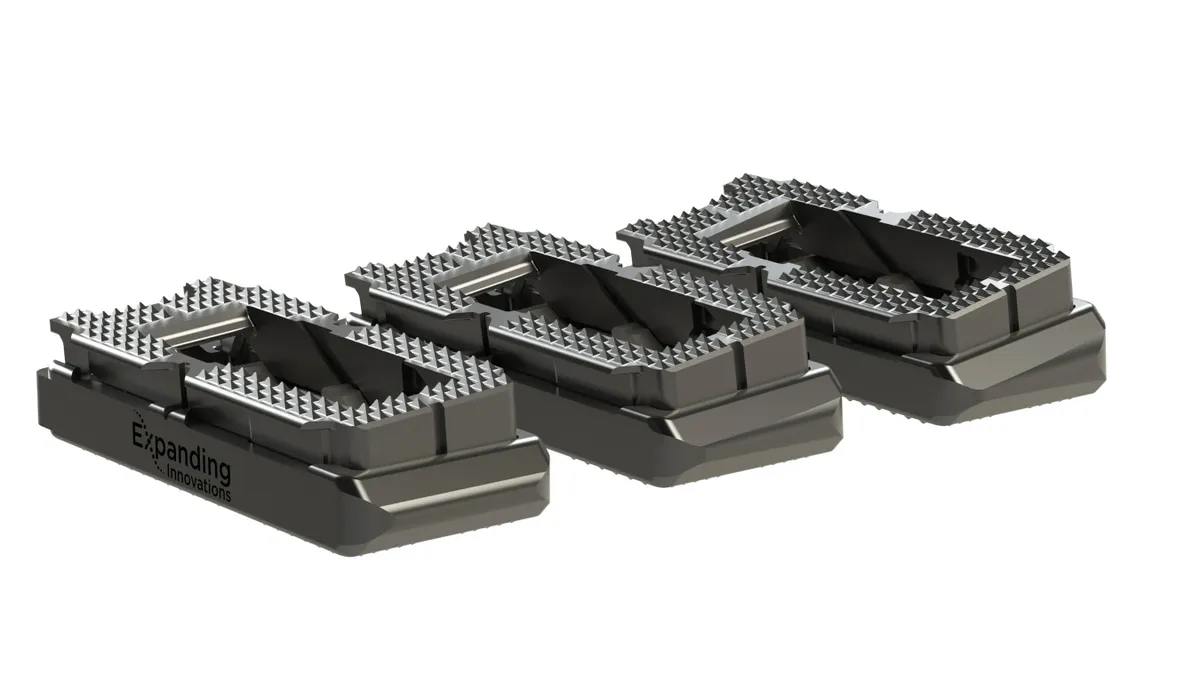
The primary driver behind this acquisition is Expanding Innovations’ proprietary, screwless expandable implant technology. In the realm of spinal fusion—a common treatment for degenerative disc disease and spinal stenosis—the stability of the interbody cage is paramount. Traditional cages often carry the risk of "subsidence," a complication where the implant sinks into the adjacent vertebrae, potentially leading to pain, instability, and the need for revision surgery.
Expanding Innovations has developed a suite of expandable interbody cages that utilize sophisticated mechanical designs to provide optimal structural support without the traditional reliance on external screws. By enabling the implant to expand in situ, surgeons can insert the device through a smaller incision and then adjust it to fit the specific anatomical requirements of the patient, thereby minimizing tissue disruption and maximizing load distribution.
Chronology of Innovation and Integration
The journey toward this acquisition represents years of technical refinement by Expanding Innovations.
- Early Development Phase: Expanding Innovations focused on the engineering challenges of lumbar fusion, identifying that existing fixed-height cages were often "one size fits all," which rarely resulted in ideal outcomes.
- Market Entry: The company successfully brought its initial lumbar fusion devices to market, gaining traction among surgeons who favor minimally invasive approaches.
- The DePuy Partnership: Following successful clinical outcomes and positive surgeon feedback, DePuy Synthes began exploring the integration of these devices into their expansive global distribution network.
- July 16, 2026: The formal acquisition is announced, with plans to fold the startup’s existing intellectual property and ongoing research pipelines into the DePuy Synthes spine business unit.
Supporting Data: Addressing the Subsidence Challenge
The medical community has long struggled with the limitations of stationary implants. Clinical data surrounding interbody fusion indicates that maintaining the height of the disc space is critical to long-term success. Expanding Innovations’ technology specifically targets these metrics.
By utilizing an expandable design, the implants achieve greater surface area contact with the vertebral endplates. According to technical assessments, this increased contact area significantly reduces the pressure exerted on the bone, which is the primary mechanical cause of subsidence. By neutralizing this risk, DePuy Synthes aims to improve patient outcomes, reduce the incidence of revision surgeries, and lower the overall cost burden of spinal procedures for hospital systems.
Furthermore, the "screwless" nature of the design simplifies the surgical workflow. Reducing the number of components used during a procedure decreases the time under anesthesia and lowers the complexity of the instrumentation required, allowing surgeons to operate with higher efficiency.
Integrating the Velys Ecosystem
One of the most compelling aspects of this acquisition is the planned synergy with the Velys Digital Surgery platform. DePuy Synthes has been aggressively building out its Velys ecosystem, which combines robotics, digital planning, and data analytics to assist surgeons in orthopedic procedures.
"Integrating Expanding Innovations’ technology into our Velys portfolio is not merely about adding a new device; it is about creating a data-driven, unified surgical experience," a spokesperson for DePuy Synthes noted. By incorporating these expandable cages into the Velys workflow, surgeons can use robotic guidance to precisely place the implants, ensuring that the expansion process is performed with millimeter accuracy. This holistic approach is expected to become a cornerstone of DePuy’s value proposition in the spine market.

Future Pipeline and Expansion
While the current acquisition provides immediate access to established lumbar fusion technology, the roadmap ahead is equally ambitious. Expanding Innovations has an active pipeline focused on evolving its core technology to suit various spinal approaches:
- Transforaminal Lumbar Interbody Fusion (TLIF): Refined versions of the current systems are in development to further streamline the TLIF approach.
- Lateral Lumbar Interbody Fusion (LLIF): The company is prioritizing the lateral approach, which is increasingly popular due to its ability to bypass major abdominal musculature.
- Anterior Lumbar Interbody Fusion (ALIF): Expanding Innovations is looking to adapt its screwless expansion mechanisms to the anterior approach, which offers unique challenges regarding access and anatomical fit, representing a new frontier for the company’s portfolio.
Implications for the Spine Market
The acquisition sends a clear signal to the medical device industry: the future of spine surgery is minimally invasive, expandable, and digitally integrated.
For Surgeons
For the practicing surgeon, this consolidation offers a more cohesive set of tools. Rather than mixing and matching components from various vendors, clinicians will soon be able to utilize a seamless workflow that pairs DePuy’s advanced instrumentation with the specialized expandable cages of Expanding Innovations. The focus on reducing surgical complexity is likely to be welcomed by both academic centers and private practice surgeons alike.
For Hospital Systems
Hospital administrators are under increasing pressure to demonstrate value-based care. The prospect of fewer revision surgeries, shorter operative times, and a more predictable recovery trajectory for patients makes this technology an attractive investment. By standardizing these implants across their facilities, hospital networks can achieve greater efficiency and better long-term clinical outcomes.
For Competitors
This move intensifies the pressure on other major players in the spine industry, such as Medtronic, Stryker, and NuVasive (now part of Globus Medical). As these companies vie for dominance in the expandable cage market, the bar for innovation has been raised. The competition is no longer just about the device itself, but about the ecosystem surrounding it—specifically, how well an implant integrates with robotic platforms and preoperative planning software.

Final Reflections
The acquisition of Expanding Innovations by DePuy Synthes is more than a mere asset purchase; it is a strategic alignment of vision. As the global population ages, the prevalence of spinal disorders is projected to rise, necessitating solutions that are both durable and minimally invasive.
By combining the manufacturing scale and global reach of a healthcare titan like Johnson & Johnson with the agile, high-precision engineering of a specialized startup, the industry moves one step closer to a new standard of care in spinal orthopedics. The success of this integration will ultimately be measured in the operating room, where surgeons—empowered by more reliable, screwless technology—will seek to restore mobility and quality of life to patients with greater precision than ever before.
As the integration progresses, the industry will be watching closely to see how quickly these new designs hit the market and whether they can indeed become the new benchmark for spinal stability and procedural efficiency in the coming decade.